

A land trust for real estate investors is a title-holding trust that puts legal title in a trustee’s name while you keep the economic benefits and practical control. That sounds elegant, and sometimes it is. But the real decision is simpler: does a land trust improve privacy, transfer efficiency, and portfolio management enough to justify the extra paperwork, without fooling you into thinking it replaces an LLC?
What a Land Trust Is and Why Real Estate Investors Use One
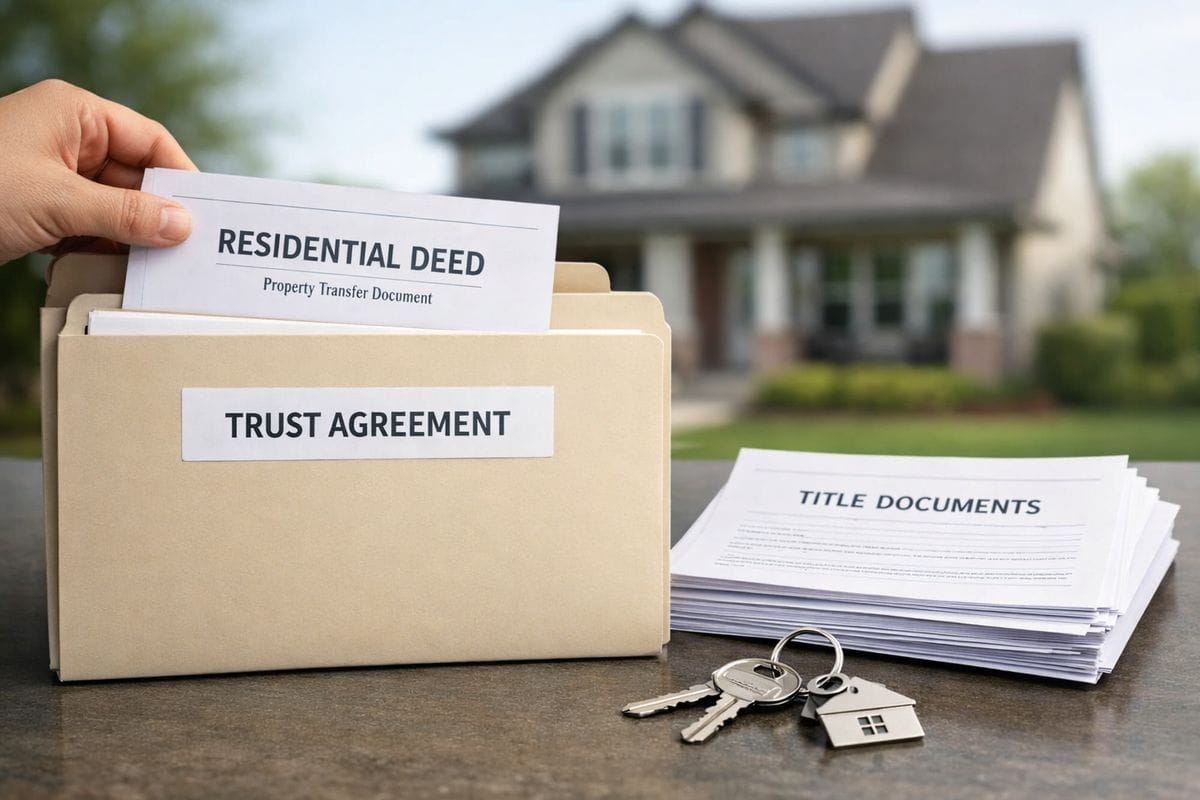
A land trust is not an operating business entity. It is a way to hold title to real estate. You transfer the property into the trust, the trustee appears on the deed, and the beneficial interest stays with you or with another entity you control.
For investors, the appeal is obvious. Public records stop showing your personal name as the owner in many counties. Ownership interests can be reassigned without recording a new deed every time. Estate transfers can become cleaner. If privacy and transfer efficiency drive the strategy, a land trust earns a serious look.
If liability protection is the goal, the recommendation is different. Based on analysis of how investor land trusts are actually used, a land trust is a niche tool. It is not the foundation of an asset-protection plan.
How a Land Trust Works in Practice
The structure has three moving parts: the trustee, the beneficiary, and the property. The trustee holds legal title. The beneficiary keeps the real benefits, including rents, sale proceeds, tax reporting, and day-to-day control through the trust agreement.
Think of it like a nominee arrangement with rules. The trustee’s name is on the title, but the beneficiary holds the steering wheel.
There is one legal trap that gets ignored in seminar pitches: merger. If the same person is effectively the trustor, trustee, and sole beneficiary in a way that collapses the separation, the trust can fail under the doctrine of merger. Paperwork quality matters here. Sloppy setup destroys the benefit fast.
Title-Holding Land Trust vs. Conservation Land Trust
The investor version is a title-holding land trust. It exists to hold ownership of a property, often for rentals, flips, or long-term portfolio assets.
That is completely different from a conservation land trust, which focuses on preserving land or restricting development. When investors talk about land trusts, this title-holding version is the one that matters.
The Three Real Reasons Investors Put Property in a Land Trust
Based on the field data, three use cases show up again and again: privacy, transfer planning, and administrative flexibility. Everything else tends to be marketing.
Privacy and Public-Record Anonymity
Privacy is the strongest legitimate reason to use a land trust. When title is held in the trust, county records often show the trust name or trustee name instead of your personal name. That does not make you invisible, but it does make you less easy to profile, solicit, and target. Research on investor usage consistently points to public-record privacy as the primary benefit.
That matters more than many investors admit. Once your name is tied to multiple properties, the calls start. So do the mailers, the contractor pitches, the hard-money offers, and the easy lawsuit screening. Privacy is deterrence. It is not immunity.
Estate Planning and Easier Transfer to Heirs
A land trust can also make ownership transfers cleaner. Instead of recording a new deed every time an ownership interest changes, beneficial interests can be assigned under the trust agreement. For family planning, that can reduce friction and help avoid probate-related delays.
That said, a land trust is not a full estate plan. It does not replace a revocable living trust, a will, or tax planning around step-up in basis. It is one tool inside a broader transfer strategy.
Administrative Flexibility for Multi-Property Investors
Administrative flexibility is where experienced investors start to care. If your portfolio includes partner changes, internal reorganizations, or layered ownership structures, separating title from beneficial ownership can save time and reduce recording churn.
The business outcome is speed. In a market where asset selection and market selection drive returns more than broad optimism, faster clean execution matters. A land trust does not increase NOI by itself, but it can reduce friction when you are actively managing a portfolio.
Where Land Trusts Deliver Value and Where the Sales Pitch Breaks Down
This is the part most investors actually need. Land trusts do some things well. Seminar marketers then take those valid advantages and exaggerate them into fantasy.
What Land Trusts Do Well
A land trust does four things well. It improves privacy, separates title from beneficial control, helps some estate transfers move more cleanly, and creates occasional convenience when ownership interests change. Those are real benefits.
The structure becomes more valuable when stacked with other entities. A trust holding title while an LLC owns the beneficial interest is a far better setup than a trust standing alone. That layered structure matches how sophisticated investors actually use the tool.
What Land Trusts Do Not Do
A land trust does not create a liability shield. Period.
If a tenant slips on broken stairs, if a contractor claim hits the property, or if a fair housing dispute lands in court, the trust does not block exposure the way an LLC is designed to do. Texas legal analysis is blunt on this point: a land trust alone is not the vehicle of choice for long-term investment property protection.
This is where investors lose money. Privacy gets confused with protection. Those are different goals.
Common Myths Investors Need to Ignore
The first myth is that a land trust defeats the due-on-sale clause. For investment property, that sales pitch is wrong. The commonly cited federal exception applies to certain owner-occupied homestead transfers, not standard investor deals, and Texas analysis specifically rejects the due-on-sale myth.
The second myth is that a trust replaces landlord insurance. It does not. Insurance remains the first line of defense for actual claims.
The third myth is that a trust fixes weak operations. It does not. Poor maintenance, bad screening, loose leases, and sloppy bookkeeping blow up portfolios, trust or no trust.
Land Trust vs. LLC for Real Estate Investors
For most landlords, this is the real comparison. Both structures show up in the same conversation, but they solve different problems.
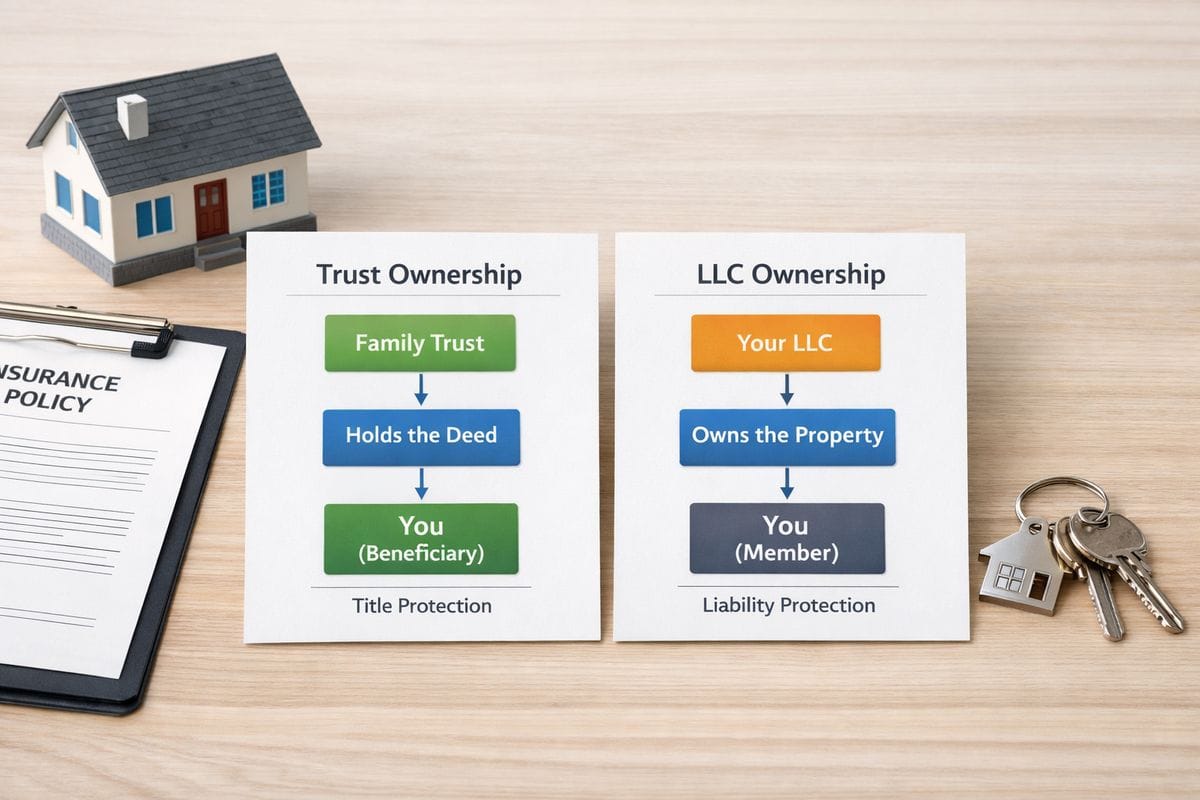
An LLC is for liability segregation, formal ownership, and business operations. A land trust is for title holding, privacy, and transfer flexibility. Taxes usually remain pass-through in either structure unless a different election applies, so tax savings are not the main distinction. The big difference is protection versus anonymity.
When an LLC Is the Better Choice
An LLC is the better choice when tenant risk is real, when contractors touch the property, when short-term rentals increase exposure, or when employees and business activity create operational liability. In those situations, the recommendation is clear: use the LLC first.
If the portfolio is small, the LLC plus strong insurance often delivers the best ROI. It protects against the risk that actually costs money.
When a Land Trust Adds Value on Top of an LLC
A land trust adds value when used on top of an LLC. The trust holds title. The LLC owns the beneficial interest. Your operating and liability posture stays inside the LLC, while the public record shows the trust or trustee instead of your personal name.
That combination addresses both privacy and liability in a way neither structure does alone. It also creates cleaner internal transfer options for portfolio planning and family succession.
Special Note for Texas Investors
Texas investors care about this question because Texas already offers strong LLC planning advantages, including favorable series LLC laws and no state income tax. That changes the math.
Based on Texas practice, the land trust is usually an add-on tool, not the core protection vehicle. Texas recognizes investor land trusts for lawful purposes, but local practice still treats the LLC as the primary structure for holding rental risk. If you own one or two rentals in Texas, an LLC plus insurance usually beats a stand-alone trust on cost-benefit grounds.
The Four Decision Drivers: When a Land Trust Is Worth It
The cleanest way to evaluate ROI is through four drivers.
Driver 1: Privacy Exposure
If keeping your name off public records matters for security, solicitation control, or simple discretion, a land trust deserves serious consideration. This is the strongest driver.
Driver 2: Liability Profile
If your biggest risk comes from tenant injury, contractor disputes, habitability claims, or short-term rental exposure, a trust is not enough. The better answer is LLC structuring backed by proper insurance.
Driver 3: Portfolio Size and Complexity
A single long-term rental often does not justify another layer. A growing portfolio with partner changes, inherited interests, or internal restructuring often does. Complexity raises the value of cleaner title management.
Driver 4: Succession and Tax Planning Goals
If generational transfer is part of the plan, a land trust can support that strategy. But it does not replace tax planning. Step-up in basis, family LLCs, revocable trusts, and beneficiary design all need coordination. Real estate remains a massive asset class, with OECD countries holding about $111 trillion in property assets, so transfer mistakes get expensive fast.
How to Set Up a Land Trust Without Creating Expensive Problems
Setup is where good strategy turns into bad execution. The structure only works if the documents, title transfer, lender review, and insurance all line up.
Core Setup Steps
You choose a trustee, draft a trust agreement, identify the beneficiaries correctly, and deed the property into the trust. The trustee can be an individual or an entity, but the role should be real, documented, and separate enough to avoid merger problems.
Then align the rest of the file. Insurance should reflect the trust and the actual beneficial owner where required. Lease paperwork and banking should match the operating structure. Loose paperwork creates claims problems later.
Financing, Insurance, and Due-on-Sale Review
This is where many investors decide the trust is not worth the hassle. Lenders care about title changes. Title companies care about vesting and authority. Insurers care about named insureds and ownership accuracy.
Before deeding financed property into a trust, review loan documents carefully. After transfer, confirm policy updates in writing. If financing or insurance gets messy, the trust can create more friction than value. That is an honest reason to skip it.
Mistakes That Make a Land Trust a Bad Bet
The most expensive mistakes are predictable: using the trust as fake asset protection, failing to update insurance, creating merger issues, ignoring lender restrictions, and putting every property into a separate trust without a clear ROI reason.
There is also a bigger strategic mistake. Focusing on ownership form while ignoring property quality and local risk. Real estate performance is increasingly selective, and net operating income growth remains the controllable driver that matters more than decorative structuring.
The Recommendation: Who Should Use a Land Trust and Who Should Skip It
A land trust is worth it if privacy matters, if estate transfer efficiency matters, or if you are building a layered ownership structure with an LLC underneath. That is the best use case. The tool earns its place when your portfolio is large enough or visible enough that anonymity and transfer flexibility have real business value.
A land trust is not worth using as a stand-alone asset protection strategy. For many small landlords, especially in Texas, an LLC plus insurance delivers better protection, lower complexity, and stronger ROI. The recommendation is decisive: use a land trust as an add-on tool for privacy and planning, not as the centerpiece of protection.
Frequently Asked Questions
Does a land trust protect rental property from lawsuits?
No. A land trust does not create the liability barrier an LLC provides. If lawsuit risk is the concern, use an LLC and insurance.
Can a land trust keep your name off public records?
Yes, in many jurisdictions. The deed often shows the trust or trustee instead of your personal name, which helps with privacy and reduces easy targeting.
Is a land trust better than an LLC in Texas?
No. In Texas, an LLC is usually the better core structure because it addresses liability directly. A land trust works best as an additional privacy layer on top of the LLC.
Does putting property into a land trust trigger the due-on-sale clause?
For investment property, yes, that risk remains. The common claim that land trusts automatically avoid due-on-sale enforcement is wrong.
Do you need a separate land trust for every property?
Not automatically. If the property is low-risk, the financing is sensitive, or the portfolio is small, the extra paperwork often fails the ROI test.
Does a land trust replace estate planning?
No. It can support estate planning, but it does not replace a revocable trust, will, tax planning, or step-up in basis strategy.