
Texas opportunity zones real estate deserves serious attention because Texas gives you a rare combination: federal Opportunity Zone tax treatment, no state income tax, and a growth engine that keeps producing jobs, tenants, and redevelopment demand. If you want to understand where the real upside is, what actually qualifies, and how to avoid expensive compliance mistakes, this guide covers the full decision framework.
Opportunity Zones are federally designated low-income census tracts where eligible capital gains can be invested through a Qualified Opportunity Fund to receive specific tax benefits tied to timing, structure, and holding period. For real estate investors in Texas, that means the tax outcome depends on federal rules, but the business outcome depends on local fundamentals such as tract quality, demand drivers, redevelopment feasibility, and exit depth.
Early on, focus on three things:
- Where Texas Opportunity Zones are actually located
- Which real estate strategies fit the rules cleanly
- How to underwrite tax benefits without ignoring deal risk
- Which compliance tests determine qualification
- How Texas growth trends and incentives improve ROI
- What red flags destroy tax-adjusted returns
Why Texas Opportunity Zones Matter for Real Estate ROI
Texas stands out because the tax structure and the market structure point in the same direction. Opportunity Zone benefits reward long-term capital. Texas keeps attracting businesses, workforce growth, and public investment that support long-duration real estate plays.
That matters at the property level. A tax incentive only adds value if your asset can lease, stabilize, refinance, and exit at a premium. Texas gives you better odds of that outcome than high-tax, slower-growth states because your returns are not being squeezed by state tax on gains, and your projects are more likely to sit in markets with expanding employment demand.
The no-state-income-tax advantage deserves direct attention. In California or New York, an Opportunity Zone investment still faces state tax friction even when the federal structure works exactly as intended. In Texas, that state-level drag is absent. Your deferred gain is not paired with a state capital gains bill, and your eventual economics are cleaner from day one through disposition.
Scale matters too. Based on analysis of state designation counts, Texas has more than 1,000 designated Opportunity Zones, second only to one state nationally. That creates range. You are not limited to a handful of distressed corridors with thin demand. You can evaluate urban infill, industrial, workforce housing, mixed-use redevelopment, border logistics, and rural revitalization across one of the largest investment landscapes in the country.
The recommendation is simple: treat Texas Opportunity Zones as a tax-enhanced real estate strategy, not a tax-first strategy. The field data shows the strongest outcomes come from buying or building in tracts that already have demand tailwinds and public investment signals.
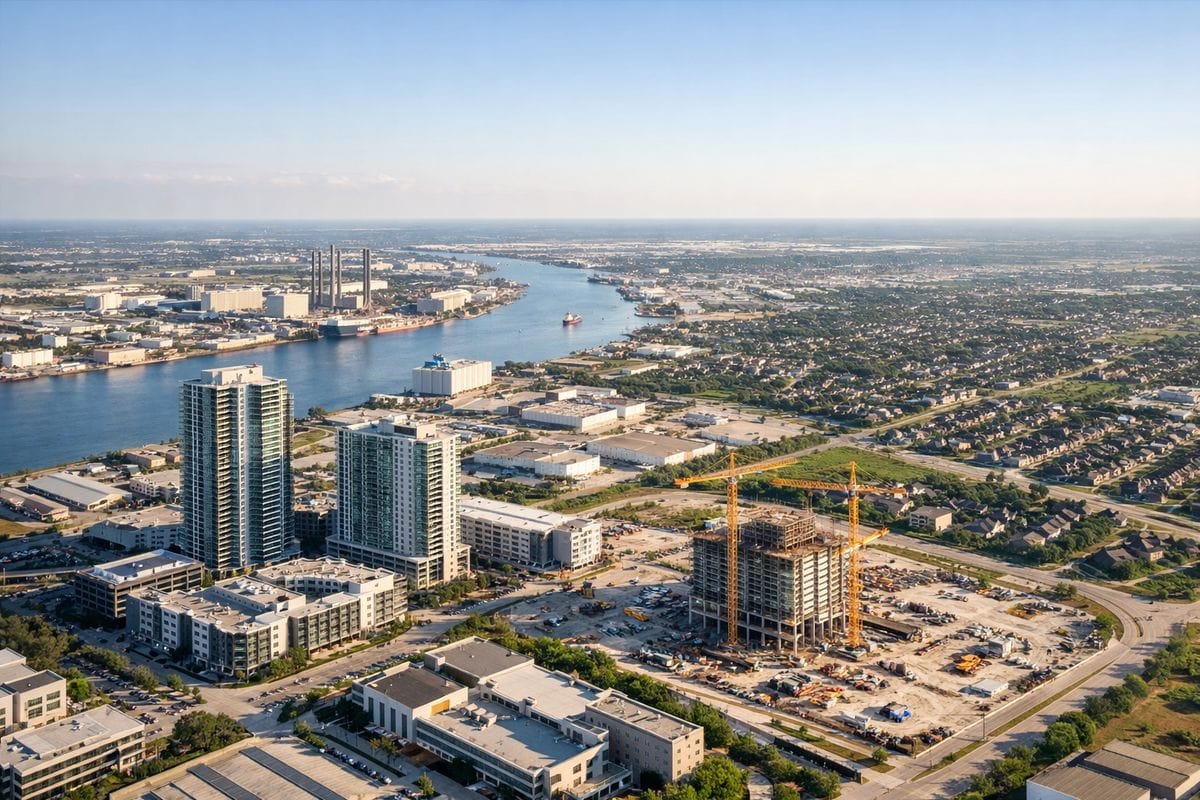
Opportunity Zones in Plain English
An Opportunity Zone is a census tract selected under federal law to attract long-term private investment into undercapitalized communities. A Qualified Opportunity Fund, usually called a QOF, is the investment vehicle that receives eligible capital gains and deploys that capital into qualifying property or operating businesses inside those tracts.
Texas did not create the tax incentive. This is a federal program administered through federal tax law and supported by federal mapping and guidance, including HUD resources (HUD Opportunity Zones). Texas mainly serves an economic-development role by promoting the program, publicizing eligible areas, and encouraging investment activity through the Governor’s Office and related development initiatives (Texas Governor’s Office Economic Development).
That distinction matters because investors routinely confuse state promotion with state compliance. Texas can highlight opportunity. Texas does not rewrite the federal qualification tests.
The Four Core Terms You Need to Know
An Opportunity Zone is the designated census tract itself. If the tract is not qualified, the deal is not an OZ deal. Address-level assumptions are not enough. Parcel verification against tract boundaries is mandatory.
A Qualified Opportunity Fund is the entity that accepts eligible capital gains and invests at least 90 percent of its assets in qualified Opportunity Zone property. For real estate, that usually means a sponsor-formed fund for one asset, a multi-asset program, or a joint venture structure set up specifically for OZ capital.
Qualified Opportunity Zone Business Property is the actual business-use property held by a qualifying business or fund. In practical real estate terms, that includes new construction or improved property used in a trade or business inside the zone, assuming all related rules are satisfied.
Substantial improvement is the rule that usually governs existing buildings. If you buy an existing structure, you generally need to invest enough in the building, not the land, to double the building basis over the applicable period. That is why old warehouse conversions, apartment rehabs, and adaptive reuse projects show up so often in OZ planning.
How the Tax Benefits Work at a High Level
The tax framework is straightforward at the strategy level, even though the legal drafting gets technical. You can invest eligible capital gains into a QOF within the required contribution window, defer recognition of that original gain until the earlier of a taxable inclusion event or the current federal deadline under existing law, and potentially eliminate federal tax on post-investment appreciation if the OZ investment is held long enough and sold properly.
Current law no longer offers the old 5-year and 7-year basis increase timing benefits that were tied to the original 2026 recognition schedule. Those dates have passed for new investors. What still matters now is deferral of eligible gains under current rules and the long-term exclusion of post-investment appreciation for qualifying holdings that meet the 10-year standard under the statute.
For decision-making, that means your model needs to separate three value buckets: the deferred tax value on the original gain, the operating return from the real estate itself, and the tax-free upside on future appreciation if your exit is handled correctly. If one of those buckets is missing, the OZ story gets weaker fast.
How Texas Fits Into the Federal Opportunity Zone Program
Texas participated in the original federal designation process by nominating qualifying census tracts, which were then certified at the federal level in 2018. Since then, the state has treated Opportunity Zones as part of a wider economic-development message: growth, business relocation, infrastructure spending, and targeted place-based investment.
For investors, the operational point is clear. Texas can help identify markets, spotlight development corridors, and frame investment narratives. Federal agencies and federal tax rules still control whether your capital qualifies. HUD provides tract mapping and community information, while the IRS governs fund and tax compliance (HUD mapping resources, IRS Opportunity Zones FAQs).
That separation matters when marketing materials get aggressive. A tract being promoted by a local economic-development office does not mean your entity structure, testing dates, use of proceeds, or improvement budget automatically satisfy OZ standards.
Texas Opportunity Zone 1.0 and 2.0 Context
Opportunity Zone 1.0 refers to the original designation framework created under the 2017 federal tax law and implemented beginning in 2018. Those designations are the active base map investors use today. Texas continues to provide informational resources on that original footprint through state-linked materials and public mapping references (Texas Opportunity Zone information).
Opportunity Zone 2.0 is a policy discussion, not the active rulebook for underwriting current deals. Proposed changes have circulated around new tract designations, tighter reporting, broader community accountability, and updated eligibility standards. None of that should drive current capital deployment unless and until enacted.
The recommendation is to underwrite to active law only. If future legislation improves the program, that is upside. If your deal only works because of a proposal, it does not work.
What Texas Growth Data Signals for Investors
What the field data shows is that Texas keeps producing the underlying demand drivers real estate investors need: labor-force growth, business expansion, and public spending that improves project feasibility. The state has reported historic highs in total labor force and Texans working, a direct signal that income-producing property has a larger base of household and business demand to draw from (Texas labor force and employment updates).
Public funding matters too. Texas has highlighted large-scale development support, including $1.4 billion in federal funding for Rural Texas Strong projects, which points to roads, utilities, resilience, and community facilities reaching areas that private capital often ignored before (Rural Texas Strong funding). That kind of spending changes absorption assumptions.
For real estate, these signals matter in three ways. They support rent growth where jobs are expanding. They improve redevelopment demand where infrastructure upgrades reduce friction. And they strengthen exit planning because more capital chases markets with visible public commitment.
Where Opportunity Zones Are Located Across Texas
Texas Opportunity Zones are spread across major metros, secondary cities, border trade corridors, Gulf Coast markets, and rural communities. That reach is a strength, but it also creates a trap: OZ designation is not a substitute for location quality.
Some tracts sit next to universities, hospitals, ports, transit projects, and job centers. Others sit in places with weak household formation, flood exposure, slow permitting, or no credible tenant pipeline. Same tax label, very different investment outcome.
Major Metro Opportunity Zone Markets
Houston has some of the most active Texas OZ development activity, especially in Third Ward, the East End, and selected industrial-adjacent corridors near the Ship Channel. These tracts attract multifamily, mixed-use, and industrial repositioning because the city combines port logistics, medical employment, university adjacency, and deep redevelopment inventory.
Dallas-Fort Worth offers strong OZ activity in southern Dallas, West Dallas, and select infill tracts tied to logistics and workforce housing demand. Southern Dallas benefits from industrial expansion and freight access. West Dallas continues to draw attention for redevelopment and neighborhood repositioning, though pricing discipline is mandatory because appreciation expectations have already moved ahead of fundamentals in some pockets.
Austin’s east side remains one of the most watched OZ redevelopment geographies in the state. Infill residential, mixed-use, and small-format commercial projects have drawn sustained capital because employment growth and land constraints support long-term demand. The catch is straightforward: entry basis can erase the OZ advantage if acquisition pricing assumes perfect execution.
San Antonio’s west side and selected urban-core corridors offer a different profile, often with better basis and stronger value-add economics. Here, the play is less about speculative appreciation and more about disciplined redevelopment near medical, education, and civic anchors.
El Paso deserves more attention than it gets. Border trade, logistics, manufacturing, and distribution support real demand in select Opportunity Zone tracts, especially where highway and customs-related infrastructure improve industrial feasibility.
Secondary and Rural Texas Opportunities
Secondary and rural Texas markets work when public investment and local industry create visible income growth. That usually means logistics routes, energy activity, tourism demand, military presence, health care expansion, or workforce initiatives that support stable occupancy.
In practice, that includes smaller cities near interstate corridors, legacy downtowns receiving streetscape or utility upgrades, and rural communities tied to broadband, resilience, or industrial recruitment efforts. The Rural Texas Strong funding signal matters here because it often points to areas where development friction is being reduced through infrastructure upgrades.
These markets require sharper underwriting because exit liquidity is thinner. But thinner competition can improve basis, and strong local demand with low replacement supply often produces better cash flow resilience than crowded metro trades.
How to Use Texas Opportunity Zone Maps and Data Tools
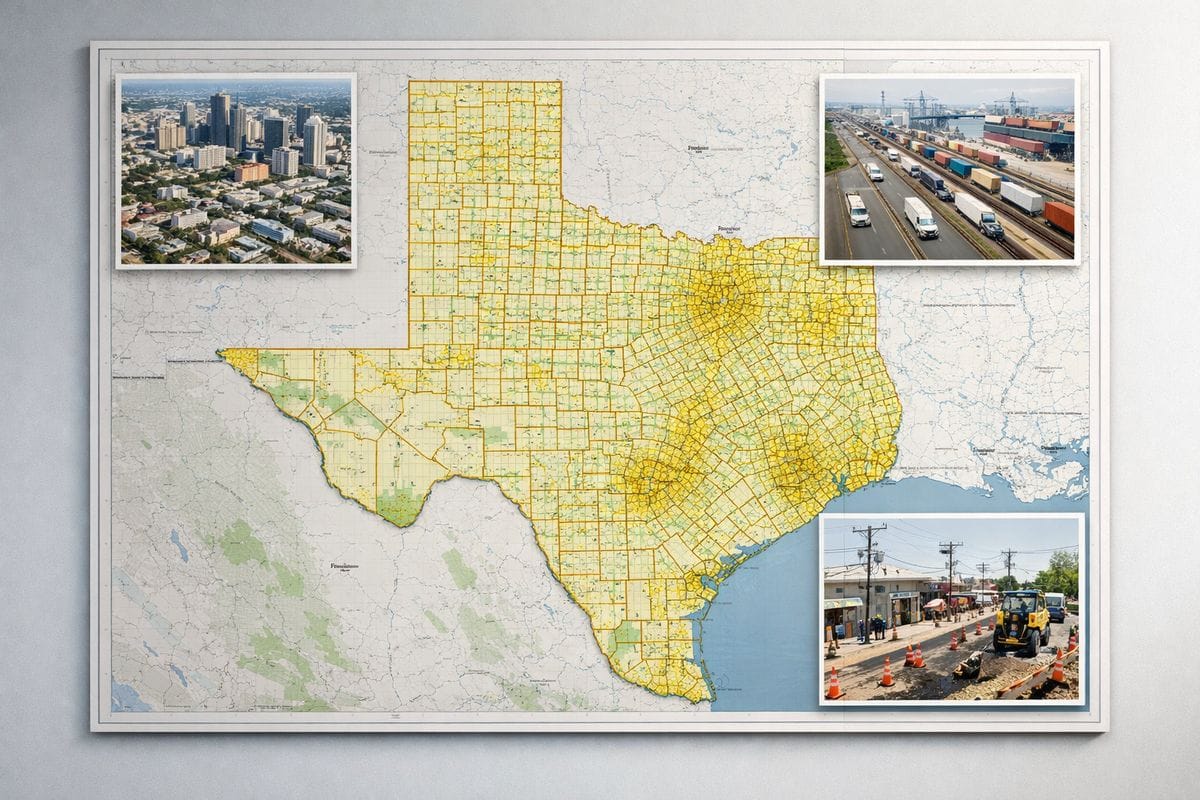
Start with the HUD Opportunity Zones map and toolkit, which remains the most practical federal-facing place to confirm tract boundaries and review census-based context (HUD Opportunity Zones map tools). Search by address, then zoom in until you can confirm the exact census tract overlay.
Do not stop at the address match. Cross-check the census tract number itself. Then verify parcel boundaries against county appraisal district maps, municipal GIS layers, zoning maps, and flood maps through FEMA or local planning portals. If a parcel straddles tract boundaries, the legal footprint matters.
For Texas-specific searching, use state-linked Opportunity Zone resources from the Governor’s Office alongside local economic-development maps and planning documents (Texas Opportunity Zones resource page). Then add one more layer: nearby public investment plans. Bond-funded streets, utility work, transit upgrades, hospital expansions, and campus projects often do more for rent growth than the OZ label itself.
The Five Real Estate Strategies That Fit Texas Opportunity Zones
Based on analysis of actual OZ deal flow, five strategies produce the clearest fit in Texas: ground-up development, substantial-improvement value-add, workforce and affordable housing, commercial and industrial repositioning, and operating businesses tied to real estate. Each strategy creates value differently, but the common thread is active business use and long-term hold potential.
Ground-Up Development
Ground-up development is often the cleanest OZ strategy because new construction typically satisfies the original-use standard without forcing you into complicated improvement math. Multifamily, build-to-rent, industrial, mixed-use, and hospitality all show up in Texas OZ pipelines for that reason.
Texas is particularly well suited to this approach because fast-growing metros and secondary cities still have redevelopment corridors where basis is manageable and absorption is real. When the site sits in a strong tract and the capital stack is controlled, ground-up development gives you a clear path from qualifying investment to tax-free appreciation on a 10-year exit.
Value-Add and Substantial Improvement Projects
Existing buildings can work extremely well, but only if the substantial-improvement test is planned from the first underwriting pass. The building basis, not the land, drives the improvement target. That changes your purchase allocation, your capex schedule, and your hold assumptions.
This is where investors get sloppy. A sponsor buys an old property in a designated tract, assumes renovation equals qualification, and discovers too late that the numbers do not meet the test. The recommendation is to model substantial improvement before signing the purchase agreement, not after closing.
Texas offers strong value-add inventory for this strategy, especially older apartment stock, warehouse buildings, neighborhood retail, and mixed-use assets in legacy urban districts.
Workforce and Affordable Housing
Housing is one of the strongest OZ fits in Texas because the state keeps adding residents and jobs, and many qualifying tracts sit near employment corridors where attainable rents are in short supply. Workforce housing produces durable demand, especially in metros where replacement cost keeps pushing market rents higher.
Keep the compliance distinction clean. Opportunity Zone rules do not equal affordable-housing rules. A project can qualify as an OZ investment without using low-income housing credits, and a housing project with affordability restrictions still needs to satisfy OZ structure and timing requirements separately.
From an ROI standpoint, workforce housing often wins because occupancy resilience is stronger, tenant demand is broader, and exit demand from institutional or regional buyers is deeper than many niche categories.
Commercial and Industrial Repositioning
Commercial and industrial OZ deals work best when the asset serves an obvious local need. That includes warehouse conversions, flex-industrial, neighborhood retail resets, service-commercial centers, and small-bay industrial in underinvested corridors.
Texas gives this strategy room to work because freight movement, business expansion, and population growth keep producing demand for practical space. In many OZ tracts, the best commercial deal is not a flashy mixed-use concept. It is a correctly sized industrial or service asset that fits the submarket.
Tenant-retention upside matters here. A repositioned property that improves parking, access, loading, utilities, and facade quality can unlock NOI growth quickly if nearby supply is limited.
Operating Businesses Tied to Real Estate
Some OZ investments are not just about owning property. They involve an active operating business that uses real estate, such as hospitality, self-storage operations with active business components, manufacturing, or service businesses occupying qualified property.
In these structures, lease treatment, entity layering, and active business requirements matter more than most investors expect. If your investment thesis depends on a business operating inside the tract rather than passive real estate ownership alone, fund structure becomes central, not secondary.
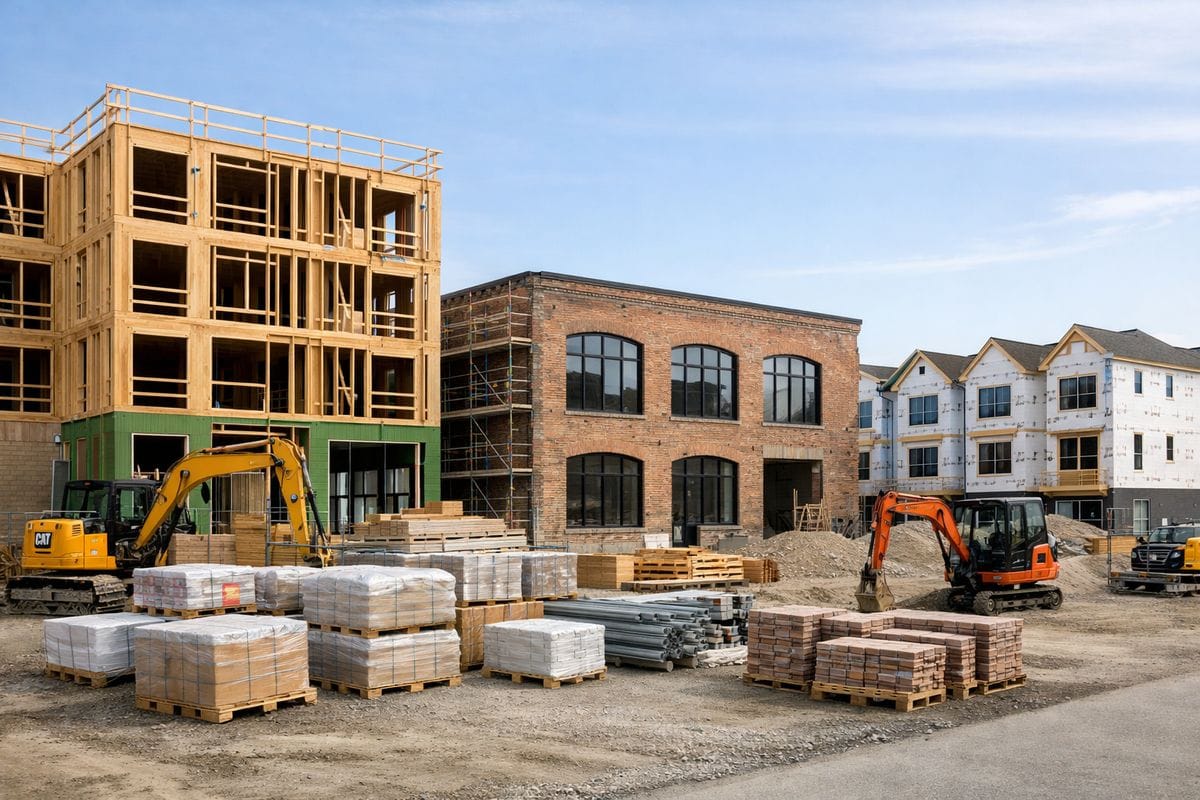
Eligibility Rules That Determine Whether a Texas Deal Qualifies
The tax benefit depends on exact rule satisfaction. Economic-development intent does not save a noncompliant deal. A property in a Texas Opportunity Zone only becomes a qualifying OZ investment if the gain, fund, timing, assets, and operating structure all line up.
Eligible Gains and the Investment Timeline
Only eligible capital gains can be invested for OZ tax treatment. The contribution window is strict, and timing errors destroy value immediately. If you miss the deadline to contribute gain proceeds into the QOF, the core tax benefit is gone.
This is where transaction planning has to start before disposition of the asset generating the gain. Sale date, recognition date, entity-level gain allocation, and investor-level contribution timing need to be mapped in advance.
Qualified Opportunity Funds: Structure and Purpose
A QOF is generally formed as a corporation or partnership for federal tax purposes and self-certifies by filing the required tax form with the IRS. That sounds simple. The actual challenge is governance.
For a single-asset deal, your fund documents still need proper capital account treatment, ownership terms, compliance controls, and exit language. For joint ventures and sponsor-led pooled vehicles, governance quality directly affects tax outcome and investor confidence.
The 90% Asset Test
At the fund level, 90 percent of assets must consist of qualified Opportunity Zone property, measured on testing dates. This is not a soft target. Construction delays, idle cash, and sloppy deployment schedules can trigger penalties and strain the entire investment structure.
That is why development timelines must be matched to testing dates before the fund accepts capital. The asset test is not just a tax rule. It is an operations rule.
Original Use and Substantial Improvement
Real estate usually qualifies through original use or substantial improvement. New construction generally satisfies original use more cleanly. Existing buildings need the improvement analysis.
Land is excluded from the substantial-improvement calculation, and that single rule changes underwriting in a big way. In a land-heavy acquisition, your building basis may be much smaller than the total purchase price, which can make the required improvement threshold more achievable. It also means lazy all-in budgeting creates false assumptions.
Working Capital Safe Harbor for Development Deals
The working capital safe harbor is one of the most useful provisions for development-oriented OZ investing. It allows staged deployment of capital held by a qualifying business entity if the funds are tied to a written plan and schedule for development, construction, or substantial rehabilitation.
For Texas development deals, this safe harbor often determines whether a project stays compliant during entitlement, construction, and lease-up. Without it, normal development timing can create asset-test pressure before the project is physically producing qualified property.
How to Underwrite a Texas Opportunity Zone Real Estate Deal
The recommendation is to underwrite every OZ deal twice. First, underwrite it as if no tax benefit exists. Second, layer in the Opportunity Zone economics and compliance requirements. If the first model fails, the second model does not rescue it.
The Three Underwriting Layers
The first layer is tract quality. You need to know whether the location supports tenant demand, public safety, transportation access, and future liquidity.
The second layer is project economics. That includes basis, capex, rent assumptions, taxes, insurance, lease-up, financing costs, and exit cap realism.
The third layer is compliance fit. That means gain timing, fund structure, original use or substantial improvement, testing dates, and hold-period planning. Weakness in any one layer is enough to kill the deal.
Market Drivers That Matter Most in Texas
Population inflows and job concentration drive rent growth. Infrastructure spending reduces friction. Landlord-friendly operating conditions support execution speed. Local permitting pace affects time-to-value. Property tax burden influences holding-period returns more than many out-of-state investors expect.
Texas is strong on growth and business climate, but property tax underwriting must be disciplined. A redevelopment win can disappear if reassessment, insurance escalation, and operating expense inflation are ignored.
Building the Tax-Adjusted Return Model
Your model should include the value of deferred gain treatment, projected post-investment appreciation, operating cash flow, refinance assumptions, and sale timing. It also needs a downside case where compliance fails or the hold period shortens.
That downside case matters. If the project exits early, misses qualification, or suffers deployment problems, your tax-adjusted IRR changes immediately. Based on review of actual OZ underwriting practices, the strongest models treat tax benefits as upside enhancement, not as the core source of return.
Asset Classes With the Strongest Fit in Texas Opportunity Zones
Not every property type performs equally inside Texas OZ tracts. The best fit comes from asset classes that benefit from demographic growth, infrastructure access, and realistic long-term hold demand.
Multifamily and Build-to-Rent
Housing leads OZ activity across Texas because demand is broad and persistent. In tracts near employment growth, hospitals, distribution hubs, and universities, multifamily and build-to-rent projects often achieve the best balance of compliance fit and operating durability.
Attainable rents are the target. Luxury assumptions break faster in transitional corridors. Workforce-oriented product with durable household demand produces better occupancy and clearer exits.
Industrial and Logistics
Industrial and logistics assets fit Texas especially well because the state remains a national center for freight movement, manufacturing, and distribution. Tracts near highways, ports, rail connections, and border trade routes deserve priority.
This is where El Paso, Houston, South Dallas, and selected Gulf Coast corridors become especially attractive. Demand is often less headline-driven than multifamily, but the income profile can be stronger if the location supports real tenant use.
Mixed-Use and Main Street Redevelopment
Mixed-use works when public improvements and anchor institutions create daily demand. Downtown districts, medical corridors, university-adjacent neighborhoods, and civic-centered redevelopment zones are the strongest candidates.
Older commercial districts in Houston, San Antonio, Fort Worth, and smaller Texas cities can produce excellent OZ outcomes when historic buildings, walkable frontage, and municipal improvements line up.
Hospitality, Senior Housing, and Niche Plays
These can work, but the underwriting standard should be higher. Hospitality depends on sustained demand and operator discipline. Senior housing depends on local demographics, referral networks, and staffing realities. Specialized assets need more than a tax incentive to succeed.
If the demand case is not obvious without OZ treatment, pass.
Texas Incentives and Programs That Can Strengthen Opportunity Zone Projects
One of the best Texas advantages is incentive stacking. A well-structured OZ investment can sit alongside other programs that improve project feasibility, reduce cost, or strengthen tenant demand. The goal is not complexity for its own sake. The goal is better ROI and shorter time-to-value.
Texas Historic Tax Credits
Historic rehabilitation in older Texas urban cores and legacy commercial districts can pair well with OZ capital. If you are redeveloping a qualified historic structure in an eligible tract, state historic credit economics can materially improve the capital stack while OZ treatment enhances long-term appreciation.
This pairing is especially relevant in older downtowns, warehouse districts, and traditional main street corridors where adaptive reuse creates stronger rents than ground-up alternatives.
Texas Enterprise Zone Program and Local Incentives
Enterprise-focused programs, local tax abatements, fee waivers, and municipal economic-development agreements can lower project costs or strengthen tenant demand. These are separate programs with separate rules. They do not create OZ eligibility, but they can improve deal performance.
The business outcome is better basis control. In a tight development spread, waived fees, infrastructure participation, or tenant-focused local support often make the difference between a marginal return and an investable one.
Infrastructure and Rural Development Funding Signals
The Rural Texas Strong funding signal should be treated as a location-screening tool, not just a headline. Roads, utilities, broadband, drainage, and community facilities change feasibility in rural and secondary markets.
When public dollars reduce development friction, private OZ capital has a cleaner path into projects that were previously too difficult to execute. That is especially useful for workforce housing, neighborhood retail, and industrial projects outside the major metros.
Risks, Compliance Failures, and Red Flags
Not every tract is investable. Not every OZ deal deserves capital. Tax benefits do not protect you from bad basis, weak demand, poor documentation, or a forced exit.
The Seven Most Common Investor Mistakes
The pattern is consistent. Investors fail to verify tract status. Investors overpay for weak locations. Investors misunderstand substantial improvement. Investors accept weak fund documentation. Investors miss deployment timing. Investors assume tax benefits rescue bad economics. Investors ignore exit planning.
Every one of these errors reduces ROI. Several of them destroy the entire investment thesis.
Location Risk Inside Qualified Tracts
OZ designation does not create demand. Crime patterns, school quality, flood exposure, political resistance, infrastructure gaps, and tenant-base weakness still control your operating reality.
This matters in Texas because some qualifying tracts sit in areas with strong redevelopment momentum, while others remain structurally weak despite the designation. In Houston, for example, flood analysis is mandatory. In urban infill tracts across Dallas or Austin, entitlement and neighborhood resistance can matter more than the tract label.
Regulatory and Tax Change Risk
Current law governs current underwriting. Future IRS guidance, reporting changes, or legislative updates can alter administration and compliance expectations. Proposed OZ 2.0 reforms are worth monitoring, but they should not be built into present value.
The recommendation is to document against active rules, monitor updates through the IRS and HUD, and avoid any investment memo that treats proposed policy as bankable economics.
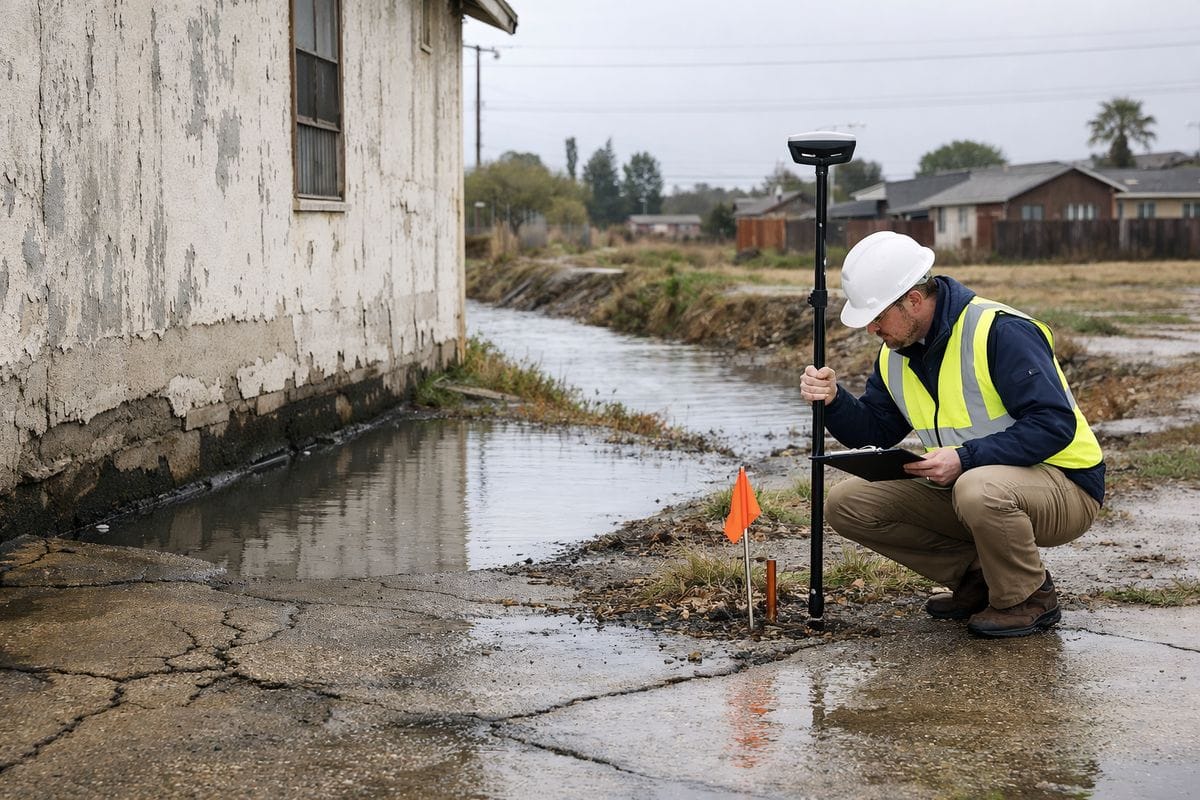
A Step-by-Step Process to Execute a Texas Opportunity Zone Investment
Successful OZ investing follows a disciplined sequence. That sequence protects timing, preserves qualification, and keeps the project focused on business outcomes rather than tax marketing.
Phase 1: Verify Tract and Gain Eligibility
Confirm the census tract on the HUD map. Confirm the parcel. Confirm zoning. Confirm flood exposure. Confirm that the gain is eligible and that the contribution window is still open.
Do this before spending heavily on legal, design, or due diligence. A deal that fails at this stage should die quickly.
Phase 2: Build the Fund and Transaction Structure
Set up the QOF and any lower-tier entities. Align operating agreements, capital accounts, sponsor economics, compliance calendars, and testing dates before closing.
For sponsor-led deals, this phase also determines whether investors trust the structure. Good governance is not cosmetic. It is part of the tax outcome.
Phase 3: Execute Development, Rehabilitation, or Stabilization
Track deployment carefully. Match construction progress to compliance deadlines. Coordinate cost segregation, draw schedules, and documentation. Preserve written plans for working capital safe harbor treatment where applicable.
This phase is where most unforced errors happen. Discipline here protects both qualification and return.
Phase 4: Hold, Monitor, and Exit for Maximum Tax Value
Long-term holding is the entire point of the program. During the hold, conduct annual compliance review, monitor entity operations, plan refinancing carefully, and prepare the eventual sale structure well in advance.
If your intended tax treatment depends on a 10-year holding strategy, your exit documents and transaction steps need to support that result, not improvise it.
Frequently Asked Questions About Texas Opportunity Zones for Real Estate Investors
How do you confirm a property is in a Texas Opportunity Zone?
Use the HUD Opportunity Zones map, search the address, and verify the exact census tract overlay. Then cross-check the tract number against county parcel maps and local GIS records. Address-only searches are not enough because parcels can sit near tract boundaries.
What types of real estate projects qualify?
Ground-up development, redevelopment, and substantial-rehabilitation projects are the most common fits. New construction often qualifies more cleanly through original use, while existing buildings need to satisfy substantial-improvement requirements.
Are Texas Opportunity Zones better for development or for buying stabilized rentals?
Development and substantial-improvement projects usually fit the rules better than buying stabilized rentals. A stabilized acquisition often lacks the original-use or improvement profile needed to maximize OZ treatment unless the business plan includes major redevelopment.
Can Opportunity Zone benefits apply to rental property owners?
Yes, if the investment is structured through a qualifying QOF and the property or business use satisfies OZ rules. Long-term hold strategy, entity structure, and compliance tracking are central. Passive ownership without proper structuring does not secure the tax result.
What happens if a fund fails compliance tests?
A failed asset test can trigger penalties and reduce expected tax value. More serious structural failures can undercut the intended OZ treatment altogether. The direct impact is lower tax-adjusted return and, in the worst case, a standard taxable investment with extra complexity but no added benefit.
The Recommendation: How to Decide if a Texas Opportunity Zone Deal Deserves Capital
The recommendation is three-part and decisive.
Invest only where tract quality supports rent growth, occupancy durability, and a credible exit. A designated tract in Houston Third Ward, East End, southern Dallas, West Dallas, East Austin, west San Antonio, or an El Paso logistics corridor can justify attention because active development and employment drivers already exist. A weak tract with no demand depth does not become investable because of a tax label.
Invest only where OZ compliance fits cleanly. If the gain timing is off, the fund documents are weak, the substantial-improvement math does not work, or the development schedule cannot support testing dates, move on. Forced compliance is not a strategy.
Invest only where the tax benefit improves an already strong deal. That is where Texas opportunity zones real estate delivers its best business outcome: higher tax-adjusted ROI, better downside control, and clearer long-term value creation in a state that combines federal OZ upside with zero state tax drag.