

A living trust rental property strategy solves one problem very well: transfer after death. It does not solve lawsuits, tenant claims, or creditor risk. If the goal is clean succession, faster administration, and continuity during incapacity, a living trust belongs in the conversation. If the goal is protection from being sued, it is the wrong tool.
What a Living Trust Does for Rental Property
A living trust is a legal container that holds title to assets during life and directs what happens to those assets after death or incapacity. In this discussion, the term almost always means a revocable living trust, which means control stays with you while you are alive and competent. You can amend it, revoke it, refinance property held in it, and move assets in and out.
That flexibility is exactly why it works for estate planning and exactly why it fails as asset protection.
For rental property, the core benefit is administrative. A funded living trust keeps titled assets out of probate, lets a successor trustee step in if you become incapacitated, and gives written instructions for management and distribution. The tradeoff is simple: better succession, no liability shield, no automatic tax win.
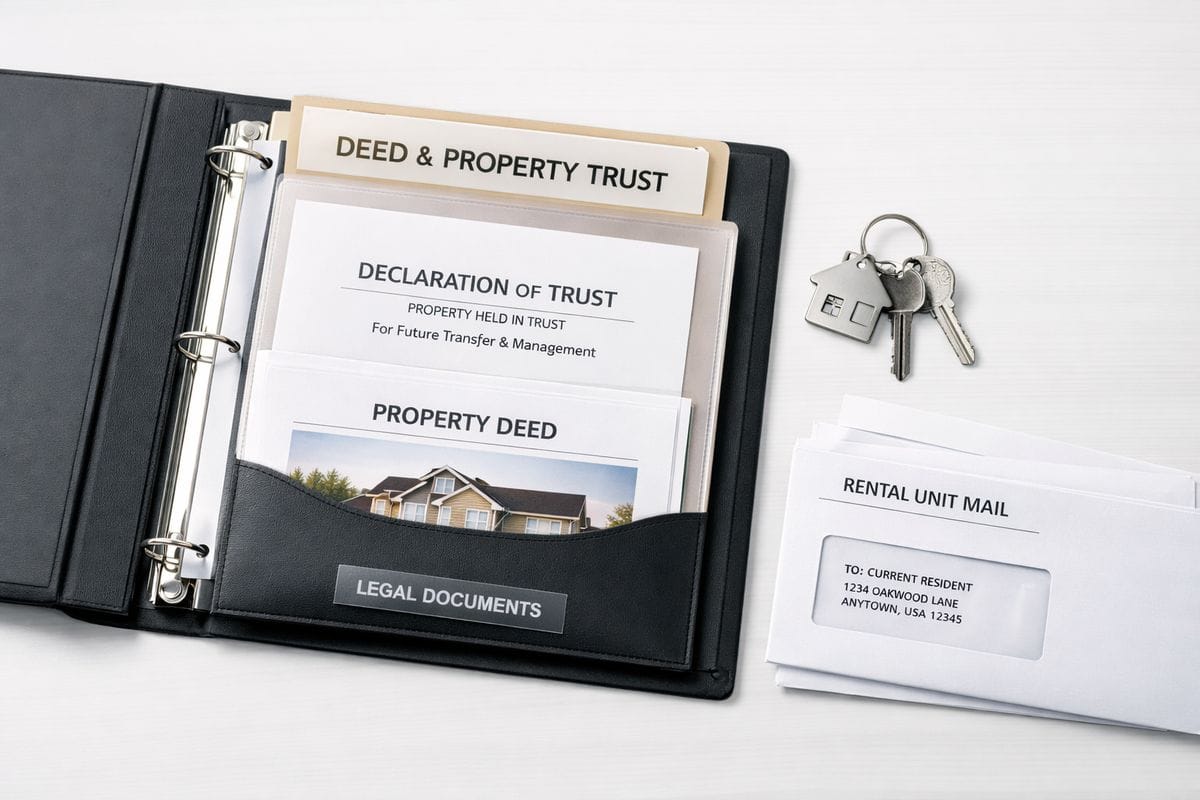
The Three Decision Drivers: Probate, Control, and Liability
Based on analysis of common investor structures, three drivers determine whether this move improves ROI or just adds paperwork: probate, control, and liability.
Probate avoidance and transfer efficiency
If rental property stays in your individual name and you die, that property usually passes through probate before heirs gain clean authority to sell it, refinance it, or operate it. In Texas, probate is often more efficient than in states with heavier court supervision, but it still takes time, legal fees, filings, and title work. A realistic planning comparison is living trust setup at roughly $1,500 to $3,000 versus probate costs that often land between $5,000 and $15,000 or more, with a timeline of 6 to 18 months depending on complexity.
A properly funded living trust avoids that bottleneck for titled property. Your successor trustee can manage the asset under the trust terms, collect rent, pay vendors, and eventually transfer or distribute the property without opening a full probate proceeding for that asset. That matters more when there are multiple heirs, blended families, or out-of-state real estate.
Management continuity during incapacity
Death planning gets the attention. Incapacity planning is often the more immediate business issue.
Rental property still needs decisions every week: leases, repairs, insurance renewals, vendor payments, security deposits, tax notices. If title sits in a funded living trust, a successor trustee can step in without a guardianship proceeding or court order. That keeps the property operating and preserves cash flow.
Think of the trust as a relay baton. Ownership does not stop and wait for court permission. It passes to the next authorized manager under rules already written down.
Liability exposure and lawsuit risk
This is where owners get burned by bad advice. A revocable living trust does not protect rental property from tenant claims, creditor judgments, slip-and-fall lawsuits, or personal guarantees. Because you keep control and can revoke the trust at any time, creditors can generally reach trust assets just as if you still held them personally. Bar guidance is explicit that revocable trusts do not protect assets.
The recommendation is straightforward: a living trust solves the death problem. An LLC solves the lawsuit problem.
When Putting Rental Property in a Living Trust Makes Sense
The field data shows this works best when estate planning is the actual objective, not when somebody is chasing marketing claims.
You want a cleaner inheritance process
If you own rentals with adult children, multiple beneficiaries, a second marriage, or out-of-state property, a living trust creates cleaner transfer mechanics. Title passes under trust instructions, not under a scramble of probate filings and family coordination. Privacy improves too, because a trust administration is generally less public than a probate file.
This has become more relevant as rental ownership shifts toward entities and formal structures. Housing research shows non-individual ownership has grown sharply, which means informal title planning increasingly creates avoidable friction at death.
You already have an LLC structure and need estate planning on top of it
This is the highest-value use case for most investors. If rentals already sit in one LLC, several LLCs, or a Texas series LLC, the cleaner move is often to place the LLC membership interests into the trust instead of deeding every property into the trust directly.
That keeps operations where they belong, inside the entity, while the trust handles succession. If the LLC operating agreement and trust are coordinated, a successor trustee can step into the ownership role without disrupting leases, banking relationships, or property management systems. For investors sorting through the real tradeoffs of LLC ownership, this is usually the structure that separates business risk from estate administration.
You are planning for long-term family ownership
A living trust also fits long-term family ownership better than a simple will. It can name who manages the rentals, how income gets distributed, when a sale requires consent, and what happens if one beneficiary wants cash while another wants to keep the property. That is practical governance, not theory.
It also coordinates well with basis planning. The tax benefit people actually care about is usually the adjustment at death, not the trust itself. If inherited basis is part of the plan, it helps to understand how basis changes after death before moving title around.
When a Living Trust Is the Wrong Tool
Bad outcomes usually come from using a trust for a job it was never designed to do.
You want asset protection from tenants or creditors
A revocable trust gives zero lawsuit shielding. If a tenant sues over habitability, a contractor claims unpaid invoices, or a personal guarantee gets called, the trust does not wall off the property. LLCs, insurance, and umbrella coverage are the real tools here. If liability exposure is the main concern, the right starting point is what actually protects real estate holdings.
You expect tax reduction just from moving title
Deeding a rental into a revocable living trust does not change federal income-tax treatment. The trust is usually ignored for income-tax purposes while you are alive. Rental income still lands on your return. Depreciation still works the same way. Estate tax planning does not magically improve either. Even bar guidance has noted that advertised tax savings are often overstated, and the same tax planning can often be handled without a living trust.
Step-up in basis is generally tied to estate inclusion, not to the trust label alone.
You are buying a packaged trust plan sold as a universal solution
This is a major red flag. State consumer agencies have warned about free-lunch seminars and one-size-fits-all trust packages that exaggerate probate savings, asset protection, or Medicaid results. A trust sold like a timeshare is usually priced for the seller’s commission, not your business outcome.
The recommendation is blunt: use an independent estate-planning attorney, not a seminar salesperson.
Living Trust vs. LLC for Rental Property
This is the question behind most searches on this topic.
What an LLC does that a living trust does not
An LLC creates liability compartmentalization. It can hold title, sign leases, open bank accounts, receive rent, pay expenses, and isolate claims to the assets inside that entity structure. That makes it the better operating vehicle for active rentals. It is built for contracts, bookkeeping, and business separation.
What a living trust does that an LLC does not
A living trust handles succession. It avoids probate on funded assets, names who takes over during incapacity, and gives instructions for beneficiaries. Those are estate-planning benefits, not operating benefits.
The structure that fits most investors: LLC plus living trust
For most investors, the best structure is both. Hold the rental in an LLC, then place the LLC ownership interest into a living trust. That belt-and-suspenders approach is especially relevant in Texas, where LLC and series LLC planning is attractive but does nothing by itself for death or incapacity.

How to Title Rental Property Without Creating Problems
Execution matters. Sloppy transfers create more trouble than no transfer at all.
Review the mortgage, insurance, and title implications first
Check the deed of trust, title policy, and landlord insurance before moving title. Due-on-sale clauses are the issue everybody hears about. Technically, transferring title can trigger lender rights. In practice, transfers into a revocable trust for estate planning are rarely enforced when borrower obligations stay current, but that does not eliminate the need to review loan language first. Insurance also needs updating so named insureds and additional insureds match the actual ownership structure.
Decide whether to deed the property or assign the LLC interest
If the property is already in an LLC, assigning the LLC interest into the trust is usually cleaner than recording a new deed for every property. That reduces title churn and keeps property-level operations stable. Direct deeding into the trust makes more sense when you still own a small number of rentals personally and have not formed entities yet.
Coordinate trustee powers with property management realities
Trust language needs to match rental operations. The successor trustee should have clear authority to lease, renew, evict, hire contractors, pay taxes, work with property managers, and coordinate refinancing or sale activity. If the trust says little beyond “hold and distribute assets,” the person in charge ends up with title but not clear operating authority.
Texas and Multi-Property Investor Considerations
Texas changes the planning math, but not the core rule.
Why Texas investors often separate estate planning from liability planning
Texas offers favorable entity planning, including strong LLC usage and series LLC appeal. That is why many investors separate the job into two buckets: LLCs for operational risk, trusts for transfer planning. Probate in Texas is often less painful than in states with formal court-supervised administration, but avoiding probate still saves time, preserves privacy, and reduces title friction for heirs.
How scale changes the recommendation
One rental owned personally is manageable. A portfolio of 10 or more properties is an administrative system. Deeds, bank accounts, bookkeeping, manager authority, insurance endorsements, and beneficiary instructions all need coordination. As portfolios grow, informal ownership starts costing time-to-value and increasing succession risk. The recommendation becomes more decisive: formal entity planning plus formal estate planning.
Common Questions About Living Trusts and Rental Property
Does a living trust protect rental property from lawsuits?
No. A revocable living trust is not an asset-protection tool. It helps with transfer and continuity, not liability shielding.
Does putting a rental in a trust trigger taxes?
Usually no for a revocable living trust. It is generally ignored for income-tax purposes, and the transfer is usually not treated as a sale. Local transfer rules and lender requirements still need review.
Is a land trust the same as a living trust?
No. A land trust is generally a title-holding arrangement often used for privacy. A living trust is an estate-planning vehicle for management during life, incapacity, and death. If comparing the two, review how land-trust structures differ.
Should each rental property have its own trust?
No. Most owners do not need a separate living trust for each property. Separate LLCs or series structures may still make sense for liability segregation, but one living trust usually handles estate planning across the portfolio.
The Recommendation: Use a Living Trust for Transfer Planning, Not as a Liability Shield
Based on analysis of common investor outcomes, the recommendation is clear. Use a revocable living trust when the goal is probate avoidance, management continuity, and controlled inheritance. Do not use it as a lawsuit shield, a tax shortcut, or a substitute for entity planning.
For most rental property owners, the highest-value structure is an LLC-based ownership plan coordinated with a living trust and supported by proper insurance. That structure gives you the business outcome that actually matters: cleaner operations during life, cleaner control during incapacity, and cleaner transfer at death.
Frequently Asked Questions
Should a rental property be deeded directly into a living trust?
If the property is owned personally, direct deeding can work. If the property is already inside an LLC, assigning the LLC interest to the trust is usually cleaner and creates less title and operational disruption.
Does a living trust avoid probate in Texas?
Yes, for assets properly titled in the trust. That is the whole point. Without that transfer, the asset usually stays in the probate estate even if trust documents exist.
How much does a living trust cost compared with probate?
A typical living trust setup often runs $1,500 to $3,000. Probate for a rental-property estate often costs $5,000 to $15,000 or more, and the process commonly stretches 6 to 18 months.
Will a lender call the loan due after a transfer to a living trust?
The clause is technically there in many loan documents, but enforcement is uncommon when the transfer is for estate planning and the loan stays current. Loan review still comes first.
Does a living trust replace an LLC for a landlord?
No. A trust handles death and incapacity. An LLC handles operational ownership and liability separation. Those jobs are different, and combining both is usually the better design.