

One mistake in ira owned rental property management can destroy the tax treatment that made the deal attractive in the first place. The IRS does not care that the rent was strong or that the property appreciated, if the account holder crossed the line into personal use, self-dealing, or hands-on management, the tax cost can hit immediately and hard.
Why Compliance-First Management Matters for IRA-Owned Rentals
Based on analysis of how prohibited transactions arise, the biggest threat is not tenant default or a bad roof. It is operational sloppiness. An IRA-owned rental works only when ownership, money flow, and decision rights stay inside a clean control system.
That control system protects ROI in three ways. First, it preserves tax deferral or tax-free growth, depending on account type. Second, it reduces the chance of account disqualification under IRC Section 4975. Third, it gives clean records for annual valuation, custodian reporting, and any required tax filing tied to debt-financed income.
Real estate remains a major self-directed IRA asset class, and the market is not small. U.S. retirement assets exceeded $49.1 trillion at the end of 2025, with IRAs at $19.2 trillion, and real estate remains one of the most widely used SDIRA asset classes in STRATA’s 2025 investor survey. The field data shows the same pattern over and over: the investment can work, but only if the operating model is built around separation.
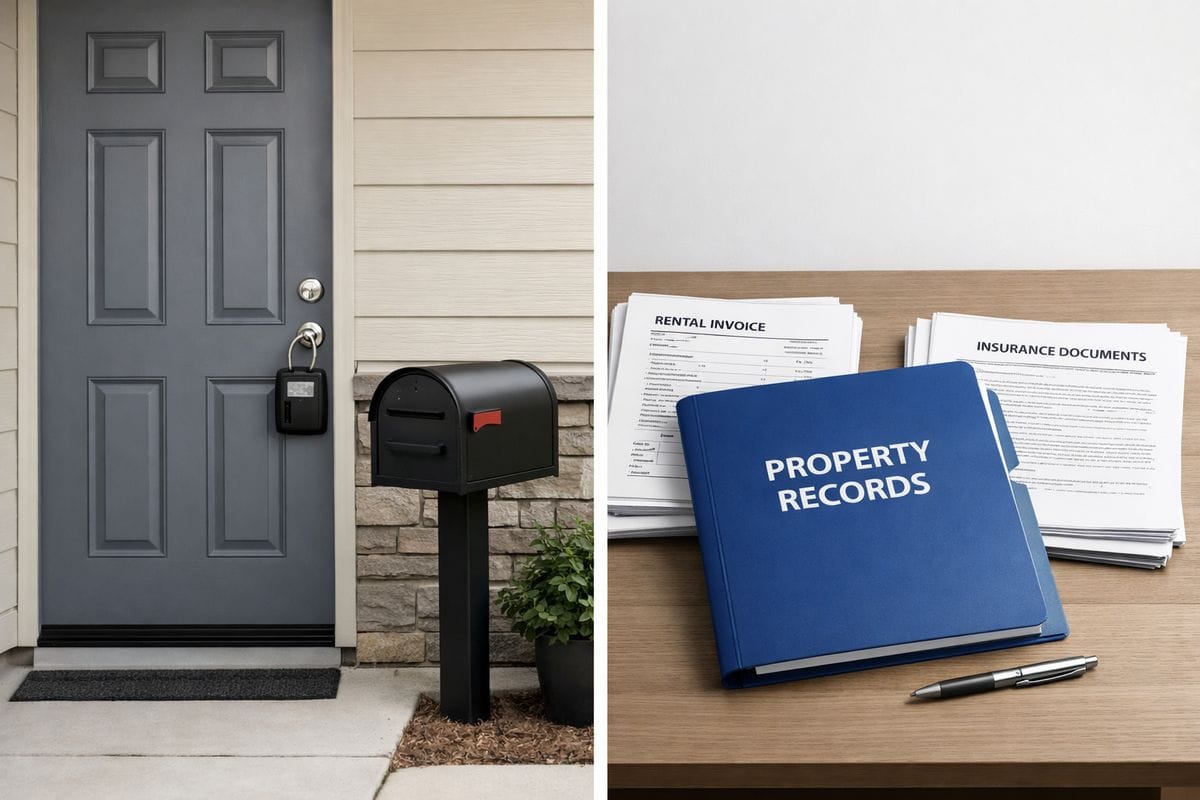
What You’ll Need Before Managing an IRA-Owned Rental Property
Before rent collection starts, the account needs the right structure, title, liquidity, third-party support, and records. Skip any one of those and the property becomes harder to manage safely.
A self-directed IRA or IRA-owned LLC with the right custodian support
A standard brokerage IRA will not handle direct real estate operations. You need a self-directed IRA custodian that permits real estate, processes invoices and contracts efficiently, and supports the structure being used. If the property sits in an IRA-owned LLC, that setup still has to be recognized and administered correctly.
Execution speed matters. A slow custodian delays contract review, repair approvals, and funding. That turns an ordinary vacancy or plumbing issue into a cash flow problem. The recommendation is to use a custodian with proven real estate workflows, not one that treats alternative assets like edge cases.
Property title vested correctly in the IRA’s name
The IRA must be the owner from contract through closing and through every operational document afterward. If an LLC is used, title must reflect the IRA-owned LLC, not your personal name. A deed that names you personally breaks the separation immediately.
The same rule applies to insurance, utility accounts where applicable, and lease paperwork. If the legal owner is wrong on paper, the operating file is already compromised.
A separate IRA cash reserve for expenses
An IRA-owned rental cannot rely on your personal checking account when a water heater fails. Taxes, insurance, repairs, management fees, HOA dues, and vacancy periods all have to be funded from IRA money. That means cash planning is not optional.
Based on review of common failures, undercapitalization causes more rule violations than most investors expect. The account runs short, an invoice arrives, and personal funds get used “temporarily.” That temporary fix is exactly what creates the problem.
A third-party property manager, contractors, and tax advisor
The safest operating structure uses independent third parties for every active function. Your property manager handles tenant screening, showings, notices, rent collection, maintenance coordination, and vendor communication. Contractors perform the labor. A real estate tax advisor reviews prohibited transaction risk, UBIT exposure, and annual reporting.
That arm’s-length structure reduces the chance that your role drifts from investor oversight into personal service. For IRA-owned rentals, that line matters more than most landlords are used to.
Core documents and tracking tools
At minimum, keep leases, management agreements, invoices, bank statements, custodian directions, insurance policies, loan documents if debt exists, and monthly reconciliations. Add a one-page compliance checklist that confirms three things each month: title is correct, money flow stayed inside the IRA, and no disqualified person used or serviced the property.
Step 1: Confirm That the IRA Owns the Property and Not You
The first control point is simple: the IRA owns the asset, not you. In a self-directed IRA, the IRA owns the property, not the investor personally.
Verify title, purchase documents, and EIN details
- Pull the deed, settlement statement, operating agreement if using an LLC, and the bank account setup.
- Confirm the buyer and owner name match the IRA or IRA-owned LLC exactly.
- Verify the EIN used for the operating account belongs to the correct entity structure.
Success looks like a clean paper trail from acquisition through current banking. No personal name as owner. No hybrid wording. No “doing business as” shortcuts.
Check that every contract names the IRA or IRA-owned LLC correctly
- Review the property management agreement, leases, insurance policy, and all open vendor contracts.
- Confirm the owner named in each document matches title.
- Replace any document that names you personally.
The contract standard is strict because commingling usually starts on ordinary paperwork, not on dramatic transactions. If the lease says you are the landlord, fix it before the next rent cycle.
Review any legacy mistakes before collecting rent
- Check for old insurance endorsements, refinances, transferred utility accounts, or repair contracts opened in your name.
- Document each error and the correction date.
- Have tax counsel review anything involving title, financing, or personal payments.
Catching a mistake before additional rent or expense activity occurs limits downstream reporting problems. Delay makes cleanup harder.
Step 2: Build an Arm’s-Length Management Structure
This is where many experienced landlords struggle. Hands-on management feels efficient. In an IRA, it is the wrong model.
Hire an independent property manager
- Hire a licensed, independent property manager with authority to handle leasing, tenant communication, inspections, notices, rent collection, and vendor coordination.
- Set management fees in the agreement, usually 8 to 12 percent of gross rent.
- Route all day-to-day issues through that manager.
Yes, the fee reduces return. But the fee buys compliance distance. That is a far better trade than risking the IRA.
Define what you can approve versus what you cannot do
- Limit your role to investment oversight: hire or fire the manager through the custodian, approve major capital expenditures, and review monthly reports.
- Do not screen tenants personally, show units, meet prospects, coordinate repairs, negotiate directly with contractors, or collect rent.
- If you visit the property, do it only as a passive investor observing condition. Do not touch tools, direct labor, or interact like the operator.
Here is the practical standard: if the task looks like landlord work, do not do it.
Put vendor relationships in writing
- Require written management agreements, vendor scopes, payment instructions, and approval limits.
- Set a repair threshold, for example, manager approval up to $500 and custodian-directed approval above that amount.
- Include an emergency clause that authorizes immediate habitability or damage-control repairs without waiting for slow custodian turnaround.
That last point matters. Emergencies do not pause for paperwork. The property manager should have written authority to order urgent repairs from IRA funds already held in reserve.
Step 3: Route All Income Directly Back to the IRA
Every dollar tied to the property must return to the IRA or IRA-owned LLC. All rental income must go directly back into the IRA or IRA-owned LLC, and all expenses must be paid only from IRA funds.
Set up the correct deposit account
- Open the operating account in the IRA-owned LLC or use the custodian-directed account structure.
- Deposit rent, late fees, pet fees, application-related income where permitted, and sale proceeds only into that account.
- Ban personal accounts from the workflow entirely.
If one rent payment lands in your personal account, the money trail is already contaminated.
Handle security deposits and reimbursements correctly
- Hold security deposits under the same entity structure required by state law and your management setup.
- Deposit tenant damage reimbursements and insurance claim proceeds back to the IRA account.
- Do not treat any reimbursement as personal repayment.
The source of the money does not change the rule. If it came from the IRA asset, it goes back to the IRA.
Use monthly statements to verify clean money flow
- Match the manager’s monthly report to the bank activity and custodian records.
- Confirm every rent receipt posted to the IRA-side account.
- Investigate any transfer, refund, or chargeback that touched the wrong account.
A monthly reconciliation is the checkpoint that keeps small posting errors from turning into prohibited transaction problems.
Step 4: Pay Every Property Expense Only From IRA Funds
This is the second core money rule. No personal funds. No personal credit card. No “just this once.”
Pay routine expenses through the manager, LLC, or custodian process
- Set routine bills to be paid by the manager from the IRA operating account or through the custodian’s payment process.
- Include taxes, insurance, utilities, HOA dues, repairs, and loan payments where applicable.
- Keep invoices and proof of payment for each disbursement.
This workflow should feel boring. Boring is good. Boring survives audits.
Maintain an operating reserve inside the IRA
- Hold at least 6 to 12 months of expected property expenses inside the IRA structure.
- Increase the reserve if the property is older, seasonal, highly leveraged, or operating as a short-term rental.
- Review reserve levels quarterly.
The data shows liquidity drives compliance. Cash reserves prevent the panic payment from a personal account.
Use a simple reserve example with real numbers
- Start with fixed monthly costs: taxes and insurance escrow equivalent $350, HOA $75, management $180, utilities during vacancy $125, loan payment $900. Total fixed monthly outflow: $1,630.
- Add average maintenance of $170 per month and a vacancy buffer of $200. New monthly operating need: $2,000.
- Hold at least 6 months, or $12,000, inside the IRA. For an older property, 9 months, or $18,000, is the stronger number.
That reserve is not excessive. One HVAC replacement plus one vacancy can consume it quickly.

Step 5: Avoid Prohibited Transactions and Disqualified Person Traps
This is the highest-risk area. Prohibited transactions under IRC Section 4975 are what disqualify otherwise profitable arrangements.
Know who counts as a disqualified person
Disqualified persons generally include you, your spouse, parents, grandparents, children, grandchildren, and entities you control. Fiduciaries and certain service providers can also create issues. Siblings are often misunderstood here, but the safer operating stance is simple: keep related-party involvement out of the deal unless tax counsel has cleared it in writing.
Do not use, stay in, or benefit from the property personally
You cannot live in the property, vacation there, use it as an office, store materials there, or stay one night between tenants. Personal benefit is prohibited. Market rent does not fix that. Good intentions do not fix that.
Do not rent to family members who are disqualified persons
You cannot rent the property to your spouse, parents, children, grandparents, or grandchildren, even at full market rent on a clean lease. The relationship itself creates the problem.
Do not perform repairs, maintenance, or management labor yourself
You cannot paint, clean, mow, install fixtures, meet vendors, show units, or coordinate turnovers. Unpaid labor is still labor. Based on analysis of enforcement risk, this is where hands-on investors most often drift into noncompliance without realizing it.
Do not buy from, sell to, or personally guarantee debt for the IRA
You cannot sell your own property into the IRA, buy the IRA property personally, or guarantee the debt. If financing is used, it must be a non-recourse loan.
Step 6: Manage Financing the Right Way if the Property Has Debt
Leverage changes both compliance and tax outcomes. It can improve acquisition capacity and weaken after-tax returns at the same time.
Confirm the loan is non-recourse
Review the note, guaranty language, carve-outs, and closing package. The lender’s remedy must be limited to the property, not your personal balance sheet. If your signature creates personal liability, the structure is wrong.
Model UBIT and UDFI before accepting leverage
Debt-financed income inside an IRA can trigger UBIT through UDFI rules. Some industry sources describe the tax burden as potentially approaching 37% in some cases. Run the numbers before closing, not at filing time. A leveraged deal with strong pre-tax cash flow can become mediocre once tax drag and compliance cost are included.
Plan for loan payments and refinancing timelines
Map monthly debt service, reserve requirements, balloon dates, rate resets, and refinance deadlines. Then compare that schedule against expected rent and vacancy patterns. Financing works only when the IRA has enough liquidity to carry the property without personal rescue money.
Step 7: Set Rules for Leasing, Tenant Screening, and Repairs
This is the daily operating workflow. The recommendation is a written process that keeps every active task with the manager.
Approve leasing criteria in advance
- Approve screening standards, rent thresholds, deposit policies, and lease templates in advance.
- Require the property manager to run tenant screening and make placement decisions within those standards.
- Keep the lease in the IRA’s name or the IRA-owned LLC’s name.
You can approve the policy. You cannot personally screen or select the tenant.
Use third parties for showings, inspections, and turnovers
- Assign showings, move-in inspections, turnover coordination, and maintenance calls to the manager and vendors.
- Keep all tenant communication off your phone and out of your inbox.
- Use manager reports as your operational checkpoint.
That separation is what keeps an investment owner from becoming the service provider.
Establish repair approval thresholds
- Set a written threshold for routine repairs the manager can approve without delay.
- Require custodian-directed approval for capital expenditures above the threshold.
- For emergencies, authorize immediate action using pre-approved reserve funds and post-event documentation.
That emergency protocol solves the real-world problem of slow custodian response. The repair still gets handled, and the payment still stays inside the IRA workflow.
Step 8: Keep Records That Survive an IRS Review
Good records do more than support tax prep. Good records prove separation.
Track income, expenses, contracts, and approvals
Save signed leases, screening reports, invoices, work orders, bank statements, insurance claims, approval emails, and year-end statements. For every major event, keep the contract, the invoice, the payment record, and the approval trail together.
Reconcile custodian, manager, and bank records monthly
Run a monthly three-way match between the manager report, the operating account, and custodian activity. That process catches commingling, missing invoices, and misposted rent before quarter-end.
Retain tax forms and entity records
Keep annual valuations, Forms 990-T if UBIT applies, loan documents, insurance certificates, and LLC records. If leverage exists, this file needs extra attention because debt creates added reporting complexity.

Step 9: Review the Property Quarterly for Compliance and Performance
A quarterly review keeps the property aligned with both IRS rules and retirement ROI.
Use a four-part quarterly review
Review occupancy, cash reserves, compliance events, and capital needs. Those four categories tell you whether the property is performing, funded, and still operating inside the rules.
Watch for red flags that require immediate action
Late tax payments, owner-paid invoices, family occupancy, missing management reports, and depleted reserves all require immediate correction. Delay increases reporting risk and operating damage.
Decide when to sell, refinance, or convert strategy
A strategy shift from long-term rental to short-term rental increases operational complexity and often raises compliance pressure because turnovers, repairs, and vendor coordination become more frequent. If the structure starts demanding hands-on involvement, the recommendation is to sell, refinance carefully, or keep the strategy simple.
Troubleshooting Common IRA-Owned Rental Property Management Problems
Mistakes happen. Speed and documentation determine whether the damage stays contained.
Rent was deposited into a personal account
Move the funds back to the IRA account immediately, document the error, preserve bank records, and have the tax advisor review the incident. Do not treat it as harmless because the money was returned. The record needs to show prompt correction.
A personal credit card paid for a repair
This is dangerous because it looks like extending credit to the IRA. Document the invoice, payment date, and reason the IRA process failed. Then escalate to tax counsel before attempting reimbursement.
The owner performed maintenance or met tenants directly
Stop the conduct immediately, document what happened, and reset the operating model so all contact runs through the property manager. The more services provided, the worse the fact pattern becomes.
A family member wants to rent the property
The answer is no if the family member is a disqualified person. Do not negotiate around that rule with market rent, prepaid rent, or a stronger deposit.
The IRA does not have enough cash for a major expense
Review legal funding options immediately, including current-year contributions if eligible, transfers, or rollovers where available under retirement account rules. If none apply on time, the property is undercapitalized. That is why reserve planning drives time-to-value.
The property has a loan and taxes were never modeled
Run the UDFI analysis before year-end, estimate filing needs, and build cash reserves for any tax due. A leveraged IRA property without tax modeling is not fully under control.
Frequently Asked Questions
Can an IRA-owned rental be self-managed?
No. The safe operating standard is third-party management. If you manage the property yourself, you are providing services to the IRA, which creates prohibited transaction risk.
Can you visit the property?
Yes, but only as a passive investor. You can observe condition. You cannot fix anything, direct labor, meet tenants as the operator, or conduct showings.
Who signs the lease for an IRA-owned property?
The lease must be in the IRA’s name or the IRA-owned LLC’s name, and it should be executed through the authorized management or entity process. Your personal name should not appear as landlord.
What happens to rent and security deposits?
All rent, fees, deposits, reimbursements, and sale proceeds must flow back into the IRA-side account structure. Personal accounts are off-limits.
Does financing an IRA rental create taxes?
Yes, debt can create UBIT through UDFI rules. That is why non-recourse loan review and pre-closing tax modeling are mandatory.
Expected Outcome: A Rental Operating Inside IRS Rules and Ready to Scale
A compliant IRA-owned rental has four visible traits: the IRA owns the asset, the property manager runs operations, every dollar stays inside the IRA workflow, and the records support every decision and payment. The recommendation is direct: formalize the management process in writing, set approval thresholds and emergency procedures now, and have a real estate tax advisor review the structure before the next lease, repair cycle, or refinance.