
If you want to know how to invest in opportunity zones without losing the tax advantage before the deal even closes, the process starts long before wiring funds. Opportunity Zone investing rewards precision: the right gain, the right clock, the right fund, the right asset, and the right hold strategy.
What Opportunity Zone investing does for after-tax ROI
Opportunity Zone investing changes after-tax ROI in three ways. It defers eligible capital gains when you reinvest within the required window, preserves upside on a long hold when the QOF interest is held for the required period under current federal rules, and improves capital deployment timing because you can move gains into a tax-advantaged structure instead of sending that tax payment out immediately.
That sounds attractive, but the tax benefit only works when execution is exact. Opportunity Zones are tied to designated census tracts, not a general neighborhood story. The investment generally has to run through a Qualified Opportunity Fund, not directly into a property. And both fund-level and asset-level rules have to hold up under review.
Based on analysis of how these deals fail, the tax incentive should never carry a weak investment. The recommendation is simple: treat the tax benefit as an enhancer of a solid business case, not a substitute for one.

Prerequisites: What to have in place before investing
Before Step 1, get the file organized. Opportunity Zone investing is deadline-driven, document-driven, and adviser-driven. Time-to-value improves when your tax records, deal records, and decision criteria are in place before any commitment is signed.
Confirm an eligible capital gain exists
Only eligible capital gains qualify for Opportunity Zone treatment. That means identifying the source of the gain, the amount of gain, and the recognition date. A sale of stock, a real estate sale, and gain flowing through from a partnership can all create eligibility, but the date and amount must be confirmed from actual tax records, not memory.
Assemble the right advisory team
This is not a solo exercise. The minimum working group is a tax advisor or CPA, securities counsel for fund documents when needed, and real estate counsel for property-level diligence. If you are forming a self-directed QOF, that team is non-negotiable because structure, elections, operating documents, and compliance procedures all have to line up before funding.
Gather core deal and tax records
Pull the settlement statement, brokerage confirmation, K-1, operating agreement, entity documents, subscription package, PPM, zone verification file, and any qualification memo. If a sponsor cannot produce organized documentation early, that is not a paperwork issue. It is a control issue.
Define the hold period and liquidity plan
Set your target hold period before investing. Opportunity Zone strategy is built around long-term capital. If your liquidity plan assumes an early sale, frequent redemptions, or uncertain refinance timing, the structure and the tax objective are already misaligned.
Step 1: Identify the capital gain and start the reinvestment clock
This is where most avoidable mistakes begin. The reinvestment clock starts from the gain event, not from the date you decide to pursue the strategy.
- Identify the transaction that created the capital gain.
- Confirm the date the gain is recognized for tax purposes.
- Calculate the applicable 180-day reinvestment window.
- Document that date in writing before reviewing funds or assets.
- Set internal calendar reminders at 30, 60, 90, and 150 days.
Checkpoint: by the end of this step, you should know the exact last date your QOF investment must be made.
Determine the gain recognition date
For a direct sale, the 180-day clock starts on the date of the sale that generated the capital gain. Not the date proceeds hit your account. Not the date you call your CPA. Not the date a sponsor opens its fund.
Example: if you sold appreciated stock on March 1, your 180-day period starts March 1. Count forward 180 days from that sale date to determine the deadline.
This matters because informal planning assumptions create false comfort. The field data shows investors lose the deferral benefit by waiting until fund diligence is complete before counting days. Count first, diligence second.
Separate eligible gains from ineligible proceeds
You reinvest the capital gain, not the full sale proceeds. That is one of the most common execution errors.
Example: you sell a rental property for $900,000. Your adjusted basis is $650,000, and selling costs are $50,000. Your taxable capital gain is not $900,000. It is based on the tax gain calculation after basis and applicable adjustments. Only the eligible gain amount goes into the QOF for Opportunity Zone treatment.
If you wire gross proceeds into the deal without separating gain from return of capital, your reporting gets messy fast. The recommendation is to pin the gain amount down before subscription documents are signed.
Track entity-level versus investor-level timing
Pass-through entities add complexity. If your gain comes through a partnership, S corporation, estate, or trust, timing has to be checked at the entity level and the investor level.
For partnership gains reported on a K-1, you can elect to start the 180-day period on either the date the partnership sold the asset or the last day of the partnership’s tax year. That exception creates planning flexibility, but only if your CPA confirms the election path and documents it.
Example: a partnership sells appreciated real estate on April 15, 2026. One timing route starts the 180 days on April 15, 2026. A second route starts the 180 days on December 31, 2026, the last day of the partnership tax year. That gives a materially longer placement window, which is often the difference between rushed underwriting and disciplined underwriting.
What if you miss the 180-day window? The gain does not qualify for deferral through that QOF investment. You can still invest in the fund, but the missed gain keeps its original tax treatment. As a rule, there is no blanket extension because you were still diligencing the deal or waiting on fund documents. Any reliance on extensions needs current tax review before action because this is not an area for assumptions.
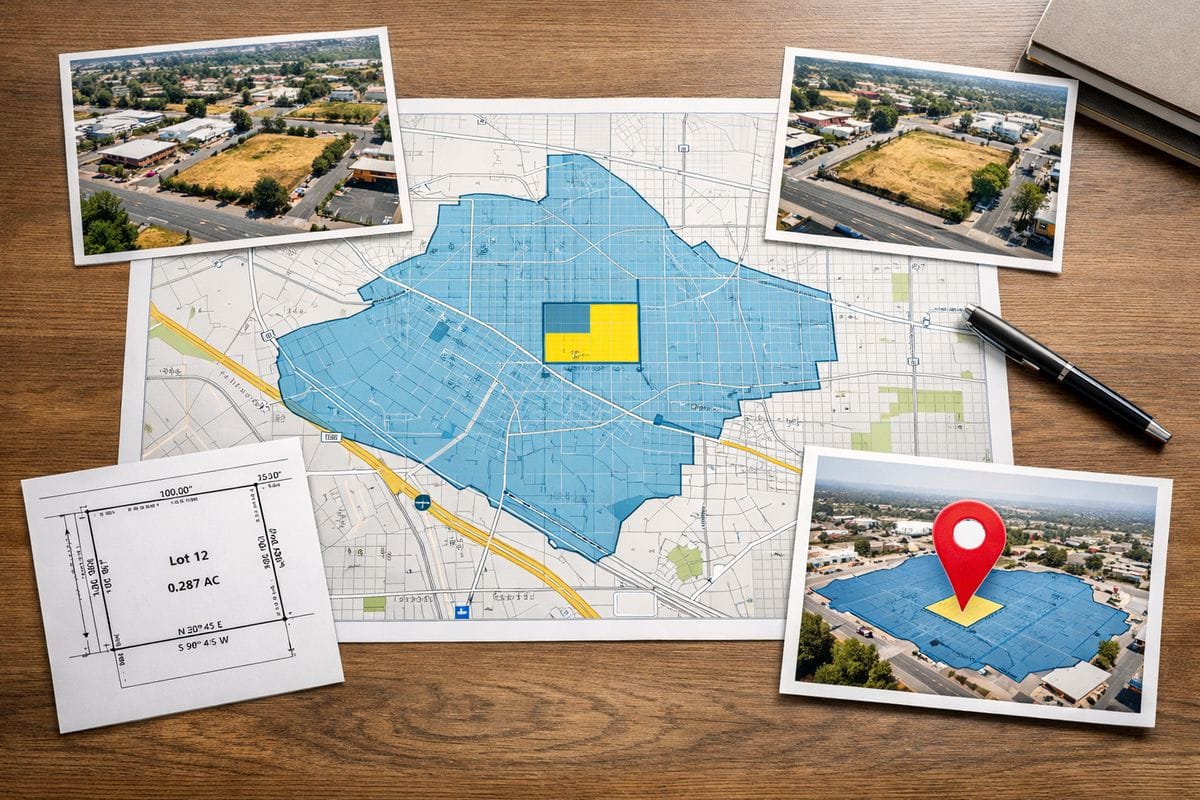
Step 2: Verify that the target location is a designated Opportunity Zone
A property can be attractive, in a growing corridor, and surrounded by redevelopment, yet still fail the zone test. The tract controls the answer.
- Pull the exact property address and parcel data.
- Match the property to the census tract.
- Validate the tract against official Opportunity Zone mapping tools.
- Save screenshots, tract numbers, and source records to the diligence file.
- Confirm the tract before signing final documents.
Use the official census tract and mapping tools
Use official mapping resources and preserve the evidence. HUD’s Opportunity Zone mapping resources make the first verification straightforward (HUD Opportunity Zones). Save the tract number, map screenshot, and date of verification.
Confirm the asset sits inside the qualifying tract
Nearby does not count. Across the street does not count. A project narrative about revitalization does not count. The asset must sit inside the qualifying tract.
Review the legal description, parcel map, and address-level location. If the site spans multiple parcels, confirm each one. If a sponsor says the asset is “in the zone” but the parcel record says otherwise, stop the process.
Check state and local market conditions
Tax treatment is not a market thesis. Review rent growth, vacancy, absorption, redevelopment pipelines, infrastructure plans, and local incentives. Based on analysis of failed OZ deals, weak market fundamentals show up later as delayed lease-up, slower NOI growth, and forced hold-period decisions.
Step 3: Choose the investment path: existing QOF or a new QOF
At this point, choose between joining an established fund and forming your own. That decision drives control, fees, reporting burden, and speed.
- Estimate your gain size and target investment amount.
- Decide whether you want sponsor control or direct control.
- Compare fund fees to setup and maintenance costs.
- Match the path to your hold strategy and reporting capacity.
Invest through an established Qualified Opportunity Fund
An established QOF is the faster path. You review the sponsor, underwrite the project, complete the subscription package, and invest as a limited partner or member. Based on field data, this route reduces setup time and administrative burden because the fund structure, annual testing, and investor reporting are already in place.
The tradeoff is obvious: less control. You accept the sponsor’s timeline, fees, governance terms, and compliance discipline.
Form a self-directed Qualified Opportunity Fund
A self-directed QOF makes sense when the gain is large, the asset pipeline is already identified, or direct control is part of the strategy. This is common in sponsor-led development, family office structures, and single-asset real estate execution.
The advantage is control over acquisition, timing, debt, business plan, and exit. The cost is responsibility. You own the entity formation, QOF election, compliance calendar, testing, and documentation from day one.
Compare control, cost, and compliance burden
Established funds win on speed and lower administrative friction. Self-directed funds win on control and fee savings at scale. If your gain is modest and your operating team is not built for annual compliance management, the sponsor route usually produces better execution. If your gain is large and the asset is already in hand, self-direction often produces stronger ROI.
Step 4: Confirm that the fund is properly organized as a Qualified Opportunity Fund
Do not assume a fund is compliant because the marketing deck says “QOF.”
- Review the entity type and governing documents.
- Confirm the fund intends to self-certify as a QOF.
- Review its annual reporting process and testing calendar.
- Validate internal controls before wiring capital.
Review entity structure and governing documents
A QOF must be organized as an eligible corporation or partnership for the purpose of investing in qualified Opportunity Zone property. Read the operating agreement, partnership agreement, or corporate documents closely enough to confirm the fund is actually built to operate inside the program rules.
Verify the QOF election and reporting process
QOFs generally self-certify and report through required tax filings. Confirm the fund has a clear process for election, annual testing, and investor reporting. If a sponsor cannot explain how compliance is documented, the issue is not technical. The issue is governance.
Assess sponsor controls and compliance systems
Ask how the fund tracks the 90% asset test, working capital timing, and asset qualification. Review investor reporting samples. Strong sponsors run on calendars, checklists, and supporting files. Weak sponsors run on assumptions.
Step 5: Test whether the underlying asset or business qualifies
A compliant fund can still hold a noncompliant asset. That destroys the tax outcome.
- Confirm the acquisition date and seller relationship.
- Determine whether qualification relies on original use or substantial improvement.
- Review the business plan against OZ asset rules.
- Document the qualification analysis in writing.
Confirm qualified Opportunity Zone business property status
Real estate projects usually qualify through acquisition plus either original use or substantial improvement. Existing buildings commonly rely on substantial improvement, which means the improvement plan and budget must support the legal standard, not just a cosmetic renovation narrative.
Evaluate vacant land, existing buildings, and new development differently
Each asset type requires a separate analysis. Vacant land needs careful factual review. Existing buildings require acquisition and improvement testing. New development often fits more cleanly, but only when land, vertical construction, and timing are aligned with the fund structure.
Check qualified Opportunity Zone business requirements
If the strategy involves an operating business rather than pure real estate, review active trade or business requirements, property use inside the zone, and how revenue and operations tie back to the location. If those facts are vague, the investment is not ready.
Step 6: Underwrite the deal on fundamentals, not tax benefits alone
Tax savings improve returns. They do not rescue bad projects.
- Review the sponsor’s operating track record.
- Analyze debt terms, promote structure, and fees.
- Model project returns before tax benefits.
- Add tax benefits only after base economics pass your hurdle.
- Stress-test downside cases.
Review sponsor track record and capital structure
Check completed projects, realized exits, construction performance, and capital stack discipline. A sponsor that consistently misses budgets or extends timelines will erode ROI long before the tax strategy has a chance to help.
Model returns with and without tax benefits
Build two return cases. One on operating fundamentals alone. One with the OZ tax treatment layered in. If the project fails your return threshold without the tax incentive, the recommendation is to reject it.
Stress-test hold period, refinance, and exit scenarios
Underwrite delays, cost overruns, slower lease-up, and pushed exits. Opportunity Zone investing depends on patient capital, but real projects miss schedules all the time. Your model should survive that reality.
Step 7: Complete subscription, funding, and basis tracking correctly
This is the execution step where good planning becomes a compliant investment.
- Review the subscription package line by line.
- Confirm the contribution amount equals the eligible gain amount.
- Wire funds before the 180-day deadline expires.
- Preserve proof of contribution date and acceptance.
- Create a basis and holding-period file immediately.
Checkpoint: by the end of this step, your closing file should show the gain source, gain amount, contribution date, fund documents, and ownership records in one place.
Review the subscription package line by line
Read transfer restrictions, fee disclosures, tax acknowledgments, withdrawal limits, side letter terms, and investor representations. These clauses govern flexibility years later, especially if your exit plan changes.
Fund the investment within the required window
The documented contribution date must align with your deadline analysis. If your 180th day falls on August 28, the contribution needs to be completed on time, not merely “in process.” Do not leave timing to a last-day wire.
Set up gain, basis, and holding-period records
Create a clean file showing the deferred gain amount, investment date, ownership entity, election support, and future exit assumptions. Good records now prevent filing chaos later.

Step 8: Monitor ongoing compliance after closing
Opportunity Zone investing is not a set-it-and-forget-it strategy. Post-close discipline protects the tax result.
- Track fund-level compliance tests on schedule.
- Monitor property or business execution against the qualification plan.
- Review annual investor reports and tax forms for consistency.
- Escalate discrepancies before filing deadlines pass.
Track the 90% asset test and related fund-level rules
The 90% asset test is a recurring fund-level requirement. If internal controls are weak, penalties and restructuring pressure follow. Your review should focus on whether the fund is actually operating to the test dates, not just discussing them.
Monitor substantial improvement and working capital execution
For real estate deals relying on improvement or development timelines, monitor budgets, draw schedules, and milestone completion. If construction slips badly and no one updates the compliance analysis, risk compounds fast.
Review annual tax forms and investor reports
Review K-1s, capital account reporting, and sponsor explanations every year. Numbers that do not tie back to the original transaction or operating results should be challenged immediately.
Step 9: Manage the hold period and plan the exit in advance
The exit should be planned years before disposition. That is how after-tax ROI is protected.
- Define the intended hold period at acquisition.
- Revisit the exit path annually.
- Model sale, refinance, and partial liquidity outcomes.
- Prepare documentation before the market window opens.
Align the exit date with the tax objective
Hold period strategy drives the final tax result. A premature sale can erode the very benefit you structured the investment to capture. Exit timing should be a tax decision and a business decision, not an emotional reaction to a market headline.
Evaluate sale, refinancing, and partial liquidity options
A fund-level sale, asset sale, refinance, or staged liquidity event each changes the economics and reporting profile. Review the path in advance so you are not making a rushed decision under capital pressure.
Prepare documentation before disposition
Before any exit, confirm valuations, legal approvals, investor consents, tax analysis, and basis records. Clean files preserve speed and reduce avoidable disputes.
Step 10: Apply a final pre-close checklist before committing capital
Before capital is committed, force a go or no-go decision through one final review.
- Confirm the gain is eligible and still within the timing window.
- Confirm the tract is designated and documented.
- Confirm the fund is properly organized and reporting-ready.
- Confirm the asset or business qualifies.
- Confirm the deal meets return targets on fundamentals.
The five-driver investment checklist
The five drivers are straightforward: eligible gain, qualifying zone, compliant fund, qualifying asset, and defensible business returns. If any one driver fails, the investment is not ready.
Red flags that require a hard stop
Hard-stop issues include a missed 180-day deadline, unclear tract verification, weak governing documents, unsupported qualification opinions, and unrealistic hold assumptions. None of these are minor. Each one is a thesis-breaking problem.
Troubleshooting: Common Opportunity Zone investing mistakes
Most failures come from ordinary sloppiness, not exotic tax issues.
Missing the reinvestment deadline
The fix is calendar discipline. Start the clock from the sale date, document it, and build reminders immediately. For partnership K-1 gains, confirm which start date election you are using before the window narrows.
Investing proceeds instead of gains
Plain English version: only the gain gets the deferral treatment. Funding the deal with gross proceeds creates confusion, overcapitalization, and reporting errors.
Assuming any property in a distressed area qualifies
A distressed neighborhood is not the legal test. The census tract is. Verify it with official mapping tools and save proof.
Trusting fund marketing without compliance proof
Request fund documents, election procedures, asset qualification analysis, and testing controls. If proof is thin, the recommendation is to walk.
Ignoring the underlying business case
A bad deal with a tax wrapper is still a bad deal. Long-term ROI comes from sound acquisition basis, disciplined execution, and a real exit path.
Expected outcome: What a successful Opportunity Zone investment process looks like
A successful process ends with a properly timed investment of eligible capital gain into a compliant QOF that holds qualifying assets or businesses inside a designated Opportunity Zone, backed by a complete diligence file, annual reporting controls, and a clear long-term exit plan. That outcome preserves the tax strategy and supports stronger after-tax capital performance.
Next steps: The recommended action plan for the next 30 days
In the next 30 days, confirm the gain date and 180-day deadline, separate gain from proceeds, verify the census tract, decide between an established fund and a self-directed QOF, complete fund and asset diligence, and move capital only after the five-driver checklist is cleared. Speed matters, but disciplined sequencing matters more.
Frequently Asked Questions
Can you invest directly into a property and still get Opportunity Zone tax benefits?
No. The tax benefits generally require an investment through a Qualified Opportunity Fund that holds qualifying property or businesses.
What happens if you miss the 180-day reinvestment window?
The gain does not qualify for Opportunity Zone deferral through that investment. You can still invest in the deal, but the missed gain keeps its normal tax treatment.
Does every capital gain qualify for Opportunity Zone treatment?
No. The gain has to be an eligible capital gain, and the amount, source, and recognition date need to be confirmed from your tax records.
How do partnership K-1 gains work for the 180-day rule?
For gains flowing through a partnership, you can elect to start the 180-day period from the partnership’s sale date or the last day of the partnership’s tax year. That election needs to be confirmed and documented with your CPA.
Is the tax benefit enough reason to buy a weak deal?
No. The recommendation is to reject any Opportunity Zone investment that does not meet your return standards on operating fundamentals before tax benefits are added.