
If you want to buy real estate with IRA funds, the upside is real: tax-deferred or tax-free growth on rental income and gains. The catch is stricter than most investors expect. One bad payment, one contract in the wrong name, or one personal guarantee can blow up the tax treatment, so the process has to be run like a compliance project from day one.
Why This Strategy Deserves a Compliance-First Process
Using retirement capital to buy investment property changes the economics of the deal. Rental income stays inside the IRA, gains from a sale stay inside the IRA, and a Roth structure can produce tax-free qualified distributions later. In a market where U.S. retirement assets exceeded $49.1 trillion at the end of 2025 and IRAs alone held $19.2 trillion, the strategy has scale behind it, even though self-directed IRAs remain a small slice of the market.
That small slice matters. Based on analysis of industry data, self-directed IRAs account for less than 5% of the broader IRA market. That tells you something useful: this is legal, established, and still specialized enough that many brokers, agents, lenders, and closing teams get the details wrong.
The recommendation is simple: treat the tax benefit as conditional. It only holds if every step follows IRS rules on ownership, prohibited transactions, funding, expenses, and reporting. That means slower timelines, more documentation, and less room for improvisation than a standard rental purchase. Most SDIRA real estate deals take 45 to 60 days because custodians review documents, approve wires, and process paperwork on their own schedule.
What You’ll Need Before Buying Real Estate With an IRA
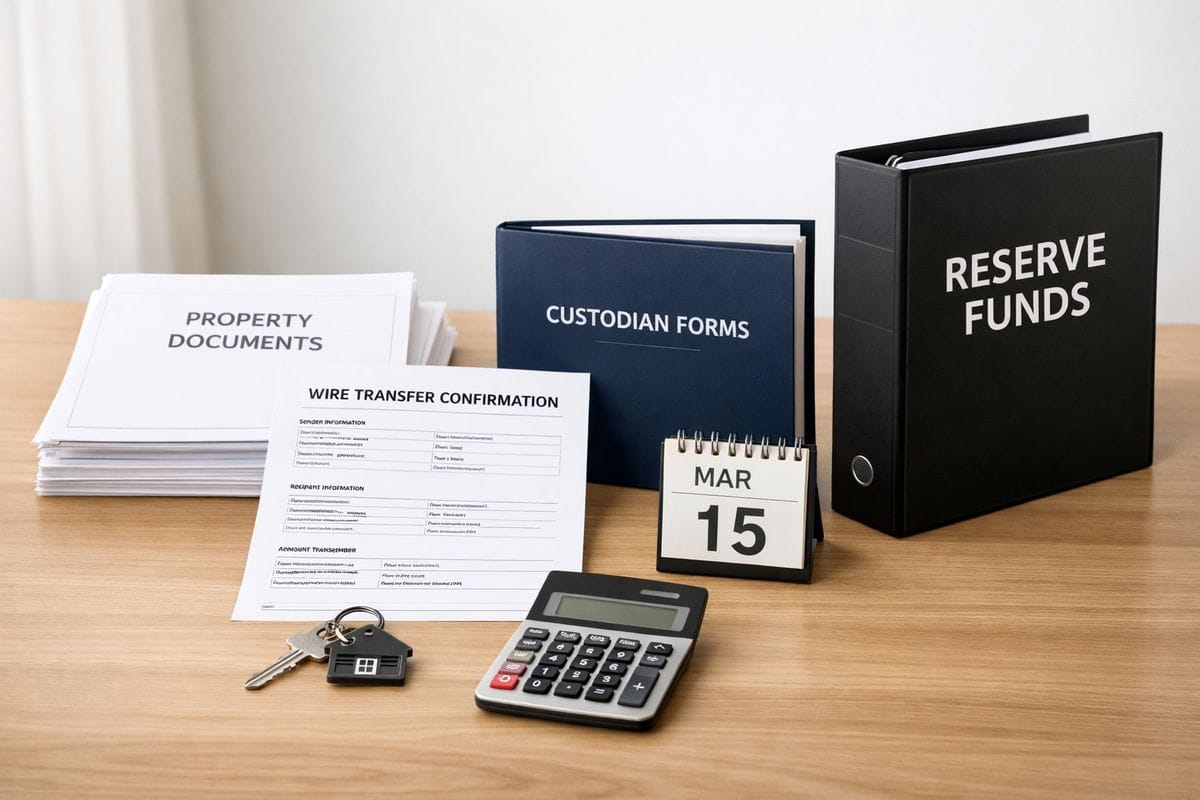
Before step 1, gather the pieces that make the purchase possible. The account must be able to hold real estate, the custodian must support the transaction type, the deal must fit IRA rules, and the account must have enough liquidity to close and operate the property.
This is where many deals fail. The property pencils out, the investor has retirement money somewhere, and the closing date gets set before the structure is ready. Then the transfer is delayed, the contract is written in the wrong buyer name, or the IRA closes with no repair reserves. That is not a minor operational problem. It is how prohibited transactions and forced sales start.
The right account type: self-directed IRA, not a standard brokerage IRA
A standard brokerage IRA at firms like Fidelity, Schwab, or Vanguard usually does not allow direct ownership of rental property, raw land, or private real estate deals. To hold real estate directly, you need a self-directed IRA, often called an SDIRA, with a custodian that permits alternative assets.
That account is the legal buyer. Not your personal name, not a generic trust name, not a shell entity unless the custodian and structure support it. If the account cannot hold the asset, the transaction stops before it starts.
Core team and documents
The minimum team is straightforward: an SDIRA custodian, a tax advisor or CPA who understands prohibited transactions and Form 990-T, and often a real estate attorney if the deal involves an LLC, nonrecourse debt, or a custom contract. For direct-property deals, add a title company and property manager who can work with an IRA-owned asset.
The minimum documents are just as important: account opening paperwork, transfer or rollover forms, proof of funds, purchase criteria, and any entity documents if using an IRA-owned LLC. If a lender is involved, underwriting documents for nonrecourse financing belong in this stack from the start, not after the offer is accepted.
Liquidity and reserve requirements
The field data shows the biggest operational mistake is underfunding. The IRA needs cash for earnest money, down payment, closing costs, taxes, insurance, maintenance, vacancies, custodian fees, and, if leverage creates taxable income, any Form 990-T tax payments. Closing with only the purchase amount is not disciplined investing. It is a compliance risk.
A simple rule works: fund the purchase and the reserve before closing. If the property needs a new HVAC six months later and the IRA cannot pay, you cannot swipe a personal card and clean it up later.
Step 1: Confirm That an IRA Real Estate Purchase Fits Your Investment Plan
Before opening accounts and moving retirement money, decide if the structure fits your actual strategy. Real estate inside an IRA is not automatically better than real estate outside one. The right decision depends on time horizon, expected yield, need for current cash flow, and how much complexity you are willing to manage.
- Define the goal of the capital. If the goal is long-term appreciation and sheltered compounding, the structure fits well.
- Decide the holding period. A five-to-ten-year hold is easier to manage than a short timeline with forced liquidity.
- Review retirement timing. If distributions are getting close, tying up a large share of retirement assets in one property creates planning pressure.
- Measure concentration risk. One asset inside one retirement account is concentration, not diversification.
- Confirm that the expected return justifies the administrative cost.
Checkpoint: success at this stage means the property strategy improves long-term after-tax ROI and does not create near-term liquidity stress.
Match the property strategy to the IRA structure
Buy-and-hold rentals fit best because income and expenses are easier to administer, and the investment purpose is clear. Commercial property also works well if the lease structure is stable and third-party management is in place.
Short-term rentals demand more caution. The business-like operating pattern, higher vendor activity, and personal-use temptation create more points of failure. Fix-and-flip deals raise another issue: active business treatment and frequent transactions can increase UBTI exposure. Land can work, but it produces no cash flow while still requiring taxes and carrying costs. Passive real estate platforms and syndications often offer cleaner administration because the sponsor handles operations and reporting.
Evaluate concentration, illiquidity, and RMD pressure
Real estate is illiquid by design. That is manageable in a taxable account. Inside an IRA, it becomes a future distribution problem if too much retirement capital is tied to one asset.
Under SECURE 2.0, the RMD age is 73 starting in 2023 and rises to 75 over time. The penalty for missing an RMD dropped from 50% to 25%, and to 10% if corrected promptly. Lower penalty does not fix the planning problem. If your IRA holds a single property and you need cash for distributions, you either distribute part of the asset in kind or sell under pressure.
Choose between tax-deferred and tax-free growth
A traditional SDIRA gives tax-deferred growth. Rental income and gains stay untaxed while inside the account, but future distributions are generally taxable as ordinary income. A Roth SDIRA changes the outcome. Qualified distributions are tax-free, so the entire appreciation path matters more.
The recommendation is direct: if the asset has strong long-term upside and you can fund a Roth structure properly, tax-free growth is the better economic engine. If current balances sit in pre-tax retirement accounts and the conversion tax cost is too high, traditional may still be the right entry point.
Step 2: Learn the IRS Rules Before You Make an Offer
This is the rule set that decides whether the deal stays valid. The governing issue is prohibited transactions under IRC Section 4975. Once a prohibited transaction happens, the tax problem is not theoretical.
- Read the prohibited transaction rules before engaging a broker.
- Identify every disqualified person connected to the deal.
- Confirm that the property is strictly investment-only.
- Build a payment process where all money flows through the IRA.
- Review UBTI and UDFI exposure before using debt.
Checkpoint: success means you can explain who cannot touch the deal, who owns the property, and how every dollar moves.
Who counts as a disqualified person
The prohibited party group includes you, your spouse, parents, grandparents, children, grandchildren, and entities you control. If you own the LLC that currently holds a property, your IRA cannot buy that property from the LLC. If your father owns the duplex, your IRA cannot buy it from your father. Simple rule, hard stop.
What transactions are prohibited
Self-dealing is the main hazard. You cannot live in the property, vacation in it, let family use it, buy from a disqualified person, sell to a disqualified person, or pay yourself to manage or repair it. Personal labor is a major trap. You cannot swing the hammer, coordinate a renovation in exchange for benefit, or create indirect value for yourself outside the IRA.
The ownership rule: the IRA owns the property, not you
Every document has to reflect that principle. Title, purchase contract, insurance, management agreement, and closing statement must all show the IRA or approved IRA-owned entity as owner. Income goes back to the IRA. Expenses come out of the IRA. No exceptions for convenience.
Key IRS references to review
Two references belong on the short list. First, IRC Section 4975 for prohibited transactions. Second, Form 990-T instructions for UBTI and UDFI reporting. If the property uses nonrecourse financing, this is not optional reading.

Step 3: Choose the Right Self-Directed IRA Custodian
Custodian choice drives transaction speed, cost, and error rates. Based on observed practice, the difference between a capable custodian and a slow, thinly staffed one easily adds weeks to closing.
- Confirm the custodian allows direct real estate.
- Ask whether nonrecourse debt is supported.
- Verify support for IRA-owned LLCs if checkbook control is planned.
- Review document turnaround times in writing.
- Compare fees in plain dollars, not vague marketing language.
- Ask how valuations and 990-T coordination are handled.
- Test responsiveness before opening the account.
Compare asset support, service model, and transaction process
Some custodians permit only direct ownership. Others support private placements, debt-financed deals, and LLC structures. Service model matters just as much. If every wire request takes five business days and every contract review takes another five, a normal closing date becomes unrealistic.
Review fee schedules in plain dollars
Expect setup fees, annual account fees, asset holding fees, wire fees, transaction review fees, bill-pay fees, and sometimes expedited processing charges. A cheap annual fee can hide expensive transaction charges. Add the actual dollars into underwriting.
Ask the seven questions that prevent delays
Ask how long contract review takes, how earnest money is released, how closing wires are approved, what valuation documents are required each year, whether nonrecourse loan documents are reviewed internally, how IRA LLCs are handled, and who coordinates 990-T reporting. Those seven answers reveal the real service level.
Step 4: Fund the Account Through a Transfer, Rollover, or Contribution
Funding errors create avoidable taxes. The cleanest path is direct movement between custodians.
- Open the SDIRA.
- Initiate a direct transfer from an existing IRA when possible.
- If using a 401(k), request a direct rollover to the SDIRA.
- Add annual contributions if eligible.
- Wait for cleared funds before making offers.
Use a direct transfer when possible
A direct custodian-to-custodian transfer is usually the cleanest option for existing IRA money and generally is not reported as a taxable event. It reduces timing risk and keeps the money out of your hands.
Handle 401(k) rollovers correctly
If funds come from a former employer plan, request a direct rollover. If a check is paid to you instead, the 60-day rollover rule applies. Miss that deadline and the tax cost lands immediately.
Add annual contributions within current limits
For 2026, some sources cite annual IRA contribution limits of $7,500, $8,500 if age 50 or older, with higher catch-up amounts for certain ages under SECURE 2.0. Even using the higher figures, annual contributions rarely fund a whole property. They work better as reserve support, not primary acquisition capital.
Step 5: Pick Your Ownership Structure
Structure affects control, speed, and compliance burden.
- Choose direct SDIRA ownership for the simplest path.
- Choose an IRA-owned LLC only if faster transaction control justifies extra complexity.
- Choose a passive platform or syndication if the goal is exposure with lighter administration.
Direct ownership through the SDIRA
This is the simplest structure. The custodian holds title for the benefit of the IRA, reviews the contract, sends earnest money, wires closing funds, and processes expenses. It is slower, but cleaner.
IRA-owned LLC and checkbook control
An IRA can own an LLC, and the LLC can hold the property and operating account. This speeds up bill payment and deal execution. It also raises the error cost. Entity setup, operating agreement language, bank account control, and tax handling all need to be right.
Passive real estate platforms and syndications
For investors who want real estate exposure without direct property operations, a private placement or syndication often produces lower administrative friction. You still need the right custodian and compliance review, but ongoing operations are easier.
Step 6: Underwrite the Property With IRA Rules in Mind
A deal that works in a personal portfolio can fail inside an IRA because the reserve burden is different.
- Reject any property with personal-use overlap.
- Underwrite rents and expenses conservatively.
- Add reserve targets before closing.
- Include all custodian and compliance costs.
- Test the numbers with no personal cash support.
Screen for investment-only use
No vacation use. No family occupancy. No weekend stays during renovation. If the asset has any path to personal benefit, pass on it.
Underwrite cash flow, reserves, and time-to-value
Use actual market rents, realistic vacancy, repair reserves, property taxes, insurance, and management fees. Then add liquidity for the unexpected. Time-to-value matters because a vacant or rehab-heavy property drains IRA cash fast.
Account for custody fees, taxes, and compliance costs
Standard underwriting misses annual custodian fees, wire fees, valuation costs, possible 990-T preparation, and entity maintenance if using an LLC. Add them all.
Run a sample numbers test
Assume a $220,000 rental purchased all cash by an SDIRA. Closing costs are $6,000. Initial reserves are $15,000. Gross annual rent is $24,000. Operating expenses, including taxes, insurance, maintenance, management, and vacancy, total $10,800. Custodian and compliance costs add $1,200. Net annual cash flow is $12,000. Based on a total IRA cash commitment of $241,000, year-one cash yield is just under 5%.
That example shows why reserve planning matters. On paper, the property looked like a 10.9% gross yield. Inside the IRA, after real costs and required liquidity, the actual year-one return is far lower.
Step 7: Decide Whether to Use Cash or Nonrecourse Financing
Financing changes both return potential and tax complexity.
- Use cash if simplicity and compliance control matter most.
- Use only nonrecourse financing if leverage is required.
- Model UDFI exposure before signing loan documents.
Understand the nonrecourse loan requirement
An IRA cannot use your personal guarantee. The lender’s remedy must be limited to the property itself, which is what makes the loan nonrecourse. Typical terms are stricter than conventional financing: 35% to 50% down, interest rates often 1% to 2% higher than standard investor loans, more reserves, and tighter underwriting. If you personally guarantee the note, the prohibited transaction risk is immediate and severe.
Calculate the UDFI and UBTI impact
Debt-financed income can trigger unrelated debt-financed income, often grouped into UBTI planning because it is reported on Form 990-T. If taxable UBTI is under $1,000, there is generally no filing requirement. Over $1,000, 990-T enters the picture. Trust tax rates climb fast, reaching 37% at roughly $16,000 of taxable UBTI. Some leveraged deals avoid actual tax in early years because depreciation offsets income, but the filing analysis still needs to happen before closing.
Compare all-cash versus leveraged returns
All-cash deals lower complexity, eliminate UDFI exposure, and simplify operations. Leveraged deals increase purchasing power and potential ROI on equity but bring lender friction, tax filings, and more points of failure. In an IRA, simplicity has real economic value.
Step 8: Make the Offer and Structure the Contract Correctly
The offer stage is where avoidable title errors begin.
- Identify the property only after funds are available or clearly in transit.
- Instruct the custodian on the exact buyer name.
- Submit the offer in the IRA’s name.
- Send earnest money from the IRA, never personal funds.
- Build enough time into the contract for custodian review.
Write the buyer name exactly as the IRA requires
The buyer must be listed exactly as the custodian requires, typically something like “XYZ Trust Company Custodian FBO [Account Holder Name] IRA.” Your personal name alone cannot be the buyer.
Handle earnest money the right way
Earnest money has to come from the IRA or the IRA LLC account. You cannot advance $5,000 personally to keep the deal moving and reimburse yourself later. That convenience payment is exactly the kind of fact pattern that creates trouble.
Include assignment or vesting correction language if needed
Retail forms are often written for individuals. If the broker uses standard paperwork, make sure the contract allows correction of vesting details before closing. Fix the name before money moves and before the deed is drafted.
Step 9: Complete Due Diligence and Close Through the Custodian
Closing is document control.
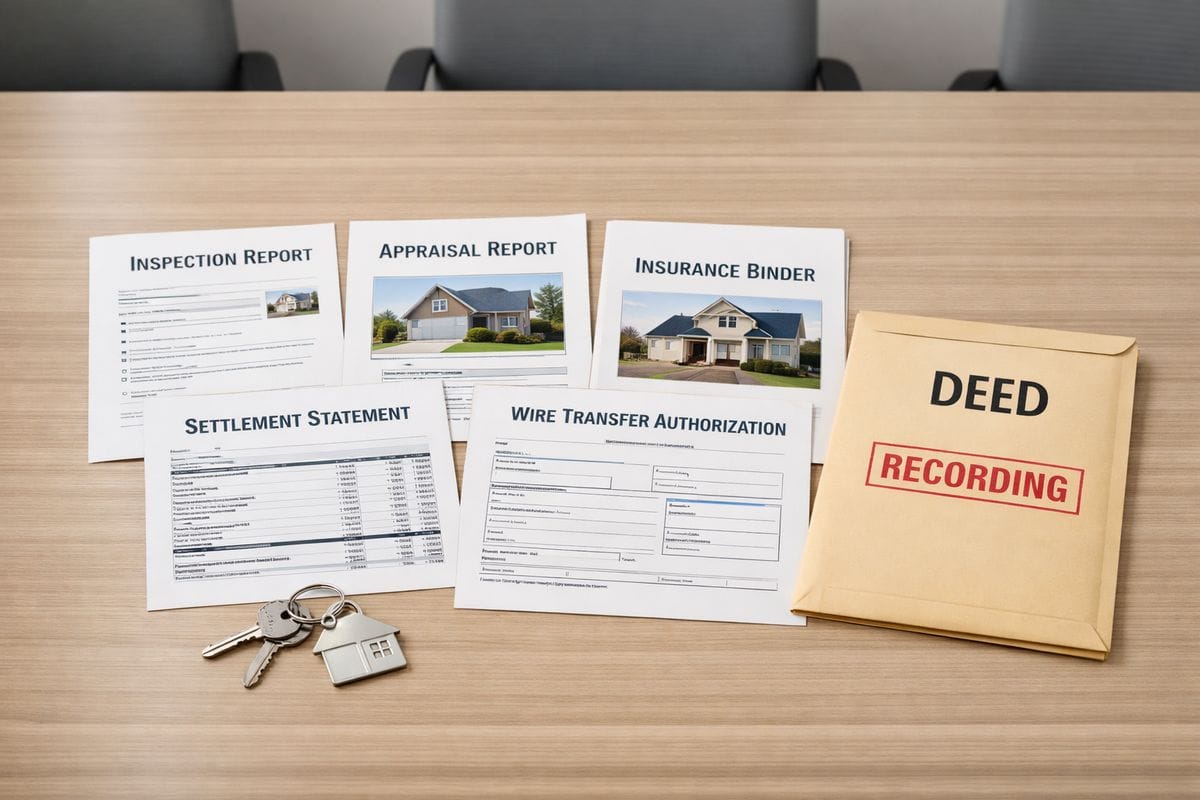
- Order inspections and title work in the IRA structure.
- Route invoices for approved costs through the IRA.
- Review the settlement statement line by line.
- Obtain final custodian approval.
- Fund closing through custodian wire.
- Record deed in the IRA’s name.
- Retain the full closing file.
Order inspections, title work, and insurance in the IRA structure
Vendors need to understand who the buyer is. Inspection invoices, insurance binders, and title commitments should all reflect the IRA ownership structure from the start.
Review the settlement statement before closing
Check vesting, prorations, lender fees, tax escrows, and any line items that suggest personal borrower responsibility. If something is wrong, fix it before signing. After recording, cleanup gets harder and more expensive.
Fund and finalize the closing
The custodian signs or authorizes closing documents, wires funds, and finalizes the purchase. Success looks simple: deed recorded correctly, funds sourced entirely from the IRA, and a complete document set saved for the file.
Step 10: Operate the Property Without Triggering a Prohibited Transaction
Owning the property is not the hard part. Operating it correctly is.
- Deposit all rent into the IRA or IRA LLC account.
- Pay all expenses from IRA funds.
- Use third-party managers and contractors.
- Keep clean books and source documents.
- Avoid any personal benefit from the asset.
Route all income back to the IRA
Rent, late fees, refunds, insurance proceeds, and sale proceeds all belong to the IRA. If income lands in your personal account first, the accounting problem becomes a compliance problem.
Pay every expense from IRA funds
Repairs, taxes, insurance, HOA dues, utilities, and management fees must be paid from IRA funds. No personal reimbursements. No temporary advances.
Use third-party managers and contractors
You cannot self-manage in a way that produces compensation, indirect benefit, or prohibited services. The safe operating model is third-party property management and third-party vendors.
Keep books, receipts, and invoices audit-ready
Maintain leases, bank records, invoices, tax bills, insurance policies, repair receipts, and year-end valuation support. Good records reduce valuation disputes and make tax filing cleaner.
Step 11: Handle Ongoing Taxes, Reporting, and Annual Valuations
An IRA-owned property carries annual administration.
Annual fair market value reporting
Custodians require an updated fair market value each year. Support can come from a broker price opinion, appraisal, tax assessment with backup, or other custodian-accepted valuation documents.
Form 990-T, UBTI, and UDFI compliance
If the property generates taxable UBTI or UDFI above filing thresholds, Form 990-T must be filed and any tax must be paid from IRA funds, not personal funds. Put the filing on the annual compliance calendar.
Watch for state and local reporting issues
Texas has no state income tax, but local compliance still matters. Property tax notices, county appraisal district records, insurance renewals, and LLC franchise or annual filing obligations still need active management.
Step 12: Plan the Exit Before You Need the Cash
Exit planning is part of acquisition planning.
Sell the property inside the IRA
When the IRA sells the property, proceeds return to the IRA and preserve the account structure. The closing process mirrors the original purchase: same vesting discipline, same custodian control.
Take distributions instead of selling
An in-kind distribution moves the property out of the IRA at its fair market value. That can solve liquidity or retirement-use goals, but valuation and tax consequences need to be mapped first.
Prepare for RMDs and liquidity needs
If the account is traditional and RMD age is approaching, build a cash plan years in advance. Illiquid property plus required distributions is a bad combination when planning starts late.
Common Mistakes That Trigger Taxes and Penalties
These are the errors that destroy the economics of the strategy.
Paying a repair bill personally
A $600 plumbing invoice paid on a personal card is still personal funding of an IRA asset. Small dollar amount, big compliance problem.
Letting family use the property
One discounted week for a child, one informal stay by a parent, one “no big deal” weekend visit, and the investment-only rule is gone.
Using the wrong title or contract buyer name
If the contract is in your personal name and the deed later goes into the IRA structure, the transaction trail is already messy. Fix vesting before closing, not after.
Running out of cash inside the IRA
No reserve means no margin for vacancies, taxes, insurance spikes, or repairs. That is how investors end up tempted to fund expenses personally.
Troubleshooting: What to Do When the Deal Hits a Problem
Problems are common. The right response prevents a bad situation from turning into a disqualifying one.
The custodian is moving too slowly
Submit complete documents, use the custodian’s exact forms, confirm review timelines before contract execution, and negotiate realistic closing dates. Forty-five to sixty days is normal for SDIRA real estate purchases.
The property needs an emergency repair but IRA cash is short
Use compliant funding sources only: eligible new contributions within limits, qualified transfers from another IRA, or liquidation of another IRA asset. Personal cash is not the answer.
A prohibited transaction may have already happened
Stop activity immediately, preserve every document, map the money trail, and get tax and legal guidance before taking another step. Fast containment matters.
Financing was denied at the last minute
Switch to cash only if the IRA stays properly reserved after closing. If not, renegotiate terms or replace the asset. A deal that drains the account is not a good deal.
Expected Outcome: What Success Looks Like After the Purchase
Success is not just “closed on the property.” Success means title is in the correct IRA name, rent flows back into the account, every expense is paid from IRA funds, records are current, valuations are updated annually, and any 990-T obligation is handled on time. That is the end state that preserves tax treatment and supports long-term ROI.
Recommended Next Steps Before Moving Forward
The recommendation is direct: review IRC Section 4975, interview specialized SDIRA custodians, model reserves and UDFI exposure in actual dollars, and have a tax advisor review the structure before any offer is submitted. In this kind of transaction, speed comes from preparation, not improvisation.
Frequently Asked Questions
Can you live in a property owned by your IRA later?
Not while it is owned by the IRA. The property must remain an investment asset only. Personal use while the IRA owns it creates a prohibited transaction. If the property is distributed out of the IRA later, personal use can begin after the distribution is completed correctly.
Can you buy a rental property with a Roth IRA?
Yes, through a self-directed Roth IRA that allows real estate. The Roth version is especially attractive when long-term appreciation is strong because qualified distributions are tax-free.
Can you use a normal mortgage to buy real estate with an IRA?
No. The financing must be nonrecourse. That means no personal guarantee, higher down payment requirements, and higher rates than standard investor loans.
How long does it take to buy real estate with an IRA?
Most purchases take 45 to 60 days. Custodian review, funding transfers, lender underwriting, and corrected vesting language all add time compared with a standard rental closing.
Do you need a property manager for an IRA-owned rental?
A third-party property manager is the safest operating model. It reduces the risk of prohibited services, improper rent handling, and personal involvement that crosses the line.
What happens if the property produces UBTI or UDFI?
If taxable income crosses the filing threshold, Form 990-T must be filed and any tax must be paid from IRA funds. This is most common with debt-financed property, which is why tax planning belongs in underwriting, not after closing.