

A prohibited transaction in self directed IRA real estate is any deal, payment, use, or service arrangement that gives you or another disqualified person an improper benefit from IRA-owned property. That matters because one careless move does not just damage a single property deal, it can blow up the tax treatment of the entire account. If you hold rentals, flips, or short-term rentals in an SDIRA, this is the rule set that decides whether your tax strategy preserves capital or destroys it.
What a Prohibited Transaction Means in SDIRA Real Estate
Self-directed IRA real estate is legal. The governing framework starts with IRC Section 408, which allows IRAs to hold a wider range of assets, including real estate, if the custodian and structure support it. The problem is not ownership itself. The problem is how your IRA interacts with people, money, and property under IRC Section 4975, the prohibited transaction statute.
In plain English, a prohibited transaction happens when your IRA stops acting like a separate retirement account and starts acting like a personal investment vehicle. The account cannot buy from you, sell to you, rent to you, pay you, reimburse you, or give you current use or value. The same rule extends to other disqualified persons tied to you.
That strategic stake is bigger than most investors expect. In a regular taxable deal, a bad payment flow or sloppy documentation creates an accounting mess. In an SDIRA, the same mistake can trigger a deemed distribution of the full account. Based on analysis of recurring failure points in real estate IRAs, the damage almost never starts with exotic tax planning. It starts with ordinary landlord behavior applied in the wrong account.
Why this rule matters more in real estate than in stocks or funds
A stock fund sits in an account and does almost nothing operationally. A rental house does the opposite. Rent comes in, repairs happen, insurance renews, property taxes come due, contractors need payment, tenants call, utilities shift, and financing has terms that have to be respected. Every one of those touchpoints creates execution risk.
That is why prohibited transactions self directed ira real estate searches are so common. Real estate is not inherently disallowed. It is just much easier to mishandle than a mutual fund. A buy-and-hold rental still requires ongoing cash management. A flip adds rehab decisions and sweat equity temptations. A short-term rental adds even more touchpoints: cleaning, furnishing, booking calendars, guest communications, and personal-use temptation.
So the risk is not asset-class risk. It is operating-model risk. The more hands-on the deal, the easier it is to step across the line.
The tax cost of getting it wrong
The tax result is brutal. If your IRA engages in a prohibited transaction, the IRA is generally treated as distributed as of January 1 of the year in which the transaction occurred, under the IRS rules for IRA prohibited transactions (IRS). That means ordinary income tax can apply to the full value of the account, not just the property involved.
If you are under age 59½, the 10% early distribution penalty generally stacks on top of that (IRS).
Put real numbers on it. Say your IRA is worth $200,000 when the violation happens. If that full amount becomes taxable and you are in the 24% federal bracket, that is $48,000 of federal income tax. If you are under 59½, add a 10% penalty, another $20,000. Total federal hit: $68,000, before state tax if applicable. If the same $200,000 lands in a 37% bracket, federal income tax alone becomes $74,000, and the penalty pushes the total federal hit to $94,000.
That is not a paperwork issue. It is capital destruction.

The Three Principles That Govern SDIRA Real Estate Compliance
Most prohibited transactions in self directed ira real estate trace back to three simple principles. If a deal fails one of these tests, the recommendation is to stop before closing.
Exclusive benefit rule
Your IRA has to exist solely for retirement benefit. That means no current personal benefit, no side compensation, no below-market perk, and no indirect value flowing to you or another disqualified person.
Think of the IRA like a sealed investment box. You can own the box. You cannot reach into the box for present-day value. Spending one weekend in the property, storing your tools in the garage, having your child stay there for free, or taking a management fee from the property all violate the same basic idea: the asset stopped serving only the retirement account.
No self-dealing
Self-dealing means your IRA cannot transact with you or other disqualified persons in a way that shifts value between related parties. Buy from, sell to, lend to, borrow from, lease to, or furnish services to, those are the classic danger zones under IRC Section 4975 (Cornell Law School Legal Information Institute).
Intent does not save a bad structure. Good motives do not matter. Market pricing does not matter. Even a deal that looks fair on paper fails if the parties are prohibited. Structure and facts control.
All money in and out must stay inside the IRA structure
This is where investors get burned in practice. Every dollar tied to the property has to move through the IRA or an IRA-owned entity. Earnest money, down payment, repairs, insurance, taxes, HOA dues, utilities, reserves, rent, and sale proceeds all stay inside the account structure.
A “temporary” personal payment is still a problem. Reimbursing yourself later does not fix it. Once your personal bank account touches the transaction, you have crossed the IRA boundary.
Who Counts as a Disqualified Person
The prohibited transaction rules are really relationship rules. If the wrong person touches the deal, the deal fails.
You, your spouse, and your lineal family
Disqualified persons include you, your spouse, your parents, grandparents, children, grandchildren, and the spouses of your children and grandchildren. That is the family tree that wrecks a large share of SDIRA real estate deals.
Here is the plain-English version: if the property touches your household or your direct up-and-down family line, assume danger first. Renting an IRA property to your daughter is prohibited. Buying a rental from your father is prohibited. Letting your grandson use the property for a weekend is prohibited. Having your son fix the plumbing is prohibited because a disqualified person furnished services to the IRA asset.
Business entities tied to you or your family
Entities create another layer of risk. A corporation, partnership, LLC, or trust can become a disqualified person if you and other disqualified persons own 50% or more of it, directly or indirectly. Control matters too. If the formal paperwork says one thing but practical control says another, that is where disputes start.
For example, using your own property management LLC to manage the IRA house is a bad structure. Hiring an LLC owned 60% by you and 40% by an unrelated partner is still a related-party problem. Putting a deal through an entity does not clean it up if your ownership or control remains on both sides.
Who is usually not disqualified
Siblings, aunts, uncles, cousins, nieces, and nephews are generally not disqualified persons under the core family rule. That often surprises investors.
But there is a catch. A technically permitted relationship does not bless a transaction that still creates indirect self-dealing. Buying from a sibling at a manipulated price, routing benefits back to you, or using a sibling as a straw party still fails. Arm’s-length behavior still matters.
The Most Common Prohibited Transactions in SDIRA Real Estate
These are the mistakes real estate investors actually make. Avoid these, and your odds of staying compliant rise sharply. Ignore them, and the tax cost can dwarf your expected ROI.
Buying property from yourself or family
Your IRA cannot buy property you already own personally. Your IRA also cannot buy from or sell to your spouse, parents, children, grandchildren, or other disqualified persons. If you own a rental in Houston and want to “move it into the IRA,” that is prohibited. If your IRA owns a property and you want to take title personally later, that is also prohibited unless handled through a taxable distribution process, not a sale to yourself.
The same answer applies to family deals. Buying your mother’s condo with IRA funds is prohibited. Selling IRA property to your son is prohibited.
Using the property personally
Personal use taints the arrangement fast. No vacation stays. No overnight use. No letting family use it. No storing personal furniture, tools, or vehicles there. No “test weekend” in a short-term rental. No office use in one room of the building.
A short-term rental creates a common trap here. One personal weekend feels minor. Under the prohibited transaction rules, it is not minor. It is disqualifying behavior because the IRA asset gave you current benefit.
Paying property expenses personally
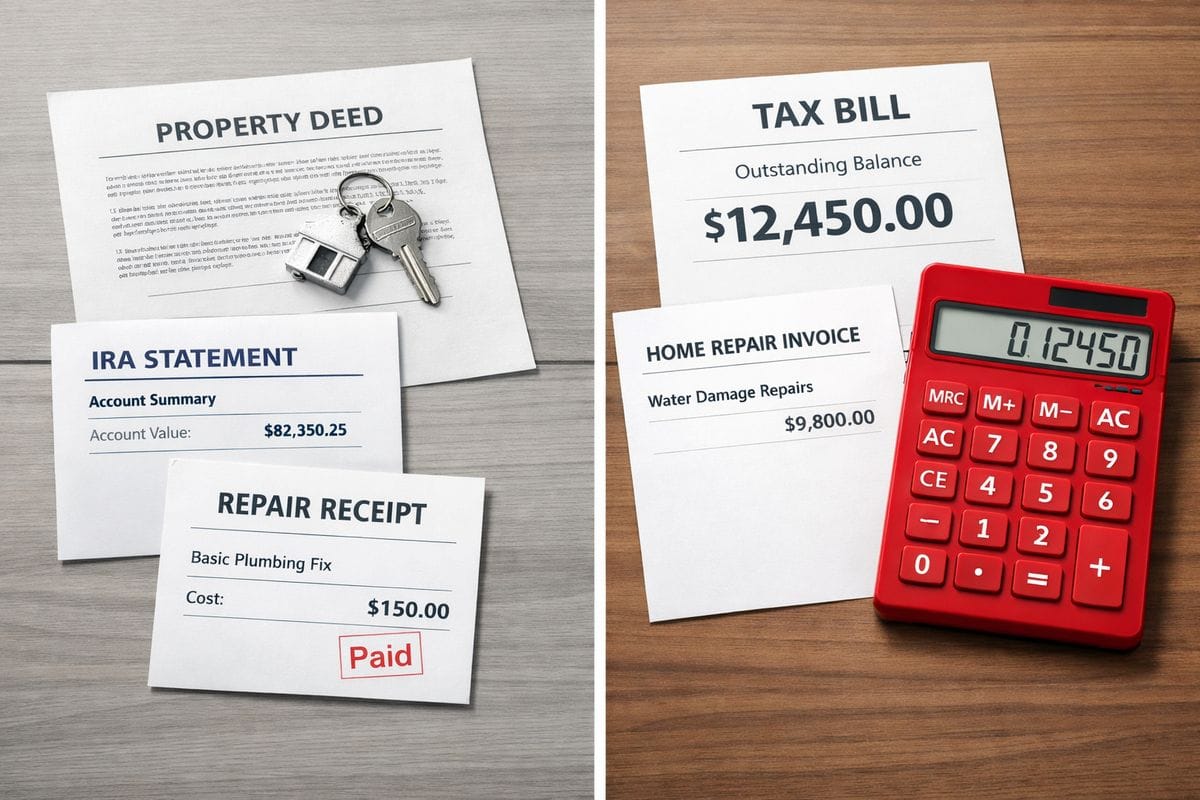
This is one of the biggest accidental violations. You cannot personally pay for repairs, insurance, taxes, utilities, HOA dues, earnest money, closing costs, or contractor invoices for IRA property. Not even once. Not even if the IRA is temporarily short on cash. Not even if you reimburse yourself later.
The field data shows that investors break this rule most often during time-sensitive repairs. The AC fails, the tenant is upset, your contractor wants a same-day deposit, and you pay $1,850 from your personal card. That convenience just crossed the line.
Taking rent or sale proceeds personally
Income has to go back into the IRA structure. Rent checks do not go into your personal account first. Security deposits do not sit in your operating account. Sale proceeds do not route through your personal escrow account and then get “moved back.”
If a tenant sends rent by mistake to your personal account, fix the payment path immediately and document the correction. Better yet, prevent the mistake by setting up the collection system correctly from day one.
Doing the work yourself
This is where many landlords talk themselves into trouble. If your IRA owns the property, your labor is not free. Mowing the lawn yourself is prohibited because you furnished services that improved or maintained an IRA asset. Painting the unit yourself is prohibited. Replacing a faucet yourself is prohibited. Managing bookings for a short-term rental yourself is risky for the same reason. Showing units, collecting rent, coordinating turnovers, and directly supervising rehab activity can also cross into prohibited service territory.
Specific examples make this real:
- Mowing the lawn yourself, prohibited
- Your son fixing the plumbing, prohibited
- Lending the IRA $5,000 for a repair, prohibited
- Renting to your daughter, prohibited
- Paying the roofer personally, prohibited
- Reimbursing yourself later, still prohibited
- Staying one weekend in the property, prohibited
- Using your LLC to manage the property, prohibited
- Taking a commission on the purchase, prohibited
- Personally guaranteeing the loan, prohibited
That is the list investors accidentally commit most often. None of these are technical edge cases. These are ordinary investor habits applied to the wrong ownership structure.
Receiving compensation tied to the deal
You cannot earn commissions, acquisition fees, management fees, leasing fees, contractor profit, or any other compensation from an IRA real estate deal if you are a disqualified person. If you are an agent, you cannot take a commission on your IRA’s purchase. If you are a contractor, you cannot invoice the IRA through your company. If you are a property manager, you cannot charge your IRA-owned property a management fee.
The issue is not just cash in your pocket. The issue is that you used retirement assets to create present-day compensation.
Borrowing money from the IRA or pledging IRA assets
You cannot borrow from your IRA. Your IRA cannot lend to you. You also cannot pledge IRA assets as collateral for a personal obligation. In real estate, this appears most often through financing. If a lender requires your personal guarantee on an IRA property loan, the structure fails. If you use the IRA as collateral for another deal, the structure fails.
That is why non-recourse financing is the standard approach. The lender underwrites the property and the IRA-owned borrower, not your personal balance sheet.

Real Estate Scenarios That Trigger Confusion Fast
Rules sound simple until a deal gets messy. These are the situations where investors rationalize bad decisions.
Fix-and-flip projects inside an SDIRA
A flip inside an SDIRA carries high prohibited transaction risk because flips are operationally intense. Materials have to be ordered fast. Crews need direction. Scope changes are constant. Delays trigger personal intervention.
Passive capital ownership is one thing. Active execution is another. If your role starts to look like project manager, contractor, or rehab supervisor, your risk rises sharply. Fronting costs personally, sourcing labor through family, or doing any portion of the rehab yourself are common failure points.
Short-term rentals and vacation properties
Short-term rentals create more touchpoints than long-term rentals, so compliance risk rises. Booking platforms, guest communication, furnishing, restocking, cleaning coordination, and calendar management all invite personal involvement. Then there is the obvious temptation: using the property for a few nights yourself.
That one “owner use” instinct is exactly what the rules prohibit. If your SDIRA owns a cabin in the Hill Country, it is not your weekend place. It is not your family’s overflow lodging. It is not your personal content backdrop. It is retirement property only.
House hacking, mixed use, and partial occupancy
House hacking does not belong in an SDIRA. Living in one unit of a duplex while the IRA owns the property is prohibited. Using the garage for personal storage is prohibited. Running your business from a suite in an IRA-owned mixed-use building is prohibited.
The same issue applies to farms and acreage. If the IRA owns rural land and you store equipment there, hunt there, or use part of the property personally, the arrangement fails. Mixed use still includes personal use.
Partnering with family or co-investing in deals
Co-investment is one of the more misunderstood areas. A valid structure can exist when the ownership percentages are set upfront and every party contributes and receives proceeds strictly in proportion to ownership. But once a disqualified person enters the picture, the scrutiny rises fast.
For example, if your IRA and your father buy a property together, that is a prohibited related-party structure. If your IRA and your sibling co-invest, the relationship itself is not automatically prohibited, but changing ownership percentages later, advancing funds unevenly, or creating side deals that favor you can still turn it into indirect self-dealing.
What Is Allowed in SDIRA Real Estate
The right lesson is not “avoid real estate.” The right lesson is “use a compliant operating model.”
Direct IRA ownership
In the basic structure, the IRA buys the property directly through the custodian. Title is held in the IRA’s name for benefit of your account. Expenses are paid from IRA cash. Rent goes back to the IRA. Sale proceeds return to the IRA. It is slow compared with a personal deal, but the lines are clearer.
IRA LLC or “checkbook control” structures
An IRA-owned LLC gives the account a wholly owned entity that can open a bank account and write checks directly. Investors use this for speed, especially in competitive markets or deals with many small payments.
But faster control means higher compliance burden. Checkbook authority does not relax prohibited transaction rules. It just makes it easier for you to violate them without a custodian catching the issue upfront. If you use this structure, discipline has to increase, not decrease.
Non-recourse financing
An SDIRA can use financing if the loan is non-recourse. That means the lender’s remedy is limited to the property and related collateral in the IRA structure. No personal guarantee. No pledge of personal assets. No side promise that makes you responsible.
One more layer matters here: debt can create unrelated debt-financed income, or UDFI, which triggers tax filing and tax payment inside the IRA structure even when the loan itself is allowed (IRS). So financing is permitted, but it adds complexity.
Gray Areas and Misconceptions That Lead to Costly Errors
Investors repeat the same justifications. The field data shows those justifications fail when facts get reviewed.
“The custodian approved it, so it must be fine”
Custodians generally hold assets and process paperwork. That is not the same as legal clearance. Many custodians do not evaluate whether a transaction is prohibited. An accepted wire does not mean the transaction is compliant. It means the paperwork was processable.
“No one will know if personal use was minimal”
This mindset is expensive. Utility records, guest logs, insurance claims, repair invoices, booking calendars, phone metadata, and payment trails all create evidence. If a dispute, audit, financing issue, or lawsuit exposes the facts, “it was only one weekend” is not a defense.
“Unpaid work is okay because no compensation changed hands”
No. Unpaid work still benefits the IRA asset. If you install flooring, mow the lawn, handle guest turnover, or perform repairs yourself, you improved or maintained a retirement asset through personal services. Lack of compensation does not erase the benefit.
“If the property is in an LLC, the rules do not apply”
The LLC does not create a personal-use shield. If your IRA owns the LLC, the LLC is part of the IRA structure. Personal use, self-dealing, and disqualified-person rules still apply with full force.
Consequences of a Prohibited Transaction: How the Damage Is Calculated
This is where investors need clarity, not theory.
Deemed distribution of the entire IRA
Under the IRA prohibited transaction rules, the account is generally treated as distributed as of January 1 of the year of the violation (IRS). That means the issue can affect the whole IRA, not just the one property or one LLC involved.
If your account held cash, another rental, and private notes alongside the problem property, the distribution rule can still reach the entire IRA. That is why the recommendation is to view prohibited transaction compliance as account-level risk management.
Income tax and early distribution penalty
Use the $200,000 example because it is common and painful enough to be memorable.
Assume your IRA value on January 1 was $200,000. A prohibited transaction happens in June when you personally pay $5,000 for foundation work and later reimburse yourself. The account is still treated as distributed as of January 1.
If you are age 45 and in the 24% federal tax bracket:
- Taxable distribution: $200,000
- Federal income tax at 24%: $48,000
- Early distribution penalty at 10%: $20,000
- Total federal cost: $68,000
If you are in the 32% bracket, the tax becomes $64,000 and total federal cost becomes $84,000. At 37%, total federal cost rises to $94,000.
That tax bill came from a $5,000 repair shortcut. That is the ratio investors need to remember.
Additional fallout for deal economics
The tax bill is only part of the damage. A prohibited transaction can force liquidation to raise cash for taxes. Financing can collapse if lenders or partners discover the issue. Closings get delayed. Exit options narrow. Time-to-value disappears because the deal shifts from long-term tax-advantaged compounding to immediate taxable loss.
Then there is lost compounding. If $200,000 remained sheltered and earned 8% annually for 15 years, it would grow to roughly $634,000. Destroying the IRA status does not just cost the current tax bill. It cuts off future tax-advantaged growth.
A Due-Diligence Checklist to Avoid Prohibited Transactions Before Closing
The winning approach is to screen the deal before money moves.
The five-question screen
Run every SDIRA real estate deal through these five questions:
- Is any disqualified person on either side of the deal?
- Will any personal money touch the property at any point?
- Will any personal use occur, even once?
- Will any compensation or service value flow to a disqualified person?
- Will financing require a guarantee or collateral pledge from you?
If any answer is yes, stop and restructure before closing.
Document flow of funds before signing
Map the whole cash path in advance: earnest money, down payment, reserves, repair budget, taxes, insurance, rent collection, security deposits, and sale proceeds. If you cannot trace every inflow and outflow without touching a personal account, the structure is not ready.
That exercise sounds tedious. It saves deals. Based on analysis of actual breakdowns, most SDIRA compliance failures happen because investors document the acquisition and improvise the operations.
Confirm support from custodian, CPA, and legal counsel
Check whether your custodian supports the intended asset, entity structure, and funding method before sending money. Then get tax and legal review before the deal is funded. That cost is tiny compared with the unwind cost of a prohibited transaction.
This is a time-to-value decision. Spending a few hours on review prevents months of dispute, amended filings, financing failure, and six-figure tax damage later.
FAQ: Prohibited Transactions in Self-Directed IRA Real Estate
Can an SDIRA buy rental property?
Yes. An SDIRA can buy rental property if the acquisition, ownership, expenses, income, and exit all stay inside IRA rules and avoid disqualified persons.
Can an SDIRA buy property from a sibling?
Generally yes, because siblings are usually not disqualified persons under the core rule. But the deal still fails if it creates indirect self-dealing, non-arm’s-length terms, or hidden benefit to you.
Can repairs be paid personally and reimbursed later?
No. Repairs, taxes, insurance, HOA dues, utilities, and all other property expenses must be paid directly from IRA funds or the IRA-owned entity.
Can property be managed personally?
That is a high-risk structure and the recommendation is no. Active management, repairs, booking activity, rent collection, and furnishing services create prohibited transaction risk. Third-party management is the safer model.
Can an SDIRA use a mortgage?
Yes, but only with non-recourse financing. If the lender requires your personal guarantee or personal collateral, the structure fails. Also, debt can trigger UDFI tax reporting.
Can family stay in the property if rent is paid?
No. If the family member is a disqualified person, paid use is still prohibited. The issue is not fair rent. The issue is prohibited use by a prohibited party.
The Recommendation: Use a Passive, Arm’s-Length Operating Model
Based on analysis of the recurring failure points, the safest SDIRA real estate model is simple: passive ownership, third-party service providers, no personal use, no related-party deals, no personal payments, and a documented flow of funds from acquisition through exit.
That recommendation drives better business outcomes because it protects tax status, preserves ROI, and keeps your retirement capital compounding instead of being forced into taxable distribution. If a deal touches your family, your labor, or your personal bank account, stop. Restructure it before closing. In prohibited transactions self directed ira real estate, discipline is not a nice extra. It is the entire strategy.