

The opportunity zone 180 day rule is the deadline that decides whether a gain qualifies for Opportunity Zone tax deferral at all. Get the date right and your gain stays in play for deferral and long-term appreciation benefits. Get it wrong and the tax result changes immediately, no matter how attractive the fund looks.
What the Opportunity Zone 180-Day Rule Means
The rule is simple in plain English: to defer an eligible gain, your gain must be invested in a Qualified Opportunity Fund within 180 days of the correct start date. That deadline controls access to the main Opportunity Zone tax benefits created under the Tax Cuts and Jobs Act of 2017.
The strategic stake is larger than a calendar problem. This deadline determines whether your gain enters the Opportunity Zone system at all, whether your QOF holding period starts on time, and whether your after-tax ROI has a path to the 10-year appreciation exclusion. Based on analysis of common filing mistakes, the biggest failures happen before fund diligence even starts: the gain type is misclassified, or day 1 is misidentified.
Think of the 180-day rule as an expiration clock on the tax election. The gain is the fuel, the QOF is the vehicle, and the clock decides whether the trip even begins.
Why the 180-Day Deadline Matters to Your Tax Strategy
Missing the deadline eliminates deferral for that gain. That is the business outcome.
Opportunity Zone benefits are timing-driven from the start. If your investment is made on time and structured properly, tax on the deferred gain generally lasts until the earlier of your sale or exchange of the QOF interest or December 31, 2026. That deferral is temporary. The longer-term prize is different: if you hold the QOF investment long enough, post-investment appreciation can qualify for exclusion after 10 years.
That distinction matters because investors often blend the deadlines together. The 180-day rule is about getting into the program. The 10-year rule is about what happens after you are in.
The Three Outcomes the Rule Controls
First, the deadline controls immediate eligibility for deferral. No timely QOF investment, no deferral election.
Second, it controls the start of your QOF holding period. That date affects how your investment timeline is measured for later tax treatment.
Third, it positions your investment for the 10-year exclusion of appreciation. Historic basis step-up rules at five and seven years changed over time, and later investments require current-rule verification before modeling returns. The recommendation is simple: treat the 180-day deadline and the 10-year exclusion as connected but separate planning tracks.

Which Gains Qualify for the 180-Day Rule
The rule applies to eligible gains, generally capital gains and certain Section 1231 gains. Ordinary income does not qualify. Gain from related-party transactions generally does not qualify for Opportunity Zone deferral either, based on IRS guidance and the statutory anti-abuse framework.
Eligible Gain Sources in Plain English
For real estate investors and landlords, the common sources are familiar. A sale of rental property can generate eligible capital gain. A sale of appreciated land can do the same. Stock sales, partnership interest sales, and certain business asset sales also fit if the transaction produces recognized eligible gain. Section 1231 gains often enter the conversation when you sell depreciable real estate or business-use property.
What Does Not Qualify
Several items are regularly misunderstood. Ordinary income does not qualify. Gain that is not recognized for tax purposes does not qualify. Debt contributions do not count as the qualifying investment. Related-party transactions are generally blocked. And your QOF investment must be made for an equity interest, not a loan, as reflected in IRS Opportunity Zone guidance.
That last point matters operationally. If money is advanced to the fund as debt, the tax deferral election fails because the structure is wrong, even if the timing is right.
The Four Start Dates That Determine When 180 Days Begins
The hardest part is rarely the 180 days itself. The hard part is identifying the right day 1.
Direct Sales by an Individual
For a direct sale that generates eligible gain, the 180-day period generally starts on the date the gain is recognized from the sale or exchange. In a straightforward real estate closing, that usually means the closing date.
A dated example makes the rule real. If you sell rental property on March 15, 2026, your 180-day window starts March 15, 2026 and closes on September 11, 2026. If September 11 falls on a business day, that is the deadline. If the 180th day lands on a weekend or legal holiday, the practical recommendation is not to test the edge. Fund the QOF before that date. Timing disputes are expensive, and wiring delays are common.
Pass-Through Entity Gains
This is where deadline errors happen most often.
For partnerships, S corporations, estates, and trusts, the 180-day period can start on the date the entity recognizes the gain. It can also start on the last day of the entity’s tax year. In many situations, another option applies: the due date of the entity return, without extensions. For calendar-year entities, that often means March 15 of the following year for partnerships and S corporations. Based on analysis of recurring K-1 mistakes, this flexibility is underused and often misunderstood.
Here is the dated timeline investors actually need. Assume your K-1 reflects partnership gain from a sale on February 10, 2026 in a calendar-year partnership. If your 180-day period starts on February 10, 2026, the deadline is August 9, 2026. If your start date is the last day of the partnership’s tax year, December 31, 2026, the deadline is June 29, 2027. That is a dramatic extension of time-to-funding. For many investors, it changes the entire capital placement strategy.
The practical recommendation is to identify your elected start date before subscription documents are signed. Do not let the fund team guess. Your return position drives the deadline.
Section 1231 Gains
Section 1231 gains create confusion because the sale date often looks like the obvious answer, but it is not the operative date for net Section 1231 gain. For many real estate owners, net Section 1231 gain is determined at year-end. As a result, the 180-day period is often tied to the last day of the tax year rather than the property sale date.
In practice, that means a landlord selling depreciable rental real estate in June does not automatically start the Opportunity Zone clock in June. The netting process at year-end matters first. That sounds technical, but the practical point is simple: do not assume your closing statement gives you day 1.
Installment Sales
Installment sales require tracking, not guesswork. IRS guidance allows two basic approaches: one 180-day period based on the year-end recognition framework, or separate 180-day periods tied to each installment payment.
That creates planning flexibility, but it also creates administrative risk. Each payment can carry its own deadline, and each deadline needs proof. If your strategy depends on installment proceeds funding the QOF, your records need to show exactly when each recognized gain amount became eligible and exactly when each investment hit the fund.
A related special case deserves attention. For Section 1256 contracts, such as certain futures and options, the annual mark-to-market framework drives timing. A futures trader with Section 1256 gains for tax year 2026 generally treats December 31, 2026 as the recognition date, which means the 180-day window opens January 1, 2027 for counting purposes and closes June 29, 2027. This is one of the least understood timing rules, but the field data shows it matters for active traders with large year-end gains.
How the Rule Works in Real-World Investor Scenarios
Abstract timing rules are where tax strategy goes to die. Real dates fix that.
Example: Sale of Appreciated Rental Property
You sell a rental property on March 15, 2026 and recognize eligible capital gain at closing. Your 180-day period starts that day. Your QOF investment deadline is September 11, 2026. If your fund subscription is signed on September 11 but your capital is not wired until September 14, the safer legal position is that the investment date is when capital is actually contributed for the equity interest, not when paper is signed.
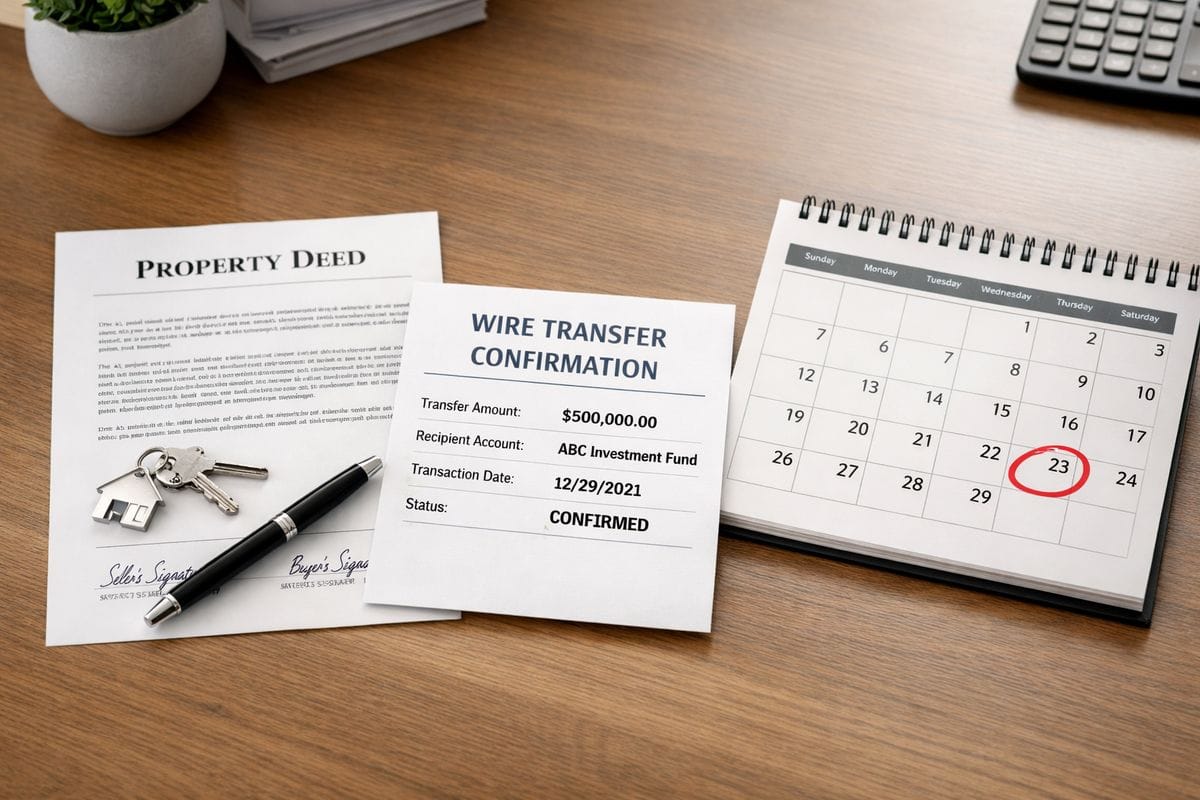
That is the practical answer to what “invested” means. A signed subscription agreement shows intent. Funding the QOF bank account is what closes the loop. If the wire misses the deadline, the tax election is exposed.
Example: Gain Reported on a K-1
Your partnership sells an asset on February 10, 2026 and later reports gain to you on Schedule K-1. If the partnership does not make the QOF investment itself, you can often use one of the alternate start dates available for pass-through gains. Using February 10, 2026 gives you an August 9, 2026 deadline. Using December 31, 2026 gives you a June 29, 2027 deadline.
That difference is why K-1 gains deserve separate tracking from direct gains. Married couples filing jointly also need to track each spouse’s gains separately when the gains arise separately. The windows are tied to the gain source, not merged into one household clock.
Example: Section 1231 Gain From Business or Rental Assets
You sell depreciable rental or business-use real estate during the year and assume the closing date starts your Opportunity Zone deadline. For Section 1231 gain, that assumption is often wrong. Your net Section 1231 gain is generally determined at year-end, and that later date often drives the 180-day period. Until the year-end netting is resolved, using the closing date as your only deadline is a planning error.
How to Make a Valid Opportunity Zone Investment
Once eligible gain is identified, the mechanics matter. Your investment must go into a Qualified Opportunity Fund, and it must be made in exchange for an equity interest. Deferral is not available for a loan to the fund.
From a practical investor standpoint, the question is not only where money goes, but when the investment legally occurs. The recommendation is to treat the date funds are received by the QOF for your equity issuance as the operative investment date. Subscription paperwork should be completed early, but funding should happen with margin for bank processing, weekends, holidays, and fund acceptance procedures.
Cash vs. Property Contributions
Cash is the cleanest path. It aligns with how most QOF subscriptions are documented, makes the deferred amount easier to trace, and reduces basis complications.
Non-cash property contributions create immediate complexity. Based on IRS rules summarized in industry guidance, only part of the investment may qualify, and the deferred amount can be limited by the basis of the contributed property. For investors focused on time-to-value and audit defensibility, cash proceeds are the cleaner route.
Why Fund Qualification Matters
A QOF is an investment vehicle organized to invest in qualified Opportunity Zone property and satisfy the program’s operating requirements. If the fund fails those requirements, your compliance and ROI risk rise immediately.
At the investor level, the takeaway is direct: deadline compliance does not rescue a bad fund structure. Before funding, confirm that the fund is actually operating as a QOF and maintaining its qualification standards under IRS Opportunity Zone rules.
Filing, Reporting, and Recordkeeping Requirements
Deferral is not automatic. You must make a timely tax election and report the investment annually.
Forms You Need to Track
The two forms that matter most are Form 8949, which is used to elect deferral of eligible gain, and Form 8997, which is used for annual reporting of Qualified Opportunity Fund investments. Your return file should also preserve sale documents, gain calculations, subscription records, and support for the exact 180-day start date.
The Records That Protect the Tax Benefit
Keep your closing statements, K-1s, installment agreements, entity return due dates, proof of funding date, and QOF subscription documents. Save wire confirmations, not just internal transfer screenshots. If timing is ever challenged, fast access to records controls time-to-resolution and protects the election.
Common Misunderstandings About the 180-Day Rule
The same errors appear over and over because the rules look simpler than they are.
“The 180 Days Always Starts on the Sale Date”
That is only true for many direct sales. Pass-through entity gains, Section 1231 gains, installment sales, and Section 1256 gains can follow different timing rules.
“Any Profit Can Be Rolled Into a QOF”
No. Only eligible gain qualifies. Full sale proceeds do not qualify unless the entire amount is gain, and ordinary income is outside the rule.
“Opportunity Zone Deferral Eliminates Tax Permanently”
No. Deferred gain is generally recognized on the earlier of disposition of the QOF interest or December 31, 2026. The separate 10-year benefit applies to post-investment appreciation, not the original deferred gain.
“You Must Live or Operate in the Zone”
No. The tax benefit is tied to the qualifying investment structure and qualifying zone activity, not your personal residence.
The Practical Recommendation Before You Invest
The recommendation is to confirm four items before funding any QOF: the exact gain type, the correct 180-day start date, the fund’s QOF status, and the filing path that supports your election. Based on analysis of common OZ filing errors, timing classification and documentation drive the outcome more than fund selection alone in the first phase.
For active investors trying to place capital, the operational rule is simple: do not aim for day 180. Aim earlier, fund in cash, and document the wire date that hits the QOF account. That is how the tax benefit survives contact with real-world deadlines.
Frequently Asked Questions
Does signing a subscription agreement count as investing within 180 days?
No. The safer legal position is that your capital must actually be contributed to the QOF for an equity interest. Signed documents without funded capital leave the deadline exposed.
What if the 180th day falls on a weekend or holiday?
Do not rely on last-day timing. Fund before the weekend or holiday. Wiring delays, bank cutoffs, and fund processing rules create unnecessary risk.
Can only part of a gain be invested in a QOF?
Yes. You can elect deferral for the amount of eligible gain actually invested. You do not need to invest the entire sale proceeds.
Do separate gains have separate 180-day periods?
Yes. Each eligible gain tracks its own timeline. If separate gains arise from different transactions, each gain has its own 180-day window.
Can ordinary rental income be invested for Opportunity Zone deferral?
No. Ordinary income does not qualify. The rule applies to eligible gains, not routine rental cash flow.
Is the 10-year exclusion affected if the 180-day deadline is missed?
Yes, because missing the 180-day deadline means the gain never enters the QOF deferral structure in the first place. No valid entry, no path to Opportunity Zone treatment on that gain.
References
- cdfifund.gov
- eig.org
- instead.com
- irs.gov
- irs.gov
- irs.gov
- nar.realtor
- natptax.com
- opportunityzones.com
- opportunityzones.com
- taxpolicycenter.org