
A strong year end tax prep rental property checklist does more than organize receipts. It lowers tax liability, speeds up filing, protects deductions, and cuts the cleanup cost that shows up when books are messy in January. Based on analysis of the ranking pages and field practice, the highest-ROI move is a structured review from November through April, built around the tasks that most often create missed deductions and IRS problems.
1. Lock Down All Rental Income Before Year-End
Start with income, because bad income reporting poisons everything downstream. Rental income includes monthly rent, late fees, pet fees, lease-break fees, parking, laundry, application fees, and tenant payments for owner expenses. The IRS also treats advance rent as taxable in the year received, even if it applies to next year, and a security deposit becomes income if retained or treated as last month’s rent.
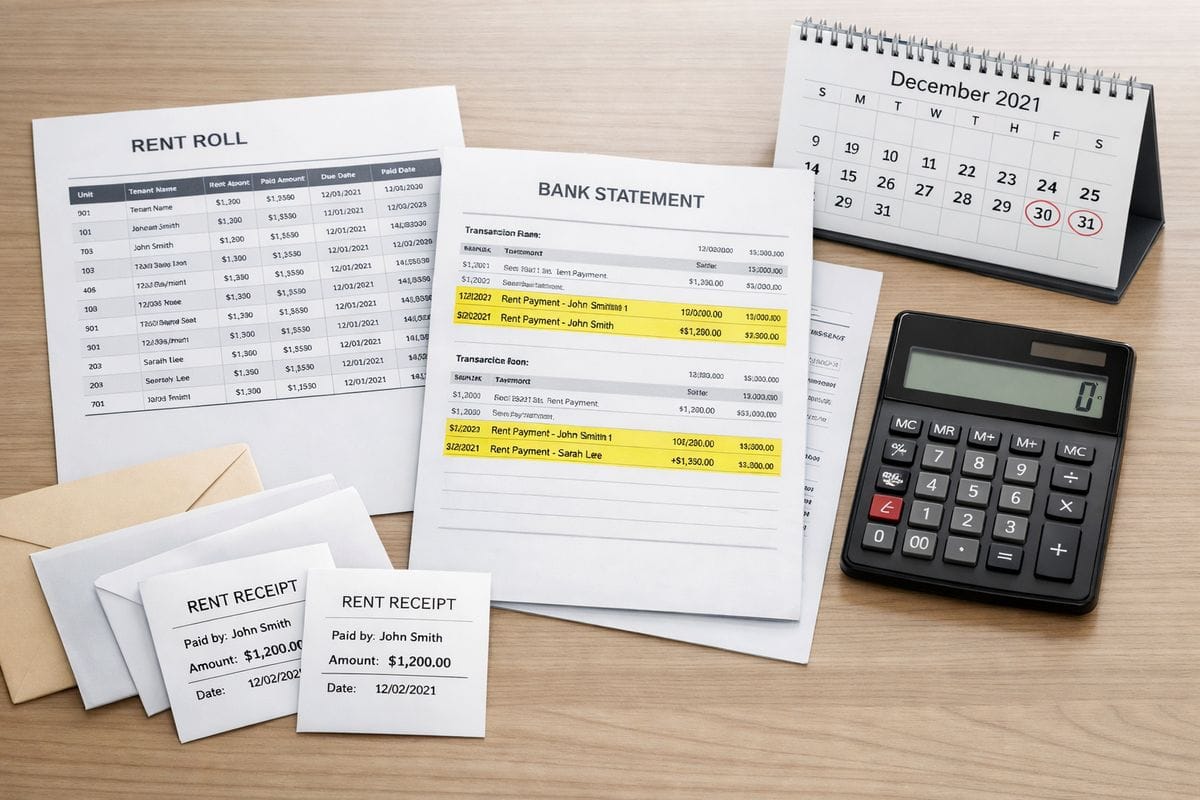
November is the right month to review year-to-date income by property. Pull the rent roll, compare it to bank activity, and identify anything recorded twice, deposited to the wrong property, or never posted at all. That single step drives cleaner Schedule E reporting and lowers audit risk.
Reconcile rent rolls to bank deposits
Match each lease to actual deposits. If Unit A shows $1,800 monthly rent, but deposits show $1,750, $1,800, and one missing month, fix that now, not in March. Tenant credits, partial payments, and off-platform payments create underreporting and duplicate income more often than landlords expect.
For short-term rentals, reconcile platform statements to bank deposits after fees. Gross income belongs in the books, with platform fees separately recorded as expense. Netting everything into one number hides deductions and distorts revenue.
Flag special cases that change tax treatment
Special cases deserve their own review tab. Advance rent, forfeited deposits, barter arrangements, and tenant reimbursements all change treatment. If a tenant repaired a fence instead of paying $900 in rent, that $900 is still rental income at fair market value. If a tenant paid a $350 water bill on your behalf, that payment is rental income, and the utility expense is generally deductible.
December is also the last clean window to identify odd receipts before memory fades and documents disappear.
2. Separate Personal and Rental Accounts
Mixed accounts create expensive tax prep. If mortgage payments, groceries, Home Depot runs, and rental insurance all hit the same card, books stop reflecting a rental business and start reflecting guesswork.
The recommendation is simple: each property or entity needs dedicated banking and credit card activity wherever possible. If that discipline did not happen during the year, year-end is the time to reclassify every owner-paid item and remove personal spending before books are finalized.
Pull out owner contributions and owner draws
Owner contributions are not rental income. Owner draws are not deductible expenses. Yet both get buried in the books constantly. If a $2,400 roof repair was paid personally, record it as an owner contribution plus the repair or asset entry, not as some mystery transfer.
Do the same for reimbursements. If rental funds reimbursed a personal card for a furnace part, record the expense correctly and classify the cash movement separately. Books should show true operating performance, not a jumble of transfers.
Note LLC and entity recordkeeping issues
An LLC does not create deductions by itself. Clean records do. If a property sits in an LLC, the bank account, credit card activity, ownership records, and bookkeeping should sit there too. That supports liability separation and makes tax prep faster, especially for multi-entity investors.
3. Categorize Every Expense Using IRS-Ready Buckets
Expense categorization is where most landlords lose money. A RentRedi survey of 835 landlords found 59% struggle most with categorization, and 31% have missed deductions due to incomplete records. What the field data shows is straightforward: bad categories create missed deductions, longer prep cycles, and higher accounting fees.
Use IRS-ready buckets from the start: mortgage interest, taxes, insurance, repairs, maintenance, cleaning, utilities, advertising, supplies, legal, accounting, management fees, software, and similar operating costs.
Match categories to Schedule E lines
Books should mirror the tax return. If bookkeeping categories line up with Schedule E reporting, tax prep turns into a review process instead of a reconstruction project. That saves time-to-file and reduces the chance that deductible items land in vague buckets like “miscellaneous.”
Chase missing receipts before January gets crowded
January is too late to start hunting down contractor invoices, insurance statements, and software subscriptions. November and December are better because vendors still answer quickly and card portals still have the current year front and center. The recommendation is to close receipt gaps before year-end, especially for larger repair and turnover costs.
4. Draw a Hard Line Between Repairs and Improvements
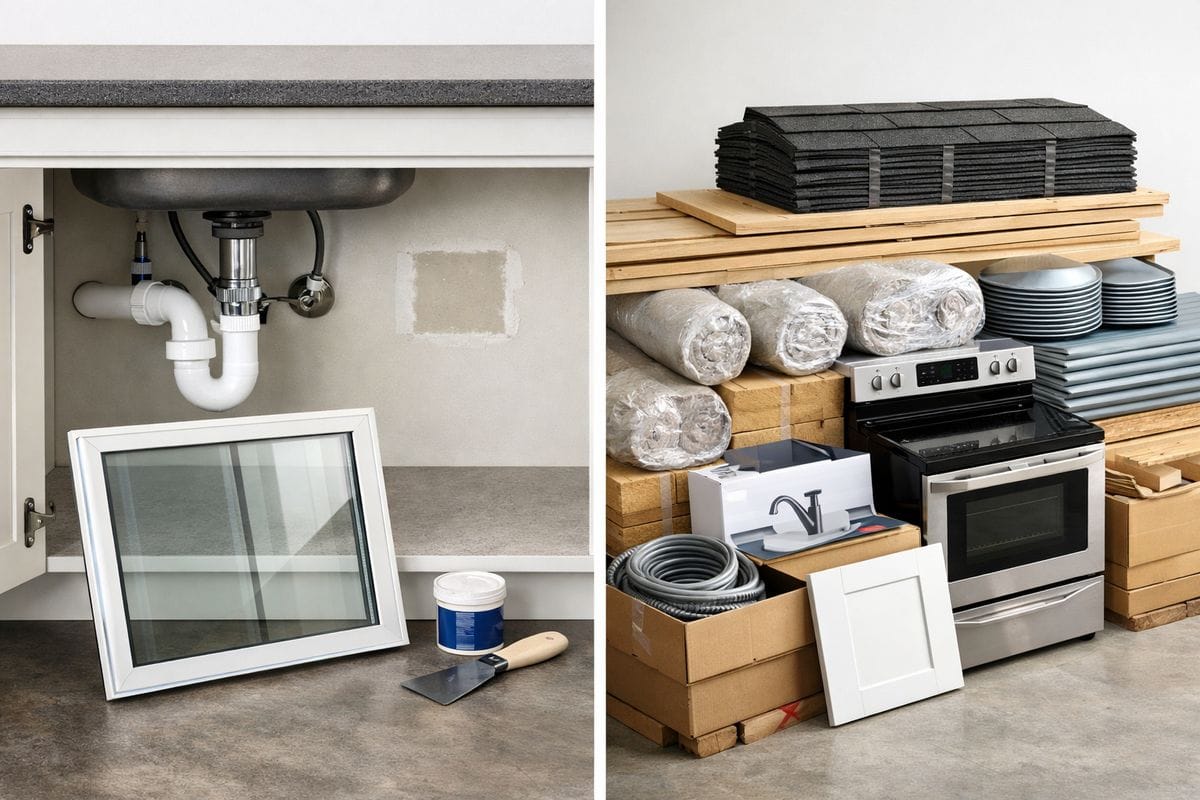
This is one of the biggest tax decision points in rental real estate. Repairs usually keep property in ordinary operating condition and are generally deductible now. Improvements add value, adapt use, or extend useful life, so they must be capitalized and depreciated.
That distinction changes real cash tax outcome. A $1,200 leak repair generally reduces this year’s taxable income now. A $12,000 roof replacement gets deducted over time through depreciation.
Use clear landlord examples
Patching drywall, fixing a leak under a sink, replacing a broken window pane, or servicing an HVAC unit usually fits repair treatment. Replacing the full roof, installing a new HVAC system, doing a full kitchen remodel, or upgrading flooring throughout the property belongs on the asset schedule.
December is your last chance to schedule true repairs before year-end if acceleration makes sense. If a unit needs a $2,500 plumbing repair anyway, getting the work completed and paid in December pulls the deduction into the current year.
Document the reason for the classification
Keep the invoice, scope of work, photos, and contractor notes. If the record shows “restored leaking pipe in upstairs bath,” the classification is easier to defend than a vague line saying “bathroom project.” Audit defense starts with documentation, not argument.
5. Review Depreciation Schedules for Every Property and Asset
Depreciation is often the largest rental deduction on the return. It also creates the longest-lasting errors. If an asset never makes it onto the schedule, the deduction disappears. If the date or basis is wrong, every future year is wrong too.
Depreciation begins when property is placed in service, not when purchased, and it is typically reported on Form 4562. January is the month to calculate current-year depreciation after the books are closed.
Confirm placed-in-service dates
A property bought in October but not rent-ready until December starts depreciation when it is available for rent. The same rule applies to appliances, flooring, and furnishings. If a refrigerator was installed on December 28 and ready for tenant use, depreciation starts this year.
Check land vs. building allocation
Land is not depreciable. Building basis is. If a $300,000 purchase allocated $90,000 to land and $210,000 to building, that split drives annual depreciation. Year-end is the time to confirm the allocation is supportable and consistent with closing records.
6. Identify Capital Additions That Belong on This Year’s Asset List
Create a year-end asset register for every property. Include roofs, HVAC systems, water heaters, appliances, flooring, fencing, and exterior improvements. This sounds basic, but plenty of landlords pay for capital items and never add them to depreciation records, which means the tax benefit never shows up.
December is also the last chance to place assets in service for the current year. If a new $1,600 refrigerator is delivered and installed by December 31, depreciation starts now, not next year.
Include short-term rental furnishings and equipment
Short-term rental operators miss asset deductions constantly because purchases are scattered across Amazon, warehouse stores, and local vendors. Beds, smart locks, cameras, linens, kitchen packages, TVs, and electronics all belong in the review. These assets often carry shorter lives and stronger planning value than landlords realize.
Tie each asset to date, cost, and useful life
A clean fixed-asset schedule needs three things at minimum: date placed in service, total cost, and depreciation life. Add property name and supporting invoice. That reduces accountant cleanup time and gives you a defensible record if the IRS asks.
7. Reconcile Vehicle, Travel, and Home Office Records
Mileage and admin deductions are common misses because documentation is weak. Rental-related vehicle use includes property visits, contractor meetings, supply runs, bank trips, inspections, and leasing activity. Personal commuting does not count.
January is a terrible time to reconstruct mileage from memory. November and December are the right time to backfill logs while the calendar is still fresh.
Clarify what travel counts
Documentation needs date, destination, business purpose, and miles. “Drove to duplex for move-out inspection, 18 miles round trip” works. “Car use for rentals” does not. Keep local rental business mileage separate from personal errands.
Address home office and admin use carefully
Home office deductions require exclusive, regular business use. A kitchen table does not qualify. A dedicated room used to manage rents, bookkeeping, lease files, and vendor coordination does. Keep the record clean and conservative.
8. Confirm the Right Tax Form: Schedule E, Schedule C, or a Special Rule
Most long-term residential rentals go on Schedule E. But the tax form changes when the activity looks more like an operating business than a passive rental. IRS guidance draws the line partly around services provided for guest convenience.
Explain the short-term rental and service test
Frequent turnovers alone do not automatically move a property to Schedule C. Substantial services do. Concierge-style services, meals, transportation, and similar guest-focused offerings push the activity toward business income treatment. That affects tax reporting and can affect self-employment tax analysis.
Include the under-15-day rule
If a home is rented for fewer than 15 days during the year, the rent is generally not taxable, and related rental expenses are not deductible, as summarized by TurboTax’s rental tax guidance. That rule is simple, but it gets missed constantly.
9. Test for Passive Loss Limits, Active Participation, and Real Estate Professional Status
Large deductions do not always create immediate tax savings. Rental activity is generally passive, and passive activity loss rules can limit current use of losses. Year-end is the time to estimate whether losses are usable now or suspended.
Cover the $25,000 active participation framework
If you actively participate and own at least 10%, you may qualify for up to $25,000 of rental loss allowance, subject to income limits. That matters for W-2 earners with a few properties because a paper loss from depreciation can reduce current tax if the rules line up.
Flag higher-level planning paths
Once the portfolio grows, status planning matters more. Real estate professional status, short-term rental strategies, and grouping analysis can change whether losses offset other income. This is where basic compliance stops being enough.
10. Review QBI Safe Harbor and Entity-Level Compliance Tasks
A rental business may qualify for the 20% Qualified Business Income deduction if the activity rises to the required level and records support the position. Year-end is the right time to test that, not after the return is drafted.
Gather proof of rental business activity
Keep logs, books, invoices, management records, and time records that show ongoing rental business activity. For landlords relying on a trade-or-business position, documentation matters as much as the deduction itself.
Clean up partnership or multi-owner records
If properties are owned with partners, clean up capital contributions, ownership percentages, and distributions before the tax package goes out. Bad partner records delay filings and create avoidable K-1 issues.
11. Build the Accountant Tax Package Before January Ends
This step drives the biggest operational win. A complete tax package cuts delays, reduces billable cleanup, and improves filing accuracy. By the end of January, assemble rent summaries, expense detail, mortgage interest statements, property tax records, insurance, loan documents, closing statements, depreciation schedules, mileage logs, and the prior-year return.
January also carries the biggest deadline most landlords miss: 1099-NEC compliance. If you paid any contractor $600 or more directly during the year, collect the W-9 before year-end and issue the 1099-NEC by January 31. Miss that deadline and penalties apply fast.
Include property-by-property reporting
Do not send one blended spreadsheet for five properties. Each property needs separate income, expense, and asset detail. Property-level reporting catches unusual spikes, missing deductions, and classification problems immediately.
Add a year-end questions list
Include a short memo covering purchases, sales, refinances, conversions, casualty losses, major renovations, and anything unusual. February is the month to hand over a clean package. March and April are for reviewing the draft return, verifying suspended loss carryforwards, and checking that nothing fell out during preparation.
12. Use Year-End Numbers to Make Next Year’s Tax Strategy Decision
Once books are clean, the next decision is strategic. Stay in basic compliance, or move into proactive planning that improves ROI before the next filing cycle. Based on analysis of real landlord tax outcomes, the recommendation is to use November through April as a six-month runway: November for year-to-date P&L review, December for deduction acceleration and W-9 collection, January for 1099s and depreciation, February for tax package delivery, and March through April for return review and carryforward verification.
Signs basic tax prep is no longer enough
The signals are clear: scaling from 1 to 5 properties, entering short-term rentals, carrying large suspended losses, doing frequent renovations, running multiple entities, or trying to offset six-figure W-2 income. At that point, reactive filing leaves money on the table.
What a proactive review should cover
A proactive review should cover depreciation strategy, repair safe harbors, disposition planning, QBI review, passive loss strategy, audit-ready documentation standards, and timing moves before December 31. That includes prepaying qualifying expenses, scheduling repairs before year-end, and placing new assets in service while the deduction still belongs to the current year.
Clean books are not the finish line. Clean books are the raw material for better tax strategy.
Frequently Asked Questions
What is included in a year-end tax prep rental property checklist?
A strong checklist includes income verification, bank reconciliation, expense categorization, repair versus improvement review, depreciation updates, mileage records, asset additions, form selection, passive loss testing, QBI review, 1099-NEC compliance, and a complete accountant package by January or February.
When should rental property year-end tax prep start?
Start in November. Review the year-to-date profit and loss, identify deduction acceleration opportunities, and begin gathering missing records. December is the deadline month for prepayments, repairs, placing assets in service, and collecting contractor W-9s.
Do landlords need to issue 1099-NEC forms?
Yes, if you paid a contractor $600 or more directly during the year in the course of your rental activity. Common examples include plumbers, electricians, handymen, and property-related vendors. The form is due by January 31, and getting the W-9 before year-end prevents a January scramble.
Is a security deposit taxable rental income?
Not when received as a true refundable deposit. It becomes taxable if you keep it for damages or apply it as last month’s rent. Advance rent is taxable when received, even if it covers a future period.
Are rental losses always deductible right away?
No. Passive activity rules can limit current deductions. Some landlords qualify for the active participation exception, and higher-level planning such as real estate professional status or short-term rental strategy can change the result.
Should short-term rentals go on Schedule E or Schedule C?
Most long-term rentals go on Schedule E. Short-term rentals can shift toward Schedule C when you provide substantial services primarily for guest convenience, such as meals, transportation, or concierge-style offerings. The service level drives the form choice.
References
- finance.yahoo.com
- irs.gov
- irs.gov
- jchs.harvard.edu
- rentredi.com
- rentredi.com
- therealestatecpa.com
- turbotax.intuit.com