

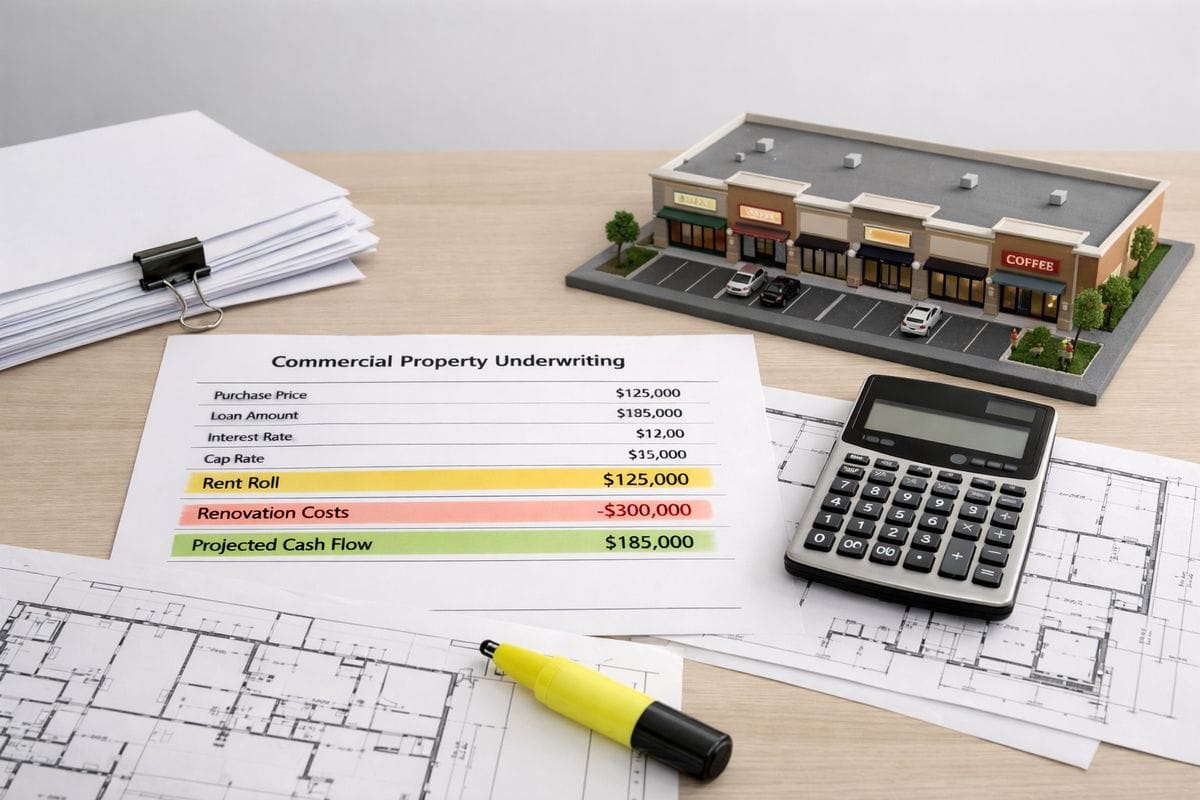
If you underwrite commercial deals as if Section 179 applies to the whole building, your year-one ROI model is wrong before closing. The truth about section 179 commercial rental property is simple: the building itself usually does not qualify, but specific carved-out assets often do, and that difference changes cash flow, pricing, and tax strategy from day one.
Why This Tax Rule Changes Deal ROI for Commercial Investors
Section 179 changes deal economics because first-year deductions change after-tax cash flow, and after-tax cash flow changes what a deal is worth to you. A larger current deduction improves near-term liquidity, reduces tax drag, and gives you more capital to fund leasing costs, reserves, and the next acquisition.
The blind spot is consistent across commercial and multifamily acquisitions. You buy a retail strip center, medical office, industrial building, or apartment complex and assume “commercial” means better deductions than residential. That assumption is too broad. The building shell usually stays on a long depreciation schedule. The real opportunity sits inside identified components such as qualified improvement property, personal property, and land improvements.
Based on analysis of common acquisition models, the recommendation is direct: stop thinking in terms of “Does the property qualify?” and start thinking in terms of “Which assets inside the deal qualify?” That shift is where better underwriting starts.
What Section 179 Actually Is in Plain English
Section 179 is an election that lets you expense the cost of qualifying business property in the year it is placed in service instead of recovering that cost slowly through normal depreciation. The IRS describes it as a first-year expensing deduction, which is the clearest way to think about it.
Expensing and depreciation do different jobs. Standard depreciation spreads a cost over an assigned tax life, such as 27.5 years for residential rental buildings or 39 years for nonresidential buildings. Section 179 lets you pull some of that deduction forward into year one, but only for property the tax code says qualifies.
That last point matters. Section 179 is not automatic. It is an election. You affirmatively claim it, you reduce the asset’s basis by the amount claimed, and you live with the downstream consequences. If the property does not qualify, the deduction does not exist.
Why Investors Confuse Section 179 With “Rental Property Depreciation”
Residential investors get used to a simple baseline. Buy a house. Allocate value between land and building. Depreciate the building over 27.5 years. Add appliances, flooring, or other short-life assets if properly tracked. That framework trains you to think “rental property = depreciation.”
Commercial ownership adds more moving parts. Now Section 179 enters the conversation. So does bonus depreciation. So does MACRS classification. So does cost segregation. It becomes easy to mash all of that into one vague idea: faster write-offs.
That shortcut causes mistakes. Section 179 is one rule. Bonus depreciation is a separate rule under Section 168(k). MACRS is the underlying depreciation system. Standard building depreciation is still the default. If you treat those as interchangeable, you will overstate deductions, miss elections, or choose the wrong tool.
The Core Misconception: Rental Property Does Not Equal Section 179 Property
Most rental buildings are Section 1250 real property. That means the building itself generally does not qualify for Section 179. Commercial rental property is not automatically Section 179 property just because it generates rent.
That is the central misconception. Investors hear that Section 179 works for commercial real estate and jump straight to the building. The tax code does not. It looks at the asset class. If the cost sits in the building structure or another nonqualifying real property category, it stays out of Section 179.
This matters in underwriting because bad assumptions distort returns. If you price a deal expecting a million-dollar first-year deduction from the building basis, your model will break once the return is prepared correctly. Tax planning starts with classification, not hope.
What Usually Does Not Qualify
Land never qualifies. The building structure does not qualify. Structural components usually do not qualify. Permanent building elements tied to the core function of the building usually do not qualify either.
That means walls that form structural framework, foundations, roofs in the general building basis context, load-bearing elements, and the main building shell are not your Section 179 opportunity. For rental real estate, especially residential rental property, this is where investors get into trouble. Claiming Section 179 on residential rental improvements as if the whole improvement qualifies is a classic audit adjustment. It also creates penalties when the filing position lacks support.
The right contrast is simple. Nonqualifying real property stays on long recovery periods. Qualifying carved-out assets get separate treatment if facts, function, and documentation support that result.
Why Commercial Investors Still Have More Opportunity Than Residential Landlords
Commercial ownership creates more planning opportunity, but not because the whole building becomes deductible. It creates more opportunity because commercial deals often include QIP, tenant build-outs, specialized systems, signage, site improvements, and a wider range of business-use assets that can be separated and classified correctly.
That makes commercial property more planning-intensive. A residential landlord with a small duplex often has fewer moving parts. A commercial buyer with a multi-tenant office or retail asset has more categories to analyze, more invoices to track, and more ways to accelerate deductions if the work is documented properly.
In plain English, commercial real estate gives you more tax planning surface area. It does not give you a free pass.
The Three Asset Buckets That Matter
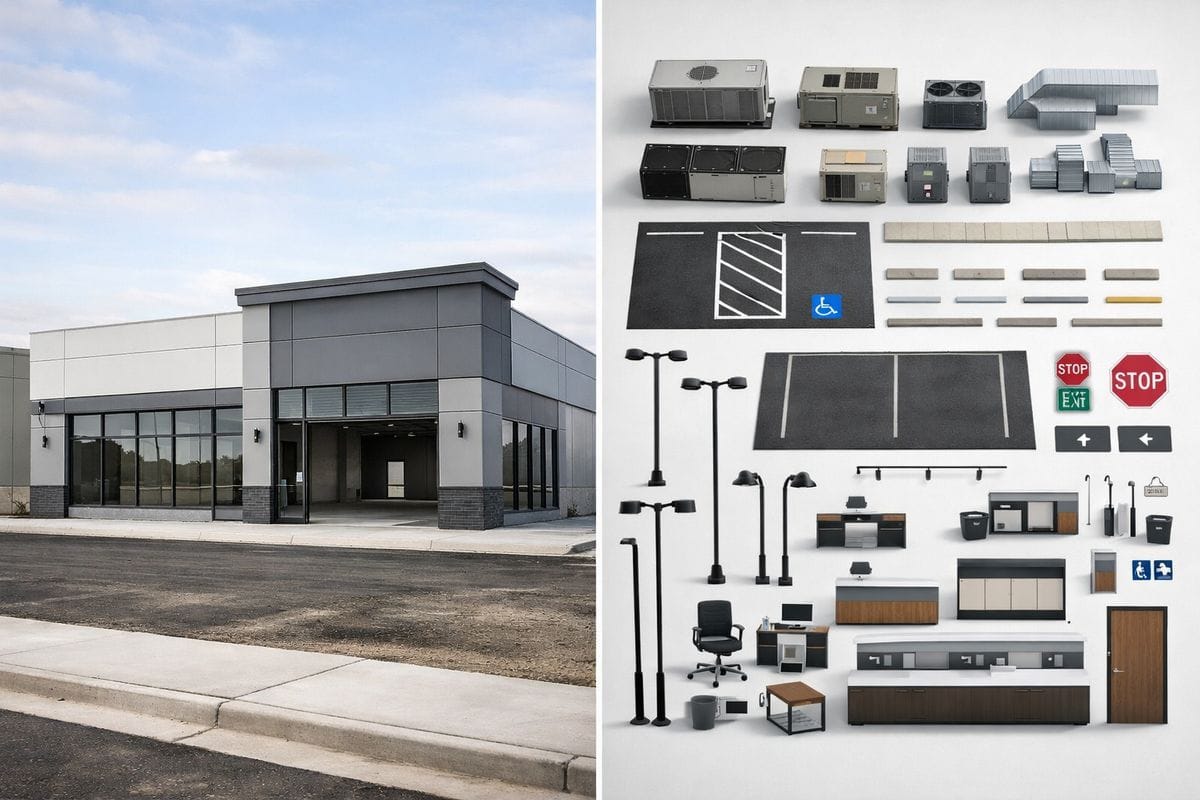
The cleanest way to evaluate any acquisition is to sort costs into three buckets. Bucket one is nonqualifying building basis. Bucket two is potentially qualifying Section 179 property. Bucket three is bonus-eligible short-life property, often identified through cost segregation.
This framework keeps your model honest. It also keeps your conversations with your CPA, cost seg provider, and acquisitions team focused on actual asset classes instead of generic tax optimism.
Bucket 1: The 39-Year Building
Nonresidential real property generally depreciates over 39 years. If you buy a strip center for $5,000,000 and allocate $1,000,000 to land, the remaining $4,000,000 building basis does not suddenly become Section 179 property. That basis generally sits on the 39-year schedule unless portions are reclassified.
The same logic applies to office buildings, industrial assets, and most other commercial properties. The bulk of the acquisition usually remains long-life property. That is the baseline.
If your model starts there, you avoid the most expensive mistake in the field: assuming accelerated deductions on basis that never qualified in the first place.
Bucket 2: Section 179-Eligible Business Property
Section 179 generally applies to tangible Section 1245 property, certain off-the-shelf software, and some qualified real property categories. In real estate, this bucket is narrower than most investors expect. It may include identified personal property, certain removable assets, and qualified improvement property in the right fact pattern.
IRS instructions also confirm that certain qualified real property can be elected under Section 179, including qualified improvement property and certain nonresidential improvements such as HVAC, fire protection, alarm, and security systems when they meet the rule set.
Notice the wording: certain property, not the building. That distinction drives the outcome.
Bucket 3: Bonus-Eligible Assets Found Through Cost Segregation
This is often where the bigger acceleration sits. Cost segregation identifies assets with 5-, 7-, and 15-year lives that can qualify for bonus depreciation if the timing rules are met. Land improvements, specialized electrical, dedicated plumbing, signage, flooring, cabinets, appliances, and similar components often land here.
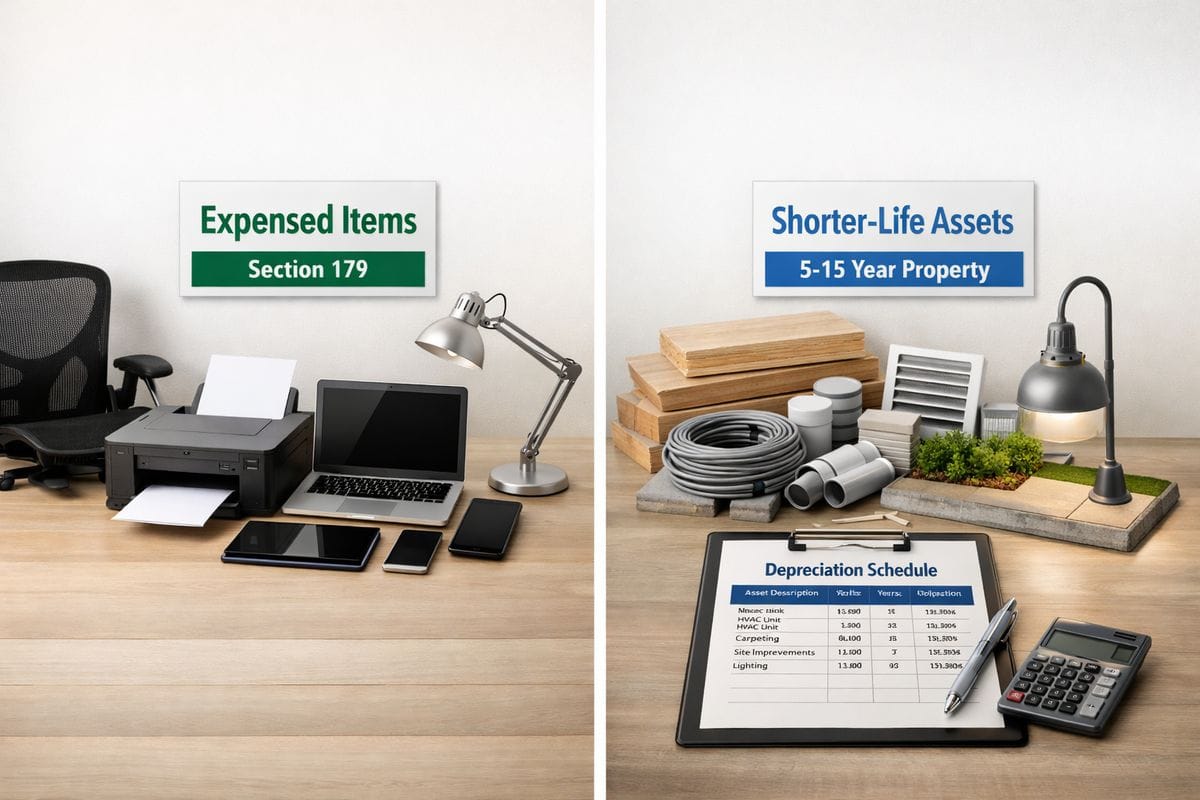
Section 179 and bonus overlap in planning, but they are not the same rule. Bonus often applies more broadly to qualifying short-life property. Section 179 gives selective control, but it comes with dollar caps, income limits, and recapture concerns. You need both tools on the table.
The Real Estate Exception Investors Miss: Qualified Improvement Property
Qualified improvement property, or QIP, is the real estate exception most investors hear about and then misapply. QIP means an improvement made by you to the interior of nonresidential real property after the building was first placed in service.
That definition has teeth. “Interior” matters. “Nonresidential” matters. “After the building was first placed in service” matters. Miss any one of those tests and the QIP treatment disappears.
This is why office, retail, and other commercial investors get both upside and risk here. QIP can create immediate expensing opportunities. It also creates some of the most common overclaims in commercial real estate returns.
What Counts as QIP
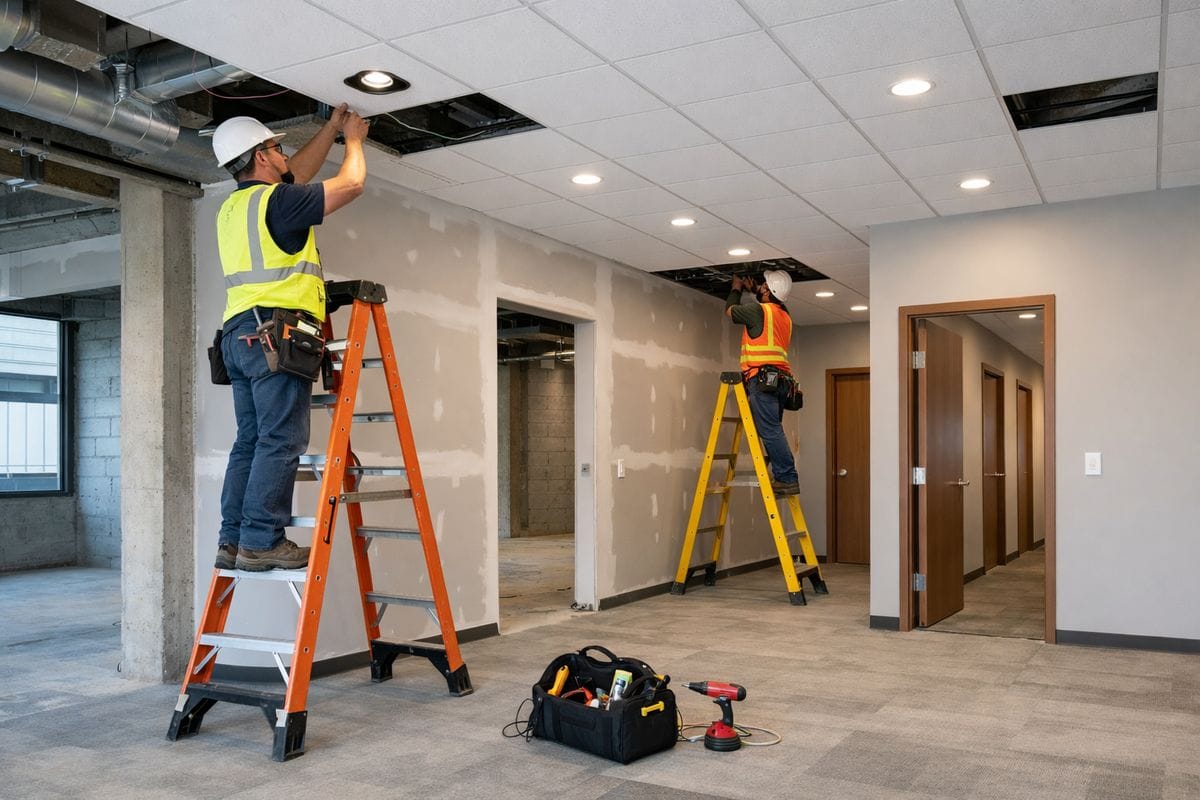
Interior drywall work in an existing office building can count. Interior doors, dropped ceilings, flooring, interior finishes, and similar improvements inside an already placed-in-service nonresidential building can count. Tenant suite reconfigurations and lobby finish upgrades often fit the category if they are interior and do not hit an exclusion.
Think of QIP like a renovation layer inside a finished commercial box. The box already exists. The building has already been placed in service. You come later and improve the interior.
That sequence is not a technical footnote. It is the rule.
What Does Not Count as QIP
Enlargements do not count. Elevators and escalators do not count. Internal structural framework does not count. If your renovation budget includes major structural work, expanding the footprint, or adding excluded components, that portion is outside QIP.
This is where renovation budgets fall apart in tax models. A $2,000,000 office upgrade sounds like a big immediate write-off until the cost breakdown shows $700,000 tied to structural and excluded work. Suddenly only part of the project qualifies for accelerated treatment.
The data shows that investors routinely overestimate QIP because contractors and leasing teams describe the work in practical construction language, not tax language. Your tax model needs the tax language.
Why New Construction and First-Time Build-Outs Trigger Mistakes
If the work is completed before the building is first placed in service, it is not QIP. That rule kills a huge number of assumptions around new construction and first-generation tenant improvements.
A newly built retail shell with tenant improvements installed before first service is still part of the initial building placed-in-service package. It does not become QIP just because the interior looks like tenant build-out work. The building was not already in service before that improvement was made.
This is one of the most expensive commercial filing errors. Investors hear “interior improvement” and stop there. The actual test is “interior improvement to nonresidential real property after the building was first placed in service.” Leave out the timing requirement and the deduction collapses.
Tangible Assets Inside and Outside the Building That May Qualify
Once QIP is understood, the next step is to look beyond it. Many real estate deductions come from assets that are not the building and are not QIP either. Function, permanence, and relationship to the operation of the property drive classification.
Interior Personal Property
Appliances, removable cabinetry, dedicated electrical components for specific equipment, AV systems, signage, furniture, and operating equipment can qualify for shorter lives and sometimes Section 179. In commercial settings, the question is not “Is it indoors?” The question is “Does it serve the building generally, or does it serve a specific business function and remain separable from the building?”
A breakroom refrigerator in an office property, movable furniture in a management office, a retail tenant’s dedicated display lighting, or a removable communication system all point in a different direction from the general building shell. That difference is why the same room can contain both nonqualifying building basis and qualifying personal property.
For residential rental property, this is where the narrow exception lives. Appliances, furniture, and similar short-life personal property can still be relevant. What does not work is treating residential rental improvements themselves as Section 179 property. That is the audit trap.
Land Improvements
Parking lots, sidewalks, fencing, landscaping, stormwater systems, curbing, and exterior lighting often fall into 15-year land improvement categories. These assets often matter more in commercial real estate than in small residential rentals because site work is a larger share of total project cost.
The NAR guidance specifically notes that parking lots and sidewalks, along with stormwater systems, fences, and landscaping components, are common real estate items eligible for accelerated treatment through the right framework.
A strip center with extensive paving and lighting can produce a meaningful short-life bucket. A suburban apartment complex with major exterior upgrades can do the same. If your acquisition model lumps all site work into building basis, you are understating first-year deductions.
Tenant-Specific Installations
Specialized installations for medical, retail, restaurant, and industrial users often create shorter-life property. A medical office with dedicated imaging room finishes, a restaurant with specialized plumbing and electrical, or a retail box with tenant-branded signage and fixture support can contain assets that are functionally tied to the tenant operation rather than the building generally.
This matters a lot in single-tenant and NNN property. The lease profile may look passive, but the asset classification can still be nuanced. Tenant-specific improvements can increase acquisition value and tax acceleration at the same time, if they are identified correctly.
Cost Segregation: The Tool That Finds the Deduction
Cost segregation is the operating process that finds the deduction. Without it, most accelerated depreciation opportunities stay buried inside 39-year basis.
The idea is straightforward. An engineering-based review breaks the purchase price or construction cost into asset categories with different tax lives. That does not create deductions out of thin air. It assigns costs to the right buckets based on function and construction detail.
For commercial investors, this is the center of the strategy. Section 179 rarely stands on its own in real estate. It becomes valuable after cost segregation identifies what actually qualifies.
How a Cost Seg Study Reclassifies Purchase Price
Take a $6,000,000 office acquisition with $1,200,000 allocated to land and $4,800,000 to depreciable improvements. Without cost seg, that $4,800,000 mostly sits on a 39-year schedule, producing roughly $123,000 of annual straight-line depreciation before conventions and adjustments.
Now assume a cost seg study identifies $550,000 of 5-year personal property and $650,000 of 15-year land improvements. The remaining $3,600,000 stays in 39-year property. Suddenly year-one deductions look very different. Some of the 5-year and 15-year property may qualify for bonus depreciation. Selected assets may also be evaluated for Section 179 depending on income and state treatment. The timing value shows up immediately.
Before the study, your tax picture looked flat. After the study, the deduction profile becomes front-loaded. That is why cost seg has such a direct impact on time-to-value and ROI.
When a Study Delivers the Best ROI
Cost seg delivers the strongest ROI when acquisition size is meaningful, property complexity is high, renovations are material, or site improvements are substantial. Office, retail, industrial, hospitality, healthcare, and large multifamily properties usually create better opportunities than a simple small residential rental.
Renovation-heavy acquisitions also stand out. If you buy an underperforming office building and spend $1,500,000 on interior work, systems, and site improvements, the tax classification opportunity expands. The same is true when a property contains specialized tenant improvements or extensive exterior infrastructure.
Based on field data, the best use case is not “every deal.” It is deals where the reclassified assets will materially change cash flow after factoring study cost, owner income position, and state rules.
Why “Good Enough” Allocations Create Audit Risk
Unsupported spreadsheets are not enough. Broker comments are not enough. Rule-of-thumb percentages copied from another deal are not enough.
Misclassification is the biggest failure point in the field data. If you claim that 22 percent of a building is 5-year property because a lender deck described it as “fully furnished and recently upgraded,” that is weak support. A defendable position needs engineering logic, asset narratives, invoice support, placed-in-service evidence, and a fixed-asset schedule that actually ties to the return.
The recommendation is firm: if the deduction is big enough to matter, the documentation is big enough to matter too.

Section 179 vs. Bonus Depreciation: Which Tool Wins and When
Investors search this comparison because the choice changes real cash outcomes. Section 179 and bonus both accelerate deductions, but they work differently and solve different problems.
Bonus depreciation is often the larger tool for real estate because it can apply to qualifying property with recovery periods of 20 years or less, and it is not constrained by the same taxable income limitation that governs Section 179. Current guidance also restored 100% bonus depreciation for qualifying property placed in service after Jan. 19, 2025, and before Jan. 1, 2031, subject to the applicable framework.
Section 179, by contrast, gives selective control. You can choose specific assets, coordinate around income, and sometimes improve state outcomes. The right answer depends on the asset mix and the owner tax profile.
Four Differences That Change the Outcome
First, Section 179 has a dollar cap and a phaseout. Bonus does not work that way.
Second, Section 179 is limited by taxable business income, while bonus can create or deepen a loss on qualifying assets. That difference alone makes bonus stronger for many larger acquisitions.
Third, Section 179 is elective on selected assets. Bonus follows a broader class-based framework unless you elect out. That gives Section 179 more precision.
Fourth, Section 179 carries its own recapture concerns tied to business use. Bonus also has recapture and disposition implications, but the operating mechanics are not identical. If you expect use changes or an early repositioning, the distinction matters.
When Section 179 Is Better Than Bonus Depreciation
Section 179 wins when you need selectivity. If your state decouples from federal bonus rules but allows a more favorable Section 179 outcome, Section 179 can produce stronger real after-tax cash flow than bonus despite looking smaller on the federal return.
It also wins when your income profile supports current use and you do not want to accelerate every qualifying asset at once. That matters in pass-through structures with uneven owner tax positions. You may prefer to expense specific assets, preserve future depreciation on others, and manage the annual tax burden more deliberately.
For investors operating multiple active businesses alongside real estate, Section 179 can fit into broader taxable income planning in a way bonus cannot.
When Bonus Depreciation Is Better
Bonus usually wins on larger acquisitions where the Section 179 cap and phaseout erase the benefit. It also wins when current taxable income is too low to absorb a large Section 179 deduction.
Take a deal with $3,200,000 of bonus-eligible 5-, 7-, and 15-year assets. Section 179 is not built for that scale if your placed-in-service total also triggers phaseout. Bonus is. If the assets qualify and timing rules are met, bonus can front-load the deduction far more effectively.
Bonus also works especially well in value-add acquisitions because used property can qualify if it is new to the taxpayer, not purchased from a related party, and not previously used by you.
When Using Both Creates the Best Result
The highest-performing strategy often uses both. Cost segregation identifies the buckets. Bonus may apply broadly to the short-life assets. Section 179 can then be layered selectively where income, state treatment, and entity structure make that choice better.
The order matters at a high level. Section 179 is considered first on elected assets, and basis is reduced accordingly. Bonus then applies to remaining qualifying basis where available. If you ignore sequencing, you can accidentally waste basis or produce a weaker state result than expected.
Deduction Limits, Phaseouts, and the Income Trap
This is where enthusiasm meets math. Section 179 sounds generous until the caps, phaseouts, and income limitation hit the model.
2025 and 2026 Dollar Limits
For 2025, the maximum deduction is $2,500,000, and the phaseout begins once qualifying property placed in service exceeds $4,000,000. For 2026, the maximum deduction is $2,560,000, and the phaseout threshold rises to $4,090,000.
Those are large numbers, but commercial acquisitions consume them quickly. Remember that the threshold looks at Section 179 property placed in service during the year, not just one small asset.
How the Phaseout Works on a Real Deal
Assume $6,500,000 of Section 179 property is placed in service in 2025. The amount over the $4,000,000 threshold is $2,500,000. That overage reduces the $2,500,000 maximum deduction dollar for dollar. Result: zero Section 179 deduction.
That surprises larger buyers because the limit sounds high in isolation. In portfolio terms, it is not. A sizable renovation program across multiple properties can wipe out the entire benefit even before you ask whether taxable income supports the deduction.
If you buy at scale, Section 179 is a selective tool, not a blanket answer.
The Taxable Income Limitation
Section 179 cannot exceed business taxable income. If the deduction is larger than the taxable income generated by active trades or businesses, the excess carries forward.
That point matters because many investors expect a giant first-year deduction to offset everything in sight. Section 179 does not work like that. The IRS instructions also make clear that a passive investor is not treated as actively conducting a trade or business for this purpose, and property held for investment is outside Section 179.
So the question is not only “Do the assets qualify?” It is also “Is there enough qualifying business income to use the deduction now?”
Can Section 179 Offset Rental Income, Active Business Income, or W-2 Wages?
This is one of the highest-intent questions because it goes straight to outcome. The answer turns on trade or business status, income characterization, entity flow-through, and passive activity rules. Investors often treat those as one issue. They are not.
Trade or Business Status for Rental Activity
A rental activity generally needs to rise to the level of a trade or business before Section 179 enters the picture in a meaningful way. Operational intensity, management involvement, service level, and lease structure matter.
A heavily operated property with meaningful day-to-day activity has a stronger position than a lightly managed lease asset that simply collects rent. That difference is not academic. It determines whether the property sits inside the kind of business activity Section 179 is built for.
This is also where short-term rentals create a distinct exception. If a short-term rental is operated as an active trade or business, with material participation and average guest stays under seven days, qualifying furnishings and certain business assets can fit the Section 179 framework. Example: a 12-unit short-term rental operation with average stays of four nights, active guest management, in-house turnover coordination, and material participation can support Section 179 on qualifying furniture, appliances, office equipment, and certain business-use assets. That is a very different fact pattern from a standard long-term residential rental.
Why Triple-Net Leases Create Problems
Triple-net lease property often creates weaker trade-or-business positioning because operational involvement is lighter. If the tenant handles taxes, insurance, maintenance, and much of the day-to-day burden, the rental stream starts looking more like passive investment income than active business income.
That does not mean no deduction opportunities exist. It means you should not assume Section 179 works the same way on a passive NNN pharmacy lease as it does in an owner-operated trade or business. For NNN buyers, the biggest accelerated depreciation opportunities often come from cost segregation and bonus on qualifying assets, not aggressive Section 179 assumptions.
What Investors Mean When They Ask About W-2 Income
Usually, this question really means: “Can this deduction lower tax on my salary from another business or job?” The answer depends on whether the Section 179 deduction arises from qualifying business activity, whether taxable income limitations are met, and whether passive rules block current use.
Some investors hear that business income can include wages and assume rental deductions automatically offset W-2 wages. That is too simplistic. Entity-level elections, K-1 reporting, passive limitations, and the nature of the activity all affect the result. Overpromising here creates expensive year-end disappointment.
Entity Structure Changes the Result
A sole owner, single-member LLC, partnership, and S corporation do not produce identical Section 179 results. That matters because commercial ownership increasingly sits inside joint ventures, syndications, and multi-member LLCs.
Elections Are Often Made at the Entity Level
Section 179 elections are often made at the entity level, and deductions then flow through to owners. The same general principle applies to bonus elections in partnerships and S corporations, where entity-level treatment controls major aspects of the result.
This matters because one owner may be able to use the passed-through deduction while another cannot. Identical K-1 items do not create identical tax outcomes across owners.
Partnership and Multi-Member Deal Friction
Partnerships create friction because the entity must make the election, but each owner still faces individual limits. One partner has active business income and basis. Another has passive income only. One partner wants maximum current deduction. Another wants to preserve future depreciation. The partnership only gets one tax filing position.
That is why entity structure should be reviewed before year-end and ideally before acquisition. If your ownership group has materially different tax profiles, the choice between bonus, Section 179, or a blended strategy is not a compliance detail. It is a deal design issue.
Why Trusts, Estates, and Certain Ownership Setups Need Special Attention
Section 179 is generally available to taxpayers other than trusts and estates. If title is held through a structure that blocks the intended election, your planning dies before it starts.
This is one more reason acquisition structure belongs in the tax discussion before closing, not after the return lands on your desk.
Timing Rules That Decide Whether the Deduction Exists
Commercial real estate tax planning is timing-sensitive because acquisition, completion, and placed-in-service dates decide whether the deduction exists in the target year at all.
Acquired by Purchase and New-to-You Rules
Section 179 generally requires acquired-by-purchase treatment and has related-party limitations. Bonus has its own rules, including used property eligibility when it is new to you and not acquired from a related party.
That difference matters in acquisitions involving affiliates, drop-and-swap structures, or internal transfers. If the paper trail is sloppy, the deduction weakens fast.
Placed in Service Means Ready and Available for Use
Placed in service does not mean “money spent.” It means ready and available for its intended use. A newly acquired office building that closes in December but still lacks completed tenant-ready improvements may not support the year-end deduction you expected. An unfinished retail suite under construction is not placed in service just because the invoices were paid.
For tenant improvements and renovations, this rule decides the tax year. It also explains why year-end closings so often disappoint buyers hoping for immediate write-offs.
Construction Start and Contract Timing
Current bonus guidance is especially sensitive to timing. The CLA analysis notes that acquisition timing under a binding contract depends on when the agreement becomes enforceable and when contingencies and cancellation periods are satisfied. It also outlines construction-start rules for self-constructed property and the 10 percent safe harbor concept. Those timing details matter because the current bonus framework ties eligibility to construction begins between Jan. 20, 2025, and Dec. 31, 2029, with placed-in-service deadlines also in play.
Contract language, delivery dates, contingencies, and actual readiness for use belong in pre-closing tax planning. Ignore them and you are guessing.
Recapture Risk: When the Tax Benefit Comes Back
Front-loaded deductions feel great in year one. Recapture feels awful later. Section 179 recapture turns a prior tax benefit back into ordinary income when the usage rules break.
The 50% Business-Use Rule
If business use drops to 50 percent or less, recapture can be triggered. That is not a minor compliance issue. It is a direct reversal of prior tax savings.
Think about mixed-use assets, shared equipment, or property-use changes after renovation. If the qualifying business use falls below the threshold, the earlier benefit is no longer fully respected. You then pick up ordinary income recapture in a later year.
Moving Into the Property or Changing Use
This risk shows up in real life more often than investors expect. A former rental unit becomes personal use. A live-work property shifts more space to personal occupancy. A short-term rental converts to a residence. Business-use assets no longer serve a qualifying trade or business.
The same warning applies to residential investors who improperly claimed Section 179 on rental improvements. Once the return is examined, the adjustment does not just remove the deduction. It can also expose penalties and interest because the original position lacked legal support.
Sale, Disposition, and Midstream Repositioning
Exit strategy matters. If you take aggressive first-year expensing and then reposition, dispose of, or significantly change the use of the property, the lifetime tax picture can look much different than the acquisition-year model suggested.
Aggressive acceleration without an exit plan often overstates ROI. Year-one tax savings matter. Lifetime after-tax return matters more.
State Tax Rules: The Deduction on the Federal Return Is Not the Whole Story
Federal modeling alone does not tell you the real answer. Many states decouple from federal bonus depreciation and apply their own Section 179 treatment. That changes actual after-tax cash flow.
Why Section 179 Sometimes Wins at the State Level
In a state that limits or disallows federal bonus conformity, bonus may look fantastic on the federal return and underwhelming in combined tax terms. Section 179 can sometimes hold more value because the state treatment is less restrictive.
This is why federal-only underwriting misses the mark. The recommendation is to model federal and state together before choosing the election strategy.
Multi-State Owners and Apportionment Complications
If you own property in one state, operate businesses in another, and live in a third, the answer gets more complicated fast. Apportionment, state-specific depreciation adjustments, and varying conformity rules all change the net benefit.
For multi-state owners, the federal return is only the starting point. Real ROI comes from combined tax modeling.
Commercial vs. Residential Rental Property: The Difference Investors Need in Numbers
Investors scaling from single-family and small multifamily into commercial property often assume the tax difference starts and ends with 27.5 years versus 39 years. That is only part of the story.
The 27.5-Year Residential Framework
Residential rental buildings generally depreciate over 27.5 years. That framework is familiar and relatively simple. You buy the asset, allocate land, depreciate the building, and separately track shorter-life personal property when appropriate.
Because of that simplicity, residential investors often expect the same style of answer in larger deals. Buy building. Claim depreciation. Maybe accelerate a few items. Done.
The 39-Year Commercial Framework
Commercial property raises the baseline to 39 years for nonresidential real property. That longer life makes asset classification more valuable because every dollar you can properly move out of 39-year basis has more timing impact.
Commercial property also creates QIP opportunities that residential property does not. That is a major dividing line. Interior improvements to nonresidential buildings can fall into powerful acceleration rules. Residential rental buildings do not get that same path.
Side-by-Side Example: Apartment Building vs. Retail Strip Center
Assume two $4,000,000 acquisitions, each with $800,000 allocated to land.
The apartment building leaves $3,200,000 in residential building basis on 27.5 years. A cost seg study may still identify appliances, site improvements, carpeting in common areas, or removable personal property. But residential use blocks the QIP pathway. If you spend $500,000 renovating apartment interiors, that work does not become QIP just because it is interior work.
Now look at a retail strip center with the same numbers. The $3,200,000 building basis starts on 39 years, which is slower. But if the property includes $300,000 of parking lot and lighting improvements, $150,000 of signage and dedicated tenant electrical, and $600,000 of interior suite renovations completed after the building was already in service, the acceleration potential is much larger. Some of that $600,000 may qualify as QIP. Some of the site work may fall into 15-year property. Some tenant-specific assets may become shorter-life property through cost seg.
That is the commercial tradeoff in plain English. The baseline building life is longer, but the planning surface is wider.
Five Real-World Deal Examples Investors Can Model
Theory matters. Underwriting examples matter more.
Example 1: Buying a Stabilized NNN Retail Property
Purchase price: $3,500,000. Land: $900,000. Depreciable basis: $2,600,000. Tenant is on a long-term NNN lease and handles most operational obligations.
Your first instinct may be to ask how much Section 179 the deal creates. The better question is how much qualifying short-life property the deal contains and whether the activity supports the Section 179 framework at all. In a passive NNN structure, trade-or-business positioning is weaker. The building shell remains 39-year property. Existing tenant improvements may still be classified through cost seg, and site assets such as parking lot, monument signage, and exterior lighting may create 15-year property. Bonus often does more work than Section 179 here.
A disciplined model might identify $180,000 of land improvements and $70,000 of signage and tenant-specific personal property. That is useful, but it is not a whole-building write-off. Expectations should stay disciplined.
Example 2: Renovating an Office Building Lobby and Suites
Existing office building. Renovation budget: $1,200,000 after acquisition. Scope includes lobby finishes, suite reconfiguration, new flooring, ceilings, interior doors, lighting, and a structural stair modification.
Here the line-by-line budget matters. Interior finishes, ceilings, flooring, and nonstructural interior work in an already placed-in-service nonresidential building point toward QIP. The stair modification and structural work do not. If $850,000 fits QIP and $350,000 does not, your tax strategy should reflect that split.
Timing matters too. If the renovated suites are not ready and available for tenant use by year-end, the deduction shifts. Paying the contractor is not enough.
Example 3: Acquiring a Small Apartment Complex With Exterior Improvements
Purchase price: $2,800,000. Land: $500,000. Building basis: $2,300,000 residential rental property. Separate exterior improvement budget: $250,000 for parking resurfacing, fencing, lighting, and landscaping upgrades.
This is where residential investors need discipline. The apartment building remains on 27.5 years. Interior apartment renovations do not open a QIP path because the building is residential, not nonresidential. Claiming Section 179 on those residential improvements is the mistake that leads to audit adjustments.
The opportunity sits elsewhere. Parking, fencing, some lighting, and landscaping-related site work may create shorter-life land improvement categories. Appliances or furniture in a leasing office can also be relevant. The residential building itself stays out of Section 179.
Example 4: Buying a Mixed-Use Building
Purchase price: $5,000,000. Ground-floor retail occupies 40 percent. Upper-floor apartments occupy 60 percent. Land is $1,000,000.
Now you have different depreciation systems inside one asset. The residential portion uses the residential framework. The retail portion uses the nonresidential framework. If you later renovate the retail interior after the building is already in service, that portion can create QIP potential. Renovating the apartment interiors does not.
Allocation becomes the whole game. If you do not split basis, improvement costs, and later placed-in-service dates correctly between residential and commercial portions, the return will be wrong.
Example 5: Value-Add Commercial Acquisition With a Cost Seg Study
Purchase price: $8,000,000. Land: $1,500,000. Renovation budget after closing: $2,000,000. Total depreciable and improvable cost base under review: $8,500,000 excluding land.
Without planning, most of the acquisition sits on 39 years and the renovation gets booked loosely by contractor category. First-year deduction under standard treatment looks modest.
Now apply cost segregation and proper improvement analysis. Assume the study identifies $900,000 of 5-year personal property, $1,100,000 of 15-year land improvements, and $1,000,000 of qualifying QIP inside the renovation budget. The remaining amount stays in 39-year basis. Bonus may apply to the 5-, 15-, and QIP categories if timing qualifies. Section 179 may then be layered selectively on chosen assets if taxable income and state treatment support it.
The difference is dramatic. Year-one deductions rise sharply, cash taxes fall, and available capital for leasing and reserves improves. That is how tax strategy improves ROI in practice, not by pretending the whole building qualifies.
The Most Expensive Mistakes Investors Make
The field data shows the same five failures over and over.
Mistake 1: Assuming the Entire Building Qualifies
It does not. This single error wrecks underwriting and creates filing risk. Most of the basis in a commercial acquisition stays in long-life real property.
Mistake 2: Missing the QIP Rules
Investors miss the interior test, the nonresidential test, and the placed-in-service timing test. New construction and first-generation build-outs get misclassified constantly. If the building was not already in service before the improvement, it is not QIP.
Mistake 3: Choosing Section 179 Before Modeling Bonus and State Impact
Section 179 feels powerful because it is elective and immediate. But if bonus produces a larger federal benefit, or if state rules punish bonus and favor Section 179, the sequence matters. Modeling after filing is useless.
Mistake 4: Ignoring Entity and K-1 Constraints
A partnership-level election does not guarantee an owner-level benefit. Basis limits, passive rules, income limitations, and owner tax profiles all shape the real result.
Mistake 5: Filing Without Documentation Strong Enough to Survive Review
A return needs invoices, asset detail, cost seg support, placed-in-service dates, and accurate Form 4562 reporting. If the support file is thin, the deduction is thin.
Documentation, Elections, and IRS Forms That Matter
Good strategy fails without clean execution.
Form 4562 and the Section 179 Election
The Section 179 election is made on Form 4562. IRS guidance is clear that Form 4562 must be attached when a rental activity includes a Section 179 deduction. If the election is not reported correctly, the deduction position weakens immediately.
The form also ties directly into basis reduction. Once Section 179 is claimed, that amount no longer remains available for regular depreciation.
Records to Keep for Cost Seg and Improvement Projects
Keep purchase allocations, invoices, contracts, fixed-asset schedules, cost seg reports, engineering narratives, and proof of placed-in-service dates. For improvements, retain scope descriptions detailed enough to distinguish structural work from interior nonstructural work.
If the file cannot explain why an asset belongs in a 5-, 7-, 15-, or QIP bucket, the classification is vulnerable.
What to Review Before the Return Is Filed
Review asset classification, state conformity, taxable income limits, entity elections, placed-in-service dates, recapture exposure, and K-1 implications before the return goes out. A return review that focuses only on totals misses the actual risk.
A Decision Framework for Investors: When Section 179 Belongs in the Plan
The strongest decisions follow three principles.
Principle 1: Start With Asset Classification, Not With the Tax Goal
Identify 39-year property, residential 27.5-year property, QIP, Section 1245 personal property, and land improvements correctly first. Only after that should you ask which election creates the best result.
Starting with the tax goal leads to overclaiming. Starting with classification leads to defendable savings.
Principle 2: Model Federal and State Outcomes Together
A deduction that looks strong federally can produce a weaker real cash outcome once state adjustments hit. State modeling belongs in acquisition underwriting, not just return preparation.
Principle 3: Match the Election to Income, Entity Structure, and Exit Plan
Current-year taxable income decides usability. Entity structure decides who gets the benefit. Exit strategy decides whether the front-loaded deduction improves or harms lifetime ROI.
The recommendation is to treat Section 179 as a selective planning tool, not a default election.
The Recommendation for Commercial Rental Property Owners
Section 179 belongs in a commercial real estate tax plan only after cost segregation, QIP analysis, taxable income modeling, state review, and entity review are complete. That sequence produces the business outcome that matters: stronger first-year cash flow, better after-tax ROI, and fewer recapture and audit problems.
For commercial rental property owners, the winning move is not aggressive claiming. It is precise claiming. Use Section 179 selectively, use bonus where it wins, and never assume the building qualifies just because the asset is commercial.
Frequently Asked Questions
Can Section 179 be used on a commercial rental building purchase?
Not on the building itself in most cases. The building is generally nonresidential real property depreciated over 39 years. Section 179 usually applies only to qualifying carved-out assets such as certain personal property, some qualified real property categories, and selected improvements that meet the rules.
Does Section 179 apply to residential rental property improvements?
No, not to the residential building or residential improvement costs as a general rule. That is a common mistake and a common audit adjustment. Short-life personal property inside a rental business, such as certain appliances or office equipment, is a different issue, but the residential building and its ordinary improvements are not Section 179 property.
What is QIP in commercial real estate?
QIP is qualified improvement property. It means improvements made to the interior of nonresidential real property after the building was first placed in service. Interior finish work can qualify. Enlargements, elevators, escalators, and internal structural framework do not.
Is bonus depreciation better than Section 179 for commercial real estate?
Often yes, especially on larger acquisitions or when taxable income limits reduce the current value of Section 179. But Section 179 can be better when selective expensing matters or when state tax treatment makes bonus less valuable. The answer comes from modeling both.
Can a short-term rental qualify for Section 179?
Yes, if the short-term rental is operated as an active trade or business and the facts support that treatment. A concrete example is a professionally run short-term rental operation with average guest stays under seven days, material participation, active turnover management, and qualifying business-use assets such as furniture and appliances.
Why does a cost segregation study matter so much?
Because most accelerated deductions in commercial real estate come from identifying and documenting the correct asset classes. Without cost segregation, qualifying 5-, 7-, and 15-year assets often remain buried in 39-year building basis, and the available first-year tax benefit gets missed.