

If a sale is about to trigger a large capital gain, choosing between opportunity zone vs 1031 exchange is not a technical footnote. It is a capital allocation decision that changes control, liquidity, tax timing, and long-term ROI. For most real estate investors, the recommendation is a 1031 exchange, but Opportunity Zones win when tax-driven appreciation and fund-based investing in designated communities are the actual objective.
Quick Overview: Opportunity Zone vs 1031 Exchange
These two strategies get compared because both defer tax. That is where the similarity ends.
A 1031 exchange lets you sell investment real estate and roll the proceeds into other like-kind investment real estate, deferring capital gains tax as long as the exchange rules are followed. You stay inside direct property ownership. You choose the next asset, control financing, shape the tenant mix, and keep the portfolio moving.
An Opportunity Zone investment starts with eligible capital gains, not necessarily from real estate. Gains from stocks, business sales, partnerships, and other appreciated assets can qualify if invested on time into a Qualified Opportunity Fund. That fund then invests in qualifying property or businesses inside designated census tracts called Qualified Opportunity Zones. The policy goal is broader than tax planning. Treasury and the IRS frame the program as a tool to spur economic growth and job creation in low-income communities.
That difference drives the decision. If direct ownership, income continuity, and cleaner execution matter most, 1031 wins. If broad gain eligibility and long-hold appreciation treatment matter more than control and liquidity, Opportunity Zones deserve a serious look.
Here is the side-by-side view that matters most in practice:
| Feature | Opportunity Zone | 1031 Exchange |
|---|---|---|
| Eligible gains | Capital gains from many asset classes | Gain from sale of investment/business real estate |
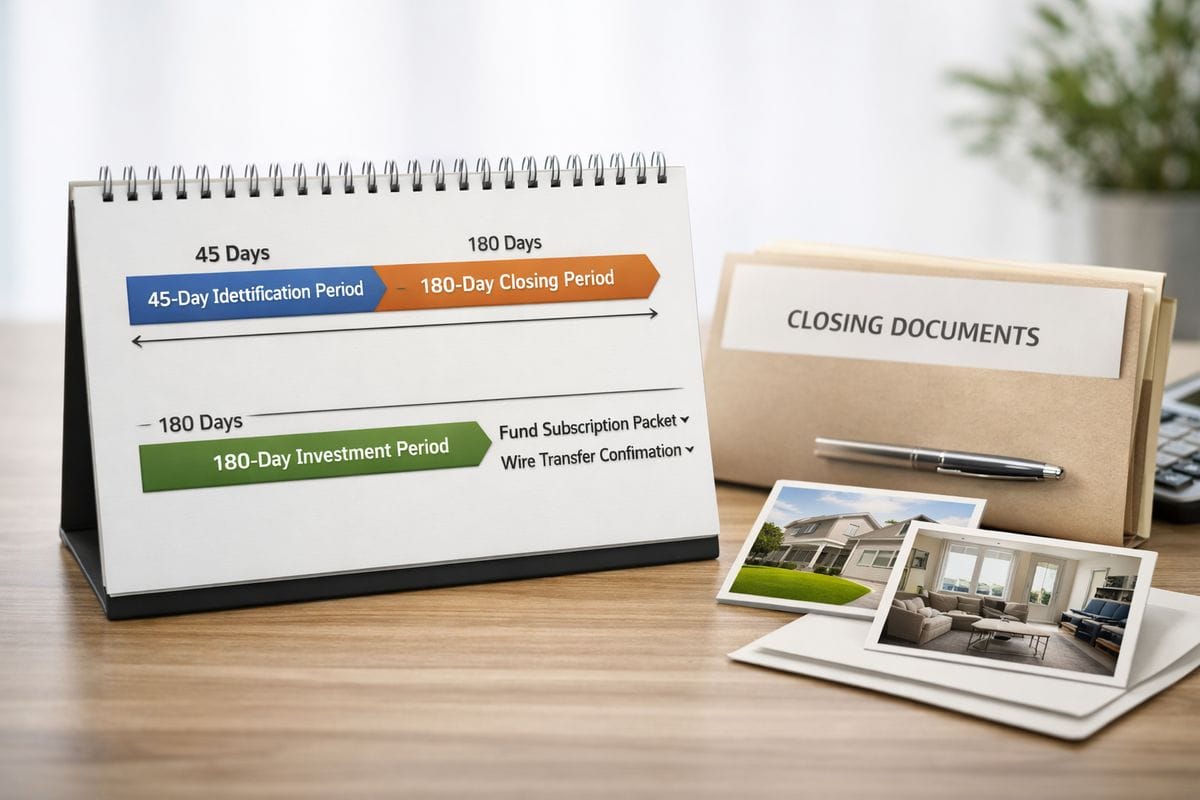
| Reinvestment timeline | 180 days from gain recognition, subject to entity rules | 45 days to identify, 180 days to close |
| Hold period | Long-term orientation, 10 years drives strongest benefit | No fixed statutory hold, but investment intent required |
| Ongoing requirements | QOF compliance, zone rules, fund reporting | QI coordination, exchange docs, replacement property compliance |
| Estate planning treatment | Deferral and basis rules depend on OZ structure and timing | Deferred gain often continues until taxable sale; step-up planning often central |
| Final tax outcome | Deferral on invested gain, potential exclusion of OZ investment appreciation after required hold | Deferral carries forward into replacement property until taxable disposition |
Based on analysis of common investor outcomes, 1031 wins for landlords, operators, and investors replacing one income-producing property with another. Opportunity Zones win when the gain comes from a non-real-estate asset, when a 10-year hold fits the plan, and when reduced control is acceptable in exchange for potential appreciation benefits.

How Each Strategy Works
The mechanics are simple at the top level and unforgiving in execution.
A 1031 exchange begins with the sale of investment or business real estate. Instead of receiving the sale proceeds directly, a qualified intermediary holds the funds. You identify replacement property within 45 days and complete the purchase within 180 days. If the structure is respected, tax on the gain is deferred into the new property.
An Opportunity Zone investment starts when a capital gain is recognized. Instead of exchanging one property for another, you contribute the eligible gain amount into a Qualified Opportunity Fund within the applicable 180-day window. The fund then invests in qualified property or businesses located in designated zones. Your tax result depends on timing, basis rules, fund compliance, and how long the investment is held.
That difference matters operationally. A 1031 is an asset replacement strategy. An Opportunity Zone is a gain redeployment strategy.
Opportunity Zone basics
Opportunity Zones were created by the Tax Cuts and Jobs Act of 2017. The structure works through Qualified Opportunity Funds, which are investment vehicles organized to place capital into Qualified Opportunity Zone property or businesses. The designated zones are low-income census tracts nominated by states and certified by Treasury, with qualifying tracts in all 50 states, the District of Columbia, and five U.S. territories.
Only eligible gains qualify for the tax incentive. That point gets missed constantly. Sale proceeds do not matter by themselves. The tax benefit attaches to the amount of gain invested, not the entire transaction value.
The regulatory backdrop is detailed. Final regulations under TD 9889 and multiple proposed regulations, notices, and revenue procedures shape how funds, property, original use, and substantial improvement are treated. The program is tax-driven, but it is not simple.
1031 exchange basics
A 1031 exchange applies to like-kind exchanges of real property held for investment or productive use in a trade or business. In practice, that means you can sell a rental house and buy an apartment building, sell raw land and buy a retail center, or sell a warehouse and buy a net lease property. Like-kind for real estate is broad, which is why 1031 remains the standard move for investors staying in property.
The process depends on a qualified intermediary. If sale proceeds touch your account, the exchange fails. The replacement property also has to satisfy value and equity rules if full deferral is the goal. Buy down in value or pull cash out, and tax shows up as boot.
The appeal is obvious. Your equity stays in real estate, tax is deferred, and the investment thesis remains under your control.
Tax Benefits and Deferral Timeline
Tax deferral sounds similar in marketing copy. The economics are different.
A 1031 exchange defers gain by carrying it into the replacement property. The tax liability does not disappear. It follows the asset chain until a taxable sale happens. That makes 1031 powerful for preserving equity and compounding inside direct ownership.
Opportunity Zones also defer tax on eligible gains, but under a separate timeline and with a separate payoff. The real attraction is not temporary deferral alone. It is the possibility of excluding post-investment appreciation on the Opportunity Zone investment after the required long hold.
That creates a clean strategic split. If near-term redeployment into income-producing real estate matters most, 1031 is stronger. If long-duration appreciation on a fund investment is the target, Opportunity Zones have a sharper upside.
Opportunity Zone tax treatment
The IRS states that investing eligible gain in a Qualified Opportunity Fund can temporarily defer tax on that gain. That deferral is not open-ended. It runs under statutory timing rules tied to the program.
The more important long-term feature is this: if the Opportunity Zone investment is held long enough and the rules are met, appreciation on that investment can receive favorable exclusion treatment. That is the headline benefit that drives serious OZ capital. Not the initial deferral alone.
But the gain invested is the key number. Sell an asset for $5 million with $2 million of gain, and only the $2 million gain is relevant to the Opportunity Zone tax incentive. The full sale proceeds do not need to be rolled over. That makes OZ more flexible for capital planning, especially after stock sales, business exits, or crypto gains, where no like-kind real estate exchange exists.
1031 exchange tax treatment
A 1031 exchange defers capital gains tax by replacing one like-kind investment property with another. The deferred gain carries into the replacement asset through basis adjustments. As long as exchanges continue or the property is held until death under a broader estate plan, the tax remains postponed.
That direct carry-forward treatment is why 1031 is so effective for real estate owners who want continuity. Equity that would have gone to tax stays deployed in property. Rent continues. Depreciation planning continues. Financing remains a controllable variable.
The recommendation is straightforward. If the goal is to preserve equity inside active or semi-active real estate ownership, 1031 delivers the cleaner tax result.
Eligible Assets and Investment Scope
The biggest practical difference is not tax mechanics. It is what gets you into the strategy in the first place.
Opportunity Zones accept eligible capital gains from many sources. A 1031 exchange requires the sale of qualifying investment or business real estate. That makes OZ broader at entry and narrower at destination.
What qualifies for Opportunity Zones
Opportunity Zone treatment begins with eligible capital gain. That gain can come from more than real estate. Stock sales, business sales, partnership interests, certain fund redemptions, and other appreciated assets can all create the type of gain that may be invested into a QOF on time.
The destination, however, is tightly defined. Your money must go into a Qualified Opportunity Fund, and that fund must place capital into qualified property or businesses in designated zones. Those zones exist across all 50 states, D.C., and five U.S. territories, but geography is still constrained to approved census tracts.
That means Opportunity Zones are broader than 1031 on where the gain comes from, but narrower on where the capital ultimately lands.
What qualifies for 1031 exchanges
A 1031 exchange applies to real property held for investment or used in a trade or business. Common examples include rental homes, multifamily properties, retail centers, office buildings, industrial property, agricultural land, and vacant land held for investment.
Personal residences do not qualify. Property held primarily for resale does not fit the standard investment profile. Securities, partnership interests, and business sales fall outside the 1031 structure.
That is why a 1031 is not a general tax shelter. It is a real estate continuity tool.
Reinvestment Rules and Deadlines
Execution risk is where otherwise good tax planning goes off track.
Both strategies use 180 days somewhere in the process. That superficial overlap confuses investors. The actual timing pressure is very different.
Opportunity Zone timing rules
Eligible gain generally must be invested into a Qualified Opportunity Fund within 180 days. For direct gains, that sounds manageable. For gains flowing through partnerships, S corporations, estates, or trusts, the clock can become more complicated because the recognition date and election timing require close tracing.
This creates a different type of pressure than a 1031. You do not need to identify and close replacement real estate personally within 45 days. But you do need correct tax-date analysis and a compliant fund subscription inside the allowed window. Based on analysis of failed filings, errors often come from misunderstanding entity-level gain timing rather than missing obvious calendar dates.
1031 exchange timing rules
A 1031 exchange imposes two hard deadlines: 45 days to identify replacement property and 180 days to complete the acquisition. Those windows create intense market pressure. In competitive markets, that pressure drives rushed underwriting, overpayment, and acceptance of inferior locations or tenant risk.
The tax rule is simple. The operating reality is not.
This is the core tradeoff. A 1031 is easier to understand but harder to execute under deal pressure. An Opportunity Zone investment is less acquisition-driven at the individual investor level but more technical on tax and fund compliance.
Control, Flexibility, and Investor Involvement
Tax savings look great on paper. Control determines whether the investment still works after closing.
Control inside an Opportunity Zone investment
When capital goes into a Qualified Opportunity Fund, direct control usually drops sharply. You are allocating capital to a sponsor, manager, or fund structure. Property selection, development pace, refinance decisions, exit timing, and reporting cadence sit with that structure, not with you.
That is not automatically bad. For investors exiting an operating business or realizing gains from securities, passive deployment can be attractive. But the tradeoff is real: sponsor dependence rises, transparency varies, and property-level decision-making falls away.
If control is the main objective, Opportunity Zones lose. If outsourcing execution in exchange for tax-driven appreciation is acceptable, the model fits.
Control inside a 1031 exchange
A 1031 exchange keeps control at the asset level. You pick the market. You choose the property type. You decide whether to buy all-cash, add debt, trade into stronger rent growth, consolidate into one asset, or diversify into several.
That control affects business outcomes directly. You can shape cash flow through tenant strategy, financing, lease structure, and capex timing. You can exit one market and enter another without waiting on a fund sponsor. You can adjust the portfolio as operating conditions change.
For landlords and active investors, this is the decisive advantage.
Liquidity, Cash Flow, and Portfolio Strategy
Three drivers determine strategic fit here: income needs, concentration risk, and time-to-value.
Opportunity Zone liquidity profile
Opportunity Zone investments are usually built for patient capital. Many funds target development or heavy repositioning inside designated communities, which means capital is tied up for longer periods and cash flow can lag. A project may need entitlement work, construction, lease-up, and stabilization before distributions become meaningful.
That profile works for investors focused on long-term appreciation and tax efficiency. It works poorly for investors replacing current rental income or seeking near-term access to capital. The tax structure rewards duration, so liquidity is often the price of admission.
1031 exchange cash flow profile
A 1031 exchange can immediately reset the portfolio around income. You can move from management-heavy rentals into triple-net assets, from under-rented buildings into stabilized multifamily, or from low-yield coastal holdings into stronger cash-flow markets.
That flexibility improves time-to-value. Cash flow starts when the replacement property performs, not when a development cycle finishes. Debt can be sized deliberately. Portfolio construction can reflect income targets, concentration limits, and regional demand trends.
If predictable operating income is the goal, 1031 has the better profile by a wide margin.
Risk Profile and Complexity
Both strategies create avoidable mistakes. The mistake patterns are different.
Opportunity Zone risk factors
Opportunity Zone risk begins with sponsor and project quality. A weak fund manager, unrealistic development budget, slow lease-up, or poor zone selection can erase the economic value of the tax benefit. Valuation is also harder when a fund holds development-stage assets rather than stabilized property.
Geographic concentration adds another layer. Designated tracts exist nationwide, but not every tract has durable fundamentals. A tax incentive does not create tenant demand by itself. Local income growth, absorption, municipal support, and exit liquidity still drive performance.
Regulatory complexity is the final pressure point. The volume of IRS guidance, including final regulations TD 9889, proposed regulations, notices, and revenue procedures, signals a higher technical burden. The upside depends on tax treatment and investment execution both working.
1031 exchange risk factors
A 1031 exchange carries simpler tax logic but significant transaction risk. The most common problems are failed identification, buying under deadline pressure, financing mismatches, and concentration in a replacement asset that looks safe only because the clock is ticking.
Overpaying is the classic failure. Tax deferral can justify a weak acquisition in the investor’s head, but the math does not forgive bad basis. A poor property bought on day 43 is still a poor property.
The answer is disciplined sourcing before the sale closes. The investors who struggle most in 1031 transactions usually begin looking too late.
Geography and Market Constraints
Location rules shape the opportunity set, and the opportunity set shapes returns.
Opportunity Zone location limits
Opportunity Zone investments must connect to designated Qualified Opportunity Zones. Those areas are specific census tracts certified by Treasury. That narrows sourcing to approved locations, not necessarily to the best-performing market in your target region.
Some zones sit in high-growth urban corridors with real demand drivers. Others do not. The tax benefit can make a weak market look investable on paper. That is where discipline matters. The location still has to work without tax incentives carrying the entire deal.
1031 exchange location flexibility
A 1031 exchange has no distressed-area requirement. Your replacement property can be in any qualifying market that matches your operating goals. You can chase rent growth in the Sun Belt, credit tenancy in the Midwest, industrial demand near ports, or low-management net lease assets in suburban trade areas.
That freedom improves diversification and underwriting quality. Market-driven allocation usually beats tax-driven geography over long holding periods. For investors focused on demand, demographics, and income resilience, 1031 has the stronger map.
Administrative Burden and Compliance
Hidden time cost matters because tax savings that consume excessive management time often fail the business test.
Opportunity Zone compliance requirements
Opportunity Zone investing comes with a heavier technical load. At the investor level, gain eligibility, election timing, and reporting all need precision. At the fund level, organization, testing, qualifying asset rules, and documentation carry ongoing obligations.
If the strategy involves direct project ownership inside a fund, concepts such as original use and substantial improvement become central. The broader regulatory framework, including multiple IRS notices and final regulations, reflects that complexity clearly. This is not a casual election. It is a structured compliance regime.
1031 exchange compliance requirements
A 1031 exchange is operationally demanding, but familiar to active real estate investors. You need a qualified intermediary, proper exchange documentation, timely identification records, coordinated closing logistics, and clean title handling.
Compared with Opportunity Zones, the compliance burden is narrower and more transaction-specific. Once the exchange closes, the ongoing reporting profile is simpler because you own the replacement property directly rather than through a specialized tax incentive regime.
That difference matters for investors managing multiple properties already. Administrative simplicity supports scale.
Pricing and Transaction Costs
Taxes are only one line item. The total cost stack decides whether the strategy actually improves ROI.
Opportunity Zone cost structure
Opportunity Zone investments often carry fund-level fees, sponsor promotes, legal setup or subscription costs, tax advisory fees, and the economic cost of illiquidity. If the fund is development-heavy, pre-stabilization delays can push time-to-value far out. That fee drag compounds.
The tax story can still be attractive, especially where appreciation is strong and the hold is long enough to unlock the intended result. But a mediocre project with layered fees is still a mediocre project. Tax incentives do not erase weak economics.
1031 exchange cost structure
A 1031 exchange usually includes intermediary fees, legal review, standard closing costs, financing expense, diligence costs, and any capex needed to reposition the replacement asset. Those costs are not trivial, but they are tied to an asset you directly underwrite.
That visibility is the advantage. You can model rent, debt service, reserves, and exit cap assumptions with much more confidence than a blind or semi-blind fund structure. Cost control tends to be stronger when asset control is stronger.
Best Fit by Investor Goal
Four drivers should make the decision: control, timeline, income need, and tax objective.
Choose Opportunity Zones when…
Choose Opportunity Zones when the gain comes from an asset that cannot use 1031 treatment, such as stock, a business sale, or certain partnership-related gains. Choose them when the plan is long-term appreciation, not immediate cash flow. Choose them when fund-based investing is acceptable and day-to-day operational control is not a priority.
The recommendation is strongest when your objective is tax-driven appreciation inside designated communities, the hold period fits a 10-year horizon, and illiquidity does not interfere with portfolio needs. That is the profile where OZ wins clearly.
Choose a 1031 exchange when…
Choose a 1031 exchange when direct ownership still matters, when income continuity matters, and when the sale involves investment real estate. This is the right fit for landlords, syndicators, and property operators repositioning from one asset into another with better yield, market exposure, or management profile.
The recommendation is strongest when the goal is preserving equity, keeping tax deferred, and staying in control of market selection, financing, tenant strategy, and exit timing. For most real estate investors, this is the stronger business decision.

Can You Use Both in a Broader Tax Strategy?
Yes, but not as interchangeable versions of the same transaction.
A 1031 exchange and an Opportunity Zone investment solve different problems, so the smart use case is sequencing and portfolio segmentation. One gain event may be handled through a 1031 to keep real estate equity fully deployed in direct ownership. A separate gain event, such as a stock sale or business exit, may be allocated to a Qualified Opportunity Fund to capture OZ treatment on that gain.
Even inside a real estate-heavy balance sheet, the two tools can coexist over time. Direct operating capital can stay in a 1031-driven portfolio focused on cash flow and control. Non-core gains can move into long-duration OZ exposure where appreciation and tax treatment are the objective. The common failure is treating one as a substitute for the other without respecting the different hold periods, control models, and compliance burden.
Advisor coordination matters here because transaction timing, entity structure, and gain source all affect what is available. The strategies can fit inside one tax plan. They do not belong in one bucket.
Verdict: Which Tax Move Wins?
The recommendation is 1031 exchange for most real estate investors seeking direct control, income continuity, cleaner execution, and broader market choice. Based on analysis of how investors actually create ROI, 1031 delivers the stronger business outcome when the objective is staying in real estate and compounding equity through better property selection.
Opportunity Zones win under a narrower but meaningful set of facts. If your gain comes from an asset class outside real estate, if a 10-year hold aligns with the plan, if current income is not the priority, and if fund-based exposure to designated communities fits your allocation model, Opportunity Zones offer a tax result that 1031 cannot replicate.
So which tax move wins? For landlords and property investors replacing one real estate asset with another, 1031 wins. For investors redeploying eligible gains from a wider range of assets into long-term, tax-driven appreciation inside designated zones, Opportunity Zones win.
Frequently Asked Questions
Can an Opportunity Zone investment defer gain from a stock sale while a 1031 exchange cannot?
Yes. That is one of the biggest differences between the two strategies. Opportunity Zones can accept eligible capital gains from many asset classes, including stock sales and business sales, while a 1031 exchange is limited to qualifying real property held for investment or business use.
Is the full sale price required to be invested in an Opportunity Zone?
No. The tax incentive applies to the eligible capital gain invested into the Qualified Opportunity Fund, not to the full sale proceeds. That makes OZ planning more flexible when part of the sale value needs to stay liquid.
Which strategy is better for current rental income?
A 1031 exchange is better for current rental income. You can buy a replacement property that produces rent immediately, optimize debt, and keep direct control over operations. Opportunity Zone investments often follow a longer development or stabilization timeline, which delays cash flow.
Does a 1031 exchange eliminate tax permanently?
No. A 1031 exchange defers tax by carrying gain forward into the replacement property. Tax is generally recognized when a later taxable disposition occurs unless a broader long-term estate plan changes the final result. The structure is powerful because deferral preserves investable equity for years, sometimes decades.
Are Opportunity Zones always better if the tax upside looks larger?
No. The tax upside only matters if the underlying investment performs. Sponsor quality, project economics, location fundamentals, fees, and illiquidity all affect the actual result. A weak OZ investment with attractive tax packaging still underperforms a strong directly owned property.
Can both strategies appear in the same long-term tax plan?
Yes. A 1031 exchange can handle gains from investment real estate that stays in direct property ownership, while Opportunity Zones can absorb eligible gains from other asset sales or from separate allocation decisions. The two tools work best as distinct parts of a broader plan, not as interchangeable moves.