

The opportunity zone substantial improvement requirement is the tax rule that decides whether an existing property in a Qualified Opportunity Zone has been improved enough to qualify for Opportunity Zone treatment. That makes it more than a technical test. It directly shapes deal feasibility, capital planning, and after-tax ROI, especially when the difference between a qualifying project and a failed one comes down to how you calculate building basis.
What Opportunity Zone Substantial Improvement Means
In plain English, the opportunity zone substantial improvement requirement says this: if you buy an existing building in a Qualified Opportunity Zone, you must put enough capital into improving that building within the required period for the property to qualify as Opportunity Zone business property. If you do not, the asset can fail the OZ rules, and the tax strategy tied to the deal starts to unravel.
That rule applies to existing property, not to every project with an OZ address. If your acquisition involves an older apartment building, mixed-use building, warehouse, or retail property, substantial improvement is usually the gatekeeper. If the project is new construction on vacant land, the analysis changes entirely because original use often becomes the relevant path.
This is why the requirement matters at the underwriting stage, not after closing. Based on analysis of OZ real estate deals, substantial improvement is one of the first filters that determines whether the transaction supports the intended tax outcome. A deal that fails this test is not just a compliance issue. It is a business problem that can reduce projected returns and weaken investor confidence.
Why This Requirement Drives Deal Economics
The rule exists to push capital into actual redevelopment. Congress did not create Opportunity Zones to reward passive land banking or simple asset parking. The policy goal was physical improvement, productive use, and local reinvestment.
That policy goal shows up in the math. If you acquire an existing building, your improvement spend has to cross a defined threshold. Meeting that threshold preserves the intended OZ structure. Missing it can damage after-tax returns, create fund-level compliance trouble, and delay time-to-value if the project has to be reworked midstream.
Here is the practical effect. A property that looks attractive on purchase price alone can become unattractive once the improvement threshold is layered in. The reverse is also true. In high-land-value markets, deals often become more feasible than expected because land is excluded from the test. That single rule changes the economics dramatically.
A Texas example makes the point. If a Houston mixed-use building is purchased for $2 million and the allocation is $1.4 million to land and $600,000 to the building, the substantial improvement test is based on the $600,000 building basis, not the full $2 million. That means the required improvement spend is more than $600,000 under the standard rule. In ordinary deal talk, that gets described as needing to “double the building basis,” but the accurate rule is that additions to basis must exceed the building’s adjusted basis at the start of the testing period.
The Three Core Rules Behind Substantial Improvement
Most projects turn on three principles: basis, timing, and land exclusion. If those three are handled correctly, the rest of the compliance work becomes far more manageable.
You Must Add Basis Equal to More Than the Starting Adjusted Basis
The general rule is straightforward. During the applicable 30-month period, additions to the property’s basis must exceed the adjusted basis of the existing building at the start of that period. In most deals, that means a 100 percent threshold measured against the building only.
That is why investors often say the rule requires “doubling the basis.” The phrase is useful shorthand, but it is not the actual legal standard. The legal standard is stricter in wording: the additions to basis must exceed the starting adjusted basis of the building. For planning purposes, though, “double the building basis” gets the right economic idea across.
Precision matters here. If the building basis is $600,000, spending exactly $600,000 is not enough under the traditional rule. The additions must exceed that amount. Underwriting should reflect that.
The 30-Month Clock Starts After Acquisition
Timing is just as important as basis. The improvement test must be satisfied during any 30-month period beginning after acquisition. The trigger is the acquisition of the property by the relevant Qualified Opportunity Fund or qualifying OZ entity, not the date the fund was formed and not the date renovation work starts.
That means your acquisition date is the anchor for the timeline. Permit delays, contractor disputes, design revisions, and supply chain slowdowns do not change the statutory clock. They affect execution risk, not the deadline itself.
Placed-in-service timing also matters because it affects tax reporting, capitalization, and the evidence supporting when improvements were made. If the project team is loose on timing, the compliance file gets weak fast.
Land Does Not Count in the Calculation
Land is excluded from the substantial improvement calculation. This is the rule that investors misread most often, and it is the one that most directly changes deal math.
If you buy a property for $1.2 million and $900,000 is allocated to land while $300,000 is allocated to the building, the improvement threshold is measured against the $300,000 building basis. You do not need to improve the property by $1.2 million. You need additions to basis that exceed $300,000 under the normal rule.
That is why many urban and infill deals remain viable even when the dirt carries most of the value. In markets such as Houston, Austin, and Dallas, excluding land from the test often makes the difference between a workable project and one that dies in underwriting.
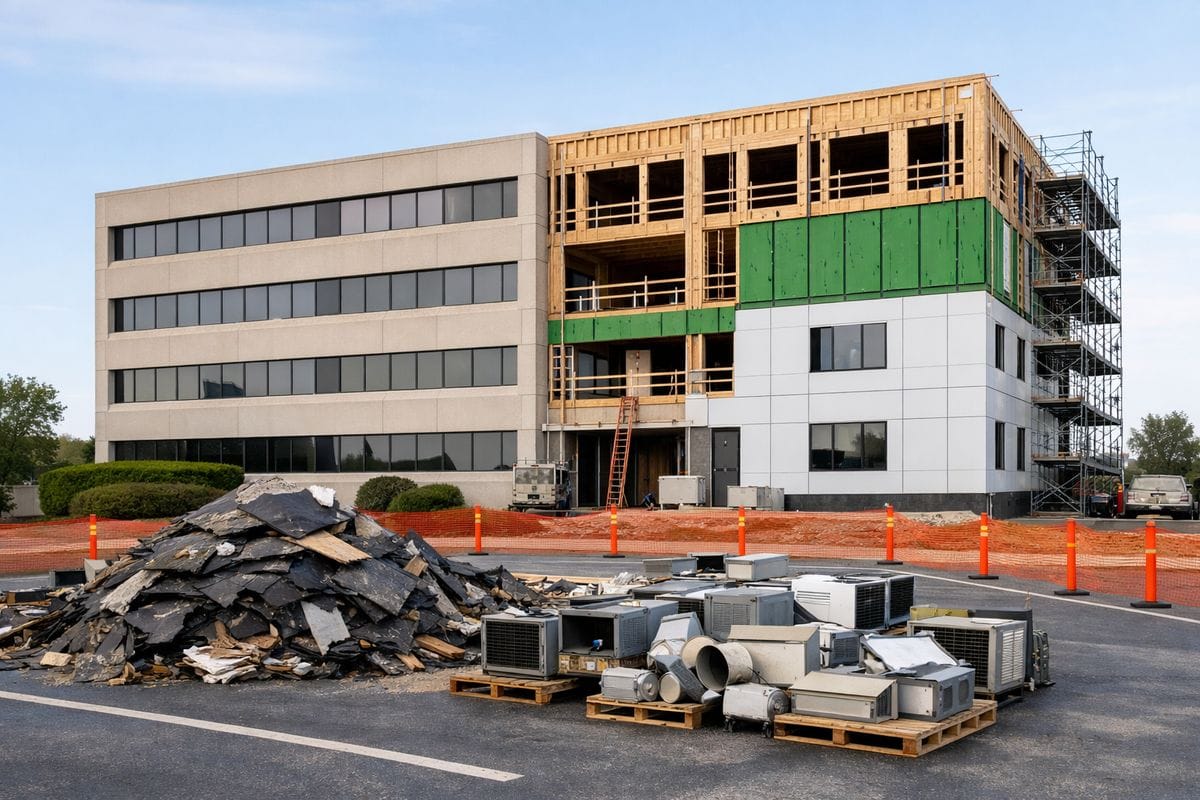
How to Calculate the Requirement Step by Step
The calculation is not complicated, but it does require discipline. Most mistakes happen because investors use the wrong starting number, track costs poorly, or assume all renovation spending counts.
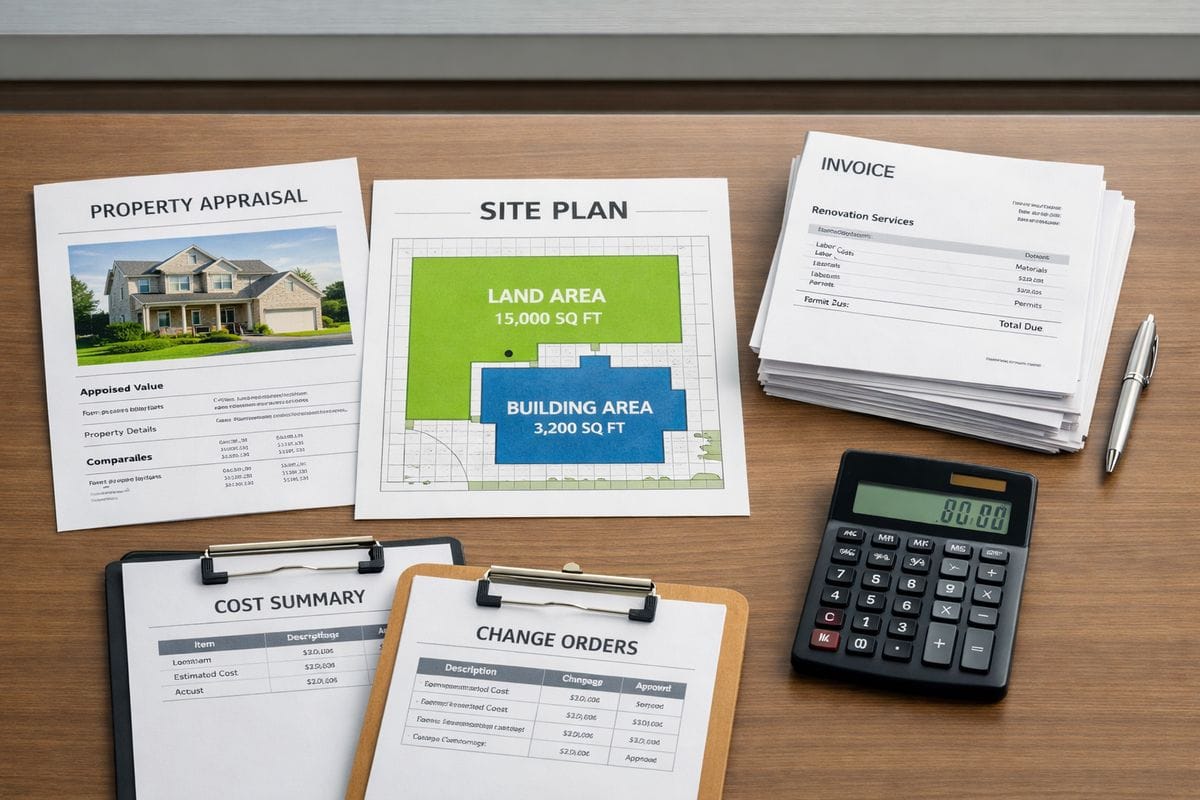
Step 1: Determine the Building’s Adjusted Basis at the Start
Start with the adjusted basis of the existing building at the beginning of the testing period. That requires separating land from building value at acquisition. Purchase price allocations, appraisals, property tax records, and cost segregation support can all help defend that split.
This number becomes the benchmark. If the building basis is overstated because land was not carved out correctly, your required improvement target becomes inflated. If it is understated without support, audit risk goes up.
Use the Houston example. Purchase price: $2 million. Land allocation: $1.4 million. Building allocation: $600,000. The relevant starting basis for substantial improvement is $600,000.
Step 2: Track Capital Improvements Added During the 30 Months
Next, track capital improvements that increase the building’s basis during the 30-month period. This is where disciplined accounting drives compliance. Job-cost reporting should separate capitalized building improvements from repairs, maintenance, financing costs, and operating expenses.
The recommendation is to track in real time, by project code and by asset category. Waiting until year-end to reconstruct improvement spending creates avoidable errors and weakens your support if the project is reviewed later.
Step 3: Compare Total Improvements Against the Threshold
Once improvement costs are accumulated, compare total qualifying additions to basis against the required threshold. For most projects, the threshold is more than 100 percent of the building’s starting adjusted basis. For qualifying rural projects, the threshold drops to 50 percent, which changes the underwriting materially.
Using the Houston example again, a $600,000 building basis means qualifying additions must exceed $600,000 under the standard rule. If the same building were in a qualifying rural OZ, the threshold would drop to more than $300,000.
What Counts as an Improvement and What Does Not
This is where real projects get messy. Not every dollar spent on a property helps satisfy the substantial improvement test.
Improvements That Usually Increase Basis
Capital improvements that become part of the building and are capitalized generally count. That typically includes roof replacement, HVAC replacement, electrical system upgrades, plumbing replacement, structural rehabilitation, major interior reconstruction, facade work, elevator modernization, and significant life-safety upgrades.
The roof example is useful because it draws the line clearly. A roof replacement usually increases basis because it is a capital improvement. A roof repair usually does not because it is maintenance.
That same logic applies across the project. Replacing a full HVAC system is different from servicing compressors. Rewiring a building is different from fixing a few outlets. Gutting and rebuilding interiors is different from paint and patch.
Costs That Usually Do Not Help
Land cost never counts. Routine repairs and maintenance generally do not count. Financing costs, interest carry, many operating expenses, cleaning, landscaping upkeep, insurance, and ordinary turnover work usually do not help satisfy the test either.
Furniture, fixtures, and equipment create another common mistake. If those items are treated as personal property rather than real property under applicable law, they do not satisfy the building improvement test. Investors often overstate qualifying spend by including FF&E that belongs in a different tax bucket.
The accounting treatment and the tax support need to match. If a cost is expensed as routine maintenance, it is not persuasive evidence of substantial improvement.
The Rural 50% Exception Changes the Math
The biggest recent change is the rural carve-out. Effective July 4, 2025, the standard threshold for qualifying rural OZ property drops from 100 percent to 50 percent. That is a major policy shift, and it makes older articles incomplete the moment they ignore it.
For investors, this is not a footnote. It is a feasibility driver. Lower required improvement spend can reduce equity needs, improve debt coverage, and expand the acquisition pool.
Which Properties Qualify for the Lower Threshold
The lower threshold applies to property in a Qualified Opportunity Zone comprised entirely of a rural area. Current guidance identifies the relevant rural framework, and the IRS Notice 2025-50 dataset is the practical reference point for zone identification. The IRS reports 8,764 total Opportunity Zones and 3,309 identified rural zones.
A rural area generally means any area other than a city or town with a population over 50,000 and any adjacent urbanized area. That definition matters because a project does not become rural just because it feels secondary or suburban. Zone-level verification is required.
Why the Rural Rule Improves Feasibility
The business impact is immediate. If a building has a $2 million adjusted basis, the old math required more than $2 million of qualifying improvements. Under the rural rule, the target drops to more than $1 million. That can change lender appetite, equity sizing, and expected after-tax ROI.
Based on analysis of redevelopment underwriting, lower thresholds improve feasibility in three ways: less capital is trapped in mandatory improvements, more acquisitions clear internal return hurdles, and projects reach tax-qualified status with less execution strain. In a market where construction pricing remains high, that matters.
When the 30-Month Rule Gets Complicated
The field data shows that timing and project structure drive most compliance errors. The statute sounds simple. Execution is not.
Renovation Delays, Permits, and Construction Phasing
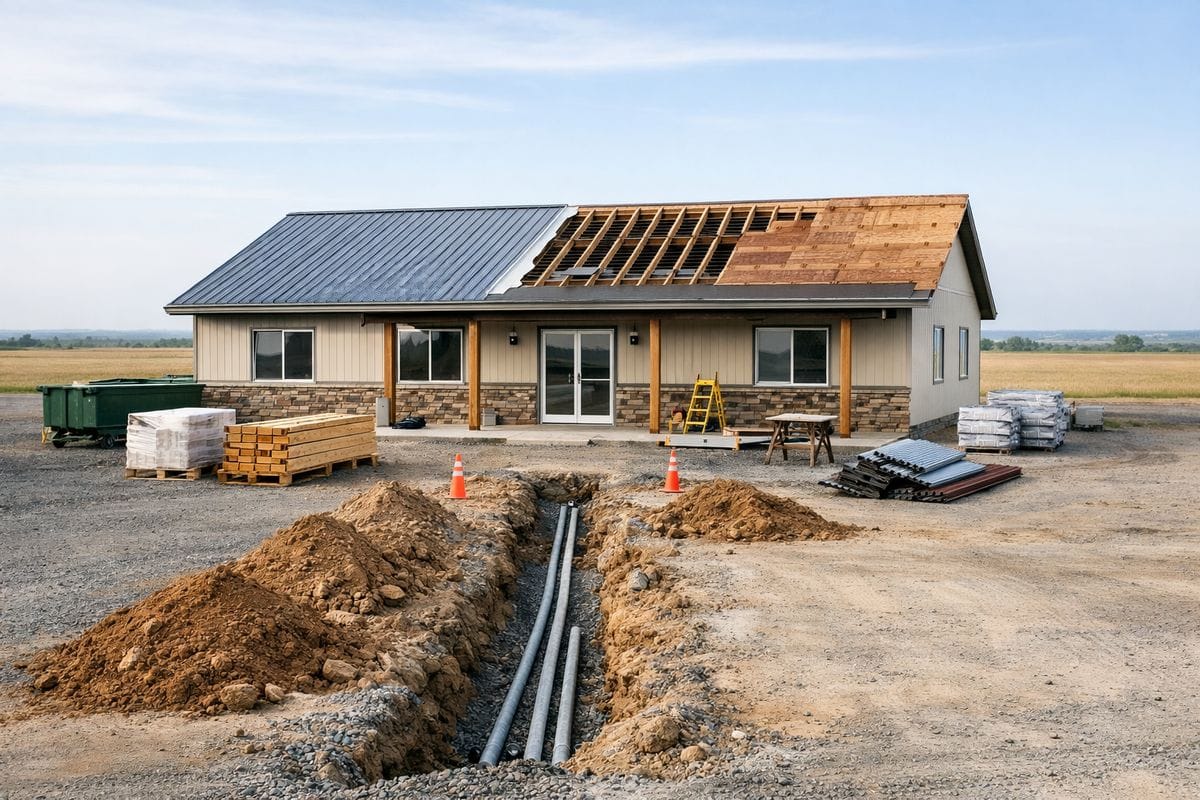
The 30-month rule does not pause because permits drag, utility work stalls, or a contractor misses milestones. Extensions are not built into the substantial improvement rule itself. That is the hard truth investors need up front.
The answer is planning, not wishful thinking. Your construction schedule should include procurement risk, municipal approval delays, contingency reserves, and documented milestone tracking from day one. If the deal only works under a perfect timeline, the deal is underwritten badly.
Multi-Building and Campus-Style Projects
Larger sites introduce another layer of complexity. Available guidance and common practice indicate that some multi-building or campus-style projects may be analyzed on an aggregated basis rather than forcing a separate test for each building. That matters because capital can be deployed unevenly across a site while still supporting the overall redevelopment plan.
This is especially relevant for mixed-use campuses, former industrial sites, and phased adaptive reuse projects. The recommendation is to structure the entity, site plan, and accounting around the intended testing method before closing, not halfway through construction.
Original Use as an Alternative Path
Some property does not need to satisfy substantial improvement at all because it qualifies under the original use rule. New construction on vacant land is the cleanest example.
Take a vacant lot in Dallas where new construction is planned. No existing building is being acquired and improved, so there is no building basis to double. The substantial improvement test does not apply because original use begins with the new development. That is a fundamentally different qualification path, and it should be identified at acquisition, not after the capital stack is assembled.
How the 31-Month Working Capital Safe Harbor Fits In
The 31-month working capital safe harbor is useful, but it is not a substitute for the 30-month substantial improvement rule. That confusion shows up constantly in OZ planning.
The safe harbor supports a Qualified Opportunity Zone business that holds working capital under a written plan for development or improvement. It helps justify cash deployment timing and phased business operations when funds are being spent according to a documented schedule.
What it does not do is extend or replace the building improvement clock. The 31-month working capital safe harbor and the 30-month substantial improvement rule serve different functions. One supports cash holding and deployment under a written plan. The other determines whether existing property has been improved enough.
The Four Documentation Priorities That Protect Compliance
Good OZ compliance is built on evidence. If the file is weak, the position is weak.
Purchase Price Allocation and Appraisal Support
Document the land-versus-building allocation at acquisition with serious support. Appraisals, allocation schedules, closing files, and tax records should point to the same conclusion. Weak allocations create avoidable risk because land is excluded from the test and directly affects the threshold.
Capitalization Policy and Basis Tracking
Use a capitalization policy that is aligned with tax reporting and project accounting. Job-cost detail, capitalization standards, depreciation records, and cost segregation support should all tell one coherent story. The recommendation is to track basis additions in real time, not after the project is complete.
Written Development Plans and Timeline Evidence
Written plans matter because timing matters. Permits, construction contracts, draw requests, inspection records, and milestone schedules support the reality of the redevelopment. Those records also help support any related working capital safe harbor position inside the OZ structure.
Entity-Level OZ Records
Maintain entity-level records for acquisition dates, testing periods, property qualification files, fund elections, and internal compliance calendars. Opportunity Zone qualification is not just a property issue. It is an entity and reporting issue too, especially under a more formal long-term OZ framework.
Common Mistakes That Cause Opportunity Zone Problems
Most Opportunity Zone failures are not caused by obscure legal traps. They come from basic execution mistakes.
Mistaking Total Purchase Price for Building Basis
This is the most common error. Investors use the full acquisition price as the benchmark instead of excluding land. That instantly overstates the required improvement target and distorts underwriting.
The Houston example proves the point. A $2 million purchase with $1.4 million allocated to land does not require $2 million of improvements. It requires improvements measured against the $600,000 building basis.
Assuming Any Renovation Satisfies the Rule
Light cosmetic work is not enough for most acquisitions. Paint, flooring, minor fixture replacements, and standard turns often fail the threshold, especially when the building basis is substantial. A project needs real capitalized building improvements, not just a nicer appearance.
Confusing the 30-Month Rule With Other OZ Deadlines
The 30-month substantial improvement period is not the 180-day investment period. It is not the 31-month working capital safe harbor. It is not the longer holding period tied to exclusion benefits. Each deadline does a different job, and combining them in underwriting creates preventable mistakes.
How This Requirement Fits Into the New Opportunity Zone Framework
Substantial improvement now sits inside a more mature, longer-term OZ program. That raises the value of getting the basics right at acquisition.
What Changed Under OZ 2.0 and OBBBA
Recent federal changes moved the program toward a permanent structure with 10-year designation cycles and stronger reporting requirements, as reflected in HUD’s OZ 2.0 comparison materials. Older OZ planning revolved around the fixed December 31, 2026 inclusion date, along with the old 10 percent and 5 percent step-ups tied to 5-year and 7-year holding periods. The newer framework generally shifts to a rolling 5-year deferral structure, keeps a 10 percent step-up, and provides stronger rural incentives, including a 30 percent benefit for qualified rural opportunity fund structures in the updated framework referenced by federal guidance.
The practical takeaway is simple: compliance discipline matters more now, not less. A permanent program rewards investors that build repeatable underwriting and documentation systems.
Why Long-Hold Investors Should Re-Underwrite Deals Now
Based on analysis of current program changes, long-hold investors should re-underwrite existing OZ assumptions immediately. Rural eligibility, hold period strategy, capital stack design, and exit timing all deserve another look.
A deal underwritten under old assumptions may now have better economics if rural status applies. Another deal may require more reporting infrastructure than originally planned. Time-to-value improves when these decisions are made before acquisition instead of during construction.
A Practical Decision Framework Before Buying an Existing OZ Property
Before buying an existing OZ property, apply four tests in order. Test the basis math. Confirm whether the property sits in a qualifying rural zone. Map the full 30-month improvement plan from acquisition date, not from construction start. Then confirm the documentation system that will support the file.
If the land allocation is unclear, the deal is not ready. If the 30-month schedule only works with zero delays, the deal is not ready. If qualifying improvements and maintenance are being mixed together in the budget, the deal is not ready.
The recommendation is decisive: underwrite substantial improvement before closing and document it as if the file will be reviewed later. That approach protects tax certainty, shortens time-to-value, and gives the project a real chance to deliver the ROI promised in the model.
Frequently Asked Questions
Does substantial improvement apply to vacant land in an Opportunity Zone?
No. If the project is new construction on vacant land, the original use path generally applies instead of the substantial improvement test. In a Dallas vacant-lot development, no existing building basis exists to double, so the improvement test does not control the analysis.
Do improvements have to equal the full purchase price?
No. The test is based on the adjusted basis of the existing building, not the total purchase price. Land is excluded. If most of the acquisition price is land value, the required improvement spend is often far lower than investors first assume.
What starts the 30-month clock?
The 30-month period starts when the property is acquired by the Qualified Opportunity Fund or the relevant qualifying OZ entity. It does not start when the fund is formed, when permits are issued, or when contractors begin work.
Does the 31-month working capital safe harbor extend the 30-month improvement period?
No. The safe harbor helps support cash deployment under a written development plan for a QOZ business, but it does not replace or extend the separate 30-month substantial improvement rule.
Does roof work count toward substantial improvement?
A roof replacement usually counts because it is a capital improvement that increases basis. A roof repair usually does not because it is maintenance. That same capital-versus-maintenance distinction applies across the project budget.
Is the rural threshold really different now?
Yes. For qualifying property in a Qualified Opportunity Zone comprised entirely of a rural area, the threshold dropped from 100 percent to 50 percent effective July 4, 2025. That change can materially improve project feasibility and after-tax returns.
References
- cbh.com
- doeren.com
- hud.gov
- irs.gov
- irs.gov
- irs.gov
- opportunityzones.com
- withum.com